
Summary: Israeli police stopped the Latin Patriarch of Jerusalem and a Franciscan friar from reaching the Church of the Holy Sepulchre on Palm Sunday, the Latin Patriarchate said, calling it the first such prevention in centuries. Police cited security concerns linked to the Iran war and said the Old City and its holy sites have been closed to worshippers since the start of the U.S.-Israeli war on Iran, particularly where bomb shelters are not available. The move has disrupted observances for Christians, Muslims and Jews and drawn criticism from several European leaders.
The Latin Patriarchate of Jerusalem reported that Cardinal Pierbattista Pizzaballa and Friar Francesco Ielpo were stopped by Israeli police while walking to the Church of the Holy Sepulchre - the church built on the site Christians believe marks Jesus' crucifixion and resurrection. In a statement, the Patriarchate said that "as a result, and for the first time in centuries, the Heads of the Church were prevented from celebrating the Palm Sunday Mass at the Church of the Holy Sepulchre."
Israeli police issued a separate statement explaining that all holy sites within Jerusalem's Old City - including locations revered by Christians, Muslims and Jews - have been closed to worshippers since the start of the U.S.-Israeli war on Iran. Police said their orders targeted sites without bomb shelters, and that they had denied a request from the Patriarchate for an exemption to mark Palm Sunday.
"The Old City and the holy sites constitute a complex area that does not allow access for large emergency and rescue vehicles, which significantly challenges response capabilities and poses a real risk to human life in the event of a mass casualty incident," police said.
Palm Sunday initiates Holy Week, the central week of Christian observance leading to Easter. Under normal circumstances the Old City would be crowded, with Roman Catholics and other pilgrims entering the massive wooden doors of the Holy Sepulchre. This year, authorities said, the usual flow of worshippers has been curtailed.
Police restrictions have also affected Ramadan and Passover observances. Jerusalem's Al-Aqsa Mosque was largely empty during Ramadan, and only a small number of worshippers have visited Judaism's Western Wall as Passover approached. The limitations affected the ability of Christians, Muslims and Jews to mark their most significant religious holidays in the city in the customary way.
The decision to block the Latin Patriarch's access prompted formal criticism from Italian leaders. Italian Prime Minister Giorgia Meloni said denying entry to religious leaders "constitutes an offence not only to believers but for every community that recognises religious freedom." Italy's Foreign Minister Antonio Tajani said on social media that he planned to summon Israel's ambassador over the incident.
France's President Emmanuel Macron also condemned the police action, saying it "adds to the worrying increase in violations of the status of the Holy Places in Jerusalem." Spokespeople for Israel's Foreign Ministry and Prime Minister Benjamin Netanyahu had not provided immediate comment. The Vatican did not respond to a request for comment.
Separately, Pope Leo delivered unusually forceful remarks as the Iran war entered its second month, saying that God rejects the prayers of leaders who start wars and have "hands full of blood."
Residents of the Old City and some religious officials said the restrictions had been applied inconsistently. They pointed out that Muslim Waqf preachers were able to access Al-Aqsa Mosque during Ramadan and Eid al-Fitr, and that cleaners were permitted ahead of Passover to remove prayer notes from the Western Wall, a yearly practice.
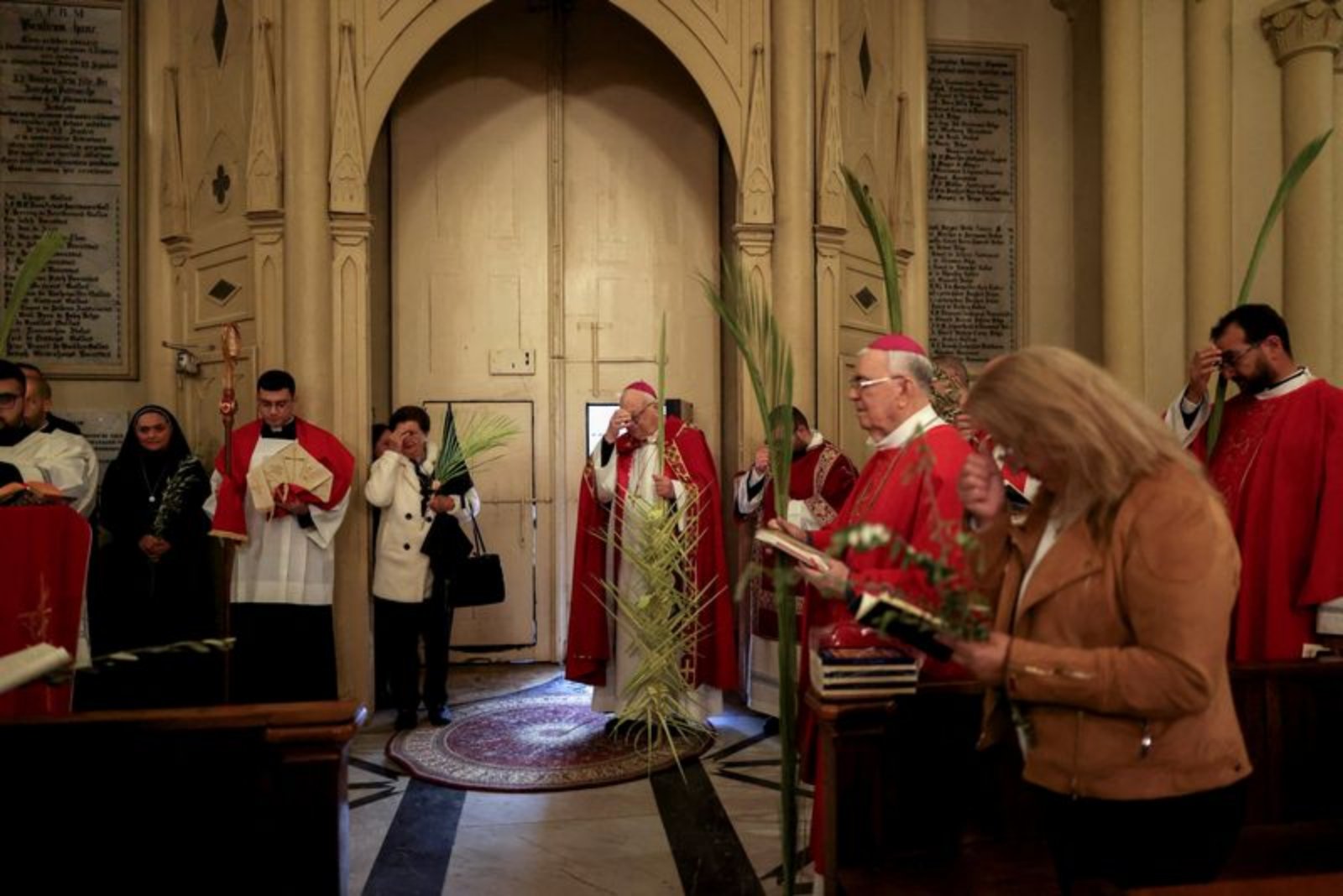
Despite the police ban on access to the Holy Sepulchre, Franciscan friars and worshippers were allowed into another nearby Old City shrine to mark Palm Sunday. A photograph showed about a dozen people praying and carrying palm fronds in that location.
Farid Jubran, a spokesperson for the Patriarchate, said authorities had been informed that the Palm Sunday Mass would take place privately and behind closed doors. He said police were notified of those arrangements but still acted to prevent the service. "But still despite this communication they insisted on acting this way," Jubran said.
Contextual note: The restrictions cited by authorities were presented as a security measure tied to the ongoing U.S.-Israeli war on Iran; police emphasised concerns about emergency access and the absence of bomb shelters in parts of the Old City. Local authorities and religious communities reported both disruption to holiday observances and perceived inconsistencies in enforcement that have heightened tensions.