
World March 31, 2026

Israeli Airstrikes in Gaza Kill Five Amidst Fragile Ceasefire

Health officials report fatalities in Jabalia and Khan Younis as ceasefire violations continue to be blamed by both sides

By Marcus Reed
Israeli Airstrikes in Gaza Kill Five Amidst Fragile Ceasefire

Israeli airstrikes on Tuesday in the Gaza Strip killed at least five people in two separate incidents - three in Jabalia and two in Khan Younis - according to Gaza health officials. The strikes occurred against the backdrop of a five-month-old, U.S.-brokered ceasefire that both Hamas and Israel accuse each other of violating. Broader regional tensions involve Iran and Hezbollah, and both sides report casualties and destruction since the ceasefire began.

Key Points

  • Two separate airstrikes in Gaza on Tuesday killed at least five people - three in Jabalia and two in Khan Younis - according to Gaza medics.
  • The incidents occurred during a five-month-old U.S.-brokered ceasefire that both Hamas and Israel accuse the other of violating; Gaza health authorities say at least 700 people have been killed by Israeli fire since the ceasefire.
  • The conflict has wider regional dimensions - Israel and the U.S. are engaged with Iran, and Israeli forces have entered southern Lebanon against Iran-backed Hezbollah - with reported casualties and extensive humanitarian destruction in Gaza that may affect reconstruction and logistics planning.

Israeli strikes in the Gaza Strip on Tuesday killed at least five people in two distinct attacks, health officials said, marking another escalation that complicates a ceasefire now described as fragile. Medics reported that an airstrike in Jabalia, in the north of the territory, killed at least three people earlier in the day. A separate airstrike in Khan Younis, in the south, killed two more.

There was no immediate comment from Israeli authorities about either incident. Since the ceasefire was agreed last October - a U.S.-brokered arrangement now five months old - Hamas and Israel have exchanged accusations of violations.

The Gaza health ministry reported that Israeli fire has killed at least 700 people since the ceasefire took effect. Israel, for its part, said that militants in Gaza killed four Israeli soldiers over the same period.

These incidents occur amid a wider regional context described in official statements included in reporting: Israel and the United States are engaged in a conflict with Iran, Israeli forces have launched an invasion into southern Lebanon in a campaign against Iran-backed Hezbollah, and the cycle of violence remains active across multiple fronts.

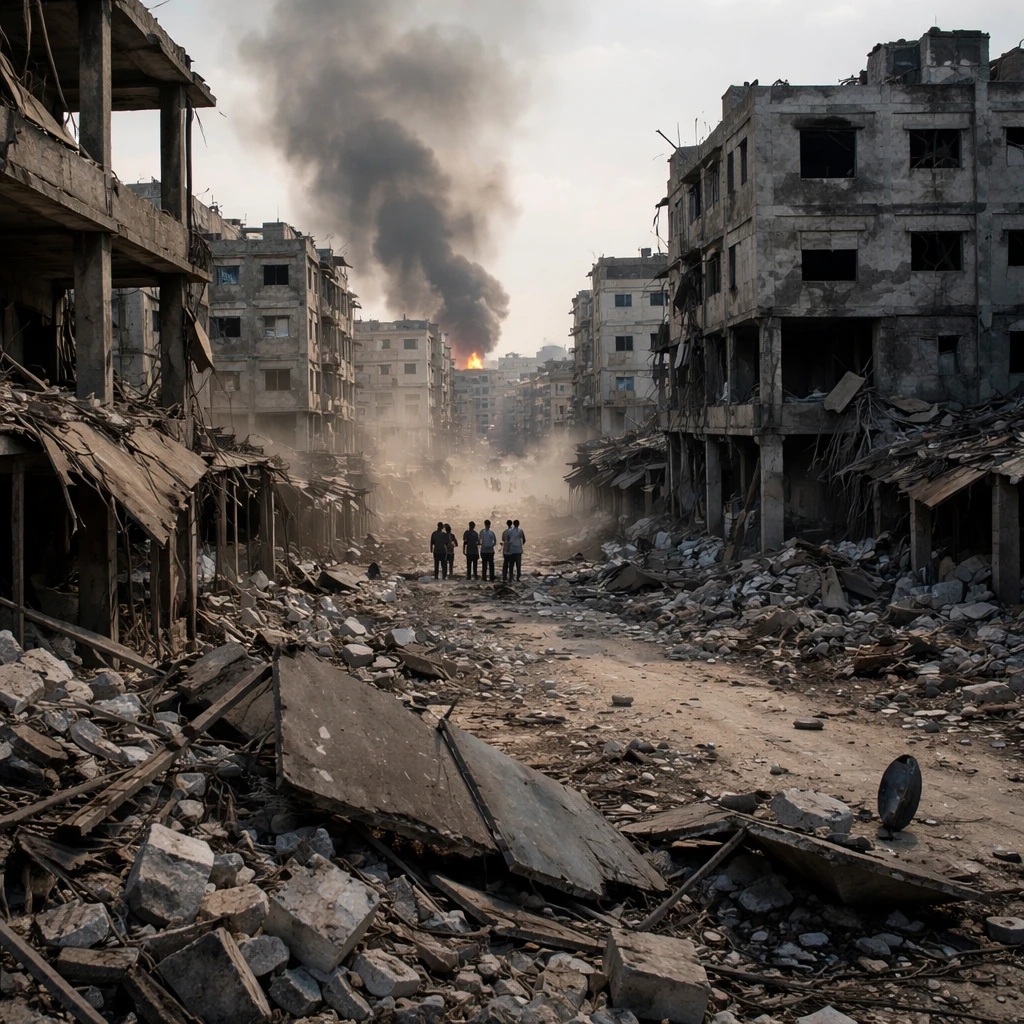
The October 7, 2023 attacks by Hamas on Israel are referenced in official tallies as having killed 1,200 people and resulted in 251 hostages taken. Israeli operations since then have been characterized by Gazan health authorities as a two-year-long campaign that has resulted in more than 72,000 Palestinian deaths - most described as civilians - widespread famine, the demolition of most buildings, and the repeated displacement of much of the population.

The current incidents in Jabalia and Khan Younis underscore the tenuous nature of the ceasefire and the ongoing possibility of renewed escalation. Information remains limited in some respects - Israeli authorities did not comment on the two airstrikes cited by Gaza medics - and both sides continue to attribute blame for violations to the other.

As reporting stands, the immediate toll from Tuesday's strikes is five dead, and they add to the longer-period casualty figures and humanitarian impacts already tallied by health authorities on all sides.


Note on limitations: Details available publicly are limited to the casualty figures and locations reported by Gaza health officials and the broader casualty figures provided by both Gaza authorities and Israeli tallies. No independent corroboration from Israeli officials about the two strikes was included in the available reporting.

Risks

  • Renewed or expanded hostilities could further disrupt civilian life and humanitarian access in Gaza, worsening famine and displacement concerns that have already been reported.
  • Escalation across multiple fronts - including southern Lebanon and broader tensions involving Iran - increases uncertainty for regional security, which can affect transport, supply chains, and reconstruction efforts.
  • Limited confirmation from Israeli authorities about specific incidents creates uncertainty in the public record and complicates independent verification of events and casualty figures.

More from World

King Charles to undertake late-April state visit to United States as London seeks to soothe tensions with President Trump Mar 31, 2026 Orphaned in Beirut: Syrian Girl's Childhood Shattered by Israeli Strike Mar 31, 2026 U.S. Senator Urges Taiwan to Heed Hong Kong’s Fate as Defence Vote Stalls Mar 31, 2026 UNRWA Chief Urges High-Level Probe After Hundreds of Staff Killed in Gaza Conflict Mar 31, 2026 Iran Strengthens Penalties for Alleged Spying, Threatens Asset Seizures and Death Penalty Mar 31, 2026