
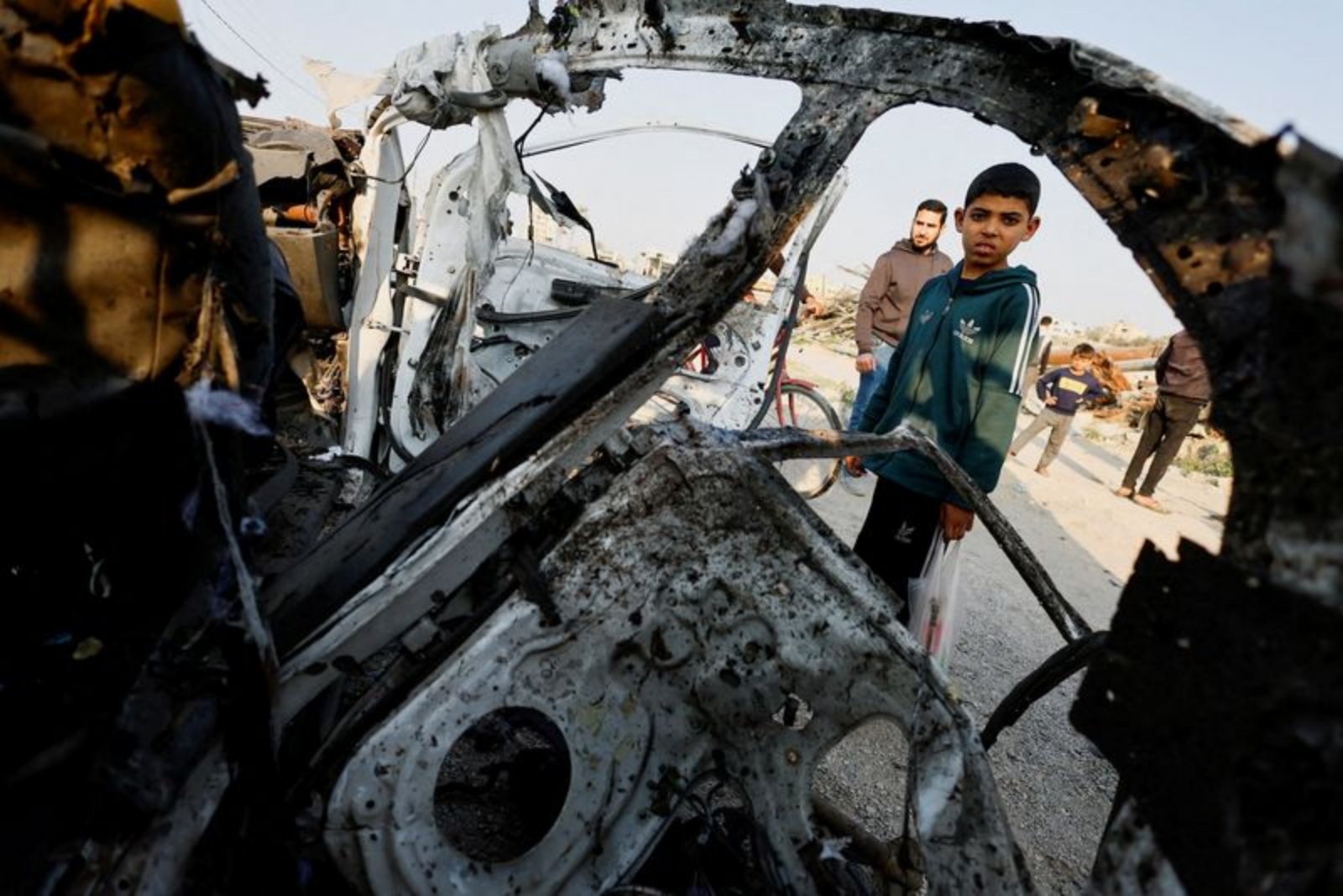
CAIRO, March 17 - Health authorities in Gaza reported that an Israeli airstrike struck a vehicle in the western sector of Khan Younis on Tuesday, killing at least three people, among them a child, and injuring 12 others, according to medics on the ground. There was no immediate comment from Israeli officials.
The strike is the most recent in a string of Israeli operations in Gaza that have continued during the wider regional confrontation involving Iran and the Lebanese group Hezbollah. Israeli forces carried out strikes on Sunday that killed 12 people in Gaza, including nine police officers in a single attack that Israel described as targeting a Hamas cell. Israeli military statements have cited perceived threats or incoming fire from Hamas as the rationale for those operations.
Gaza health authorities say that overall fatalities attributable to Israel's assault have surpassed 72,000 Palestinians. Within that total, officials report that more than 670 people have been killed since a ceasefire took effect last October. Gaza health officials also note that at least 40 people have been killed by Israeli fire since joint U.S. and Israeli strikes on Iran at the end of February.
Diplomatic efforts have moved in parallel with the violence. Three sources said envoys from U.S. President Donald Trump's 'Board of Peace' met representatives of Hamas in Cairo in an effort to preserve the October ceasefire, which officials say has come under serious pressure. A Palestinian official familiar with the talks told negotiators that Hamas believes Israel is using the war with Iran as cover to retreat from commitments under the U.S. plan. Israel rejects that characterization.
Both sides have exchanged accusations of violating the ceasefire. In a related development in the Israeli-occupied West Bank, health officials reported that Israeli forces shot and killed a 17-year-old Palestinian and wounded another. The Israeli military said its troops fired on three people who hurled stones at Israeli vehicles near the town of Salfit, adding that two of the stone-throwers were 'neutralised'.
Rights groups and medical personnel in the West Bank say that restrictions on movement introduced during the U.S.-Israeli campaign against Iran have enabled some Israeli settlers to attack Palestinians, while military roadblocks have hampered ambulances trying to reach victims. The Palestinian health ministry reports that settlers have killed at least five Palestinians in the West Bank since the Iran-related hostilities began on February 28.
This evolving pattern of violence - combining airstrikes, ground incidents and movement restrictions - has contributed to rising humanitarian and security pressures across Gaza and the West Bank, and has complicated efforts to maintain the ceasefire agreed last October.