
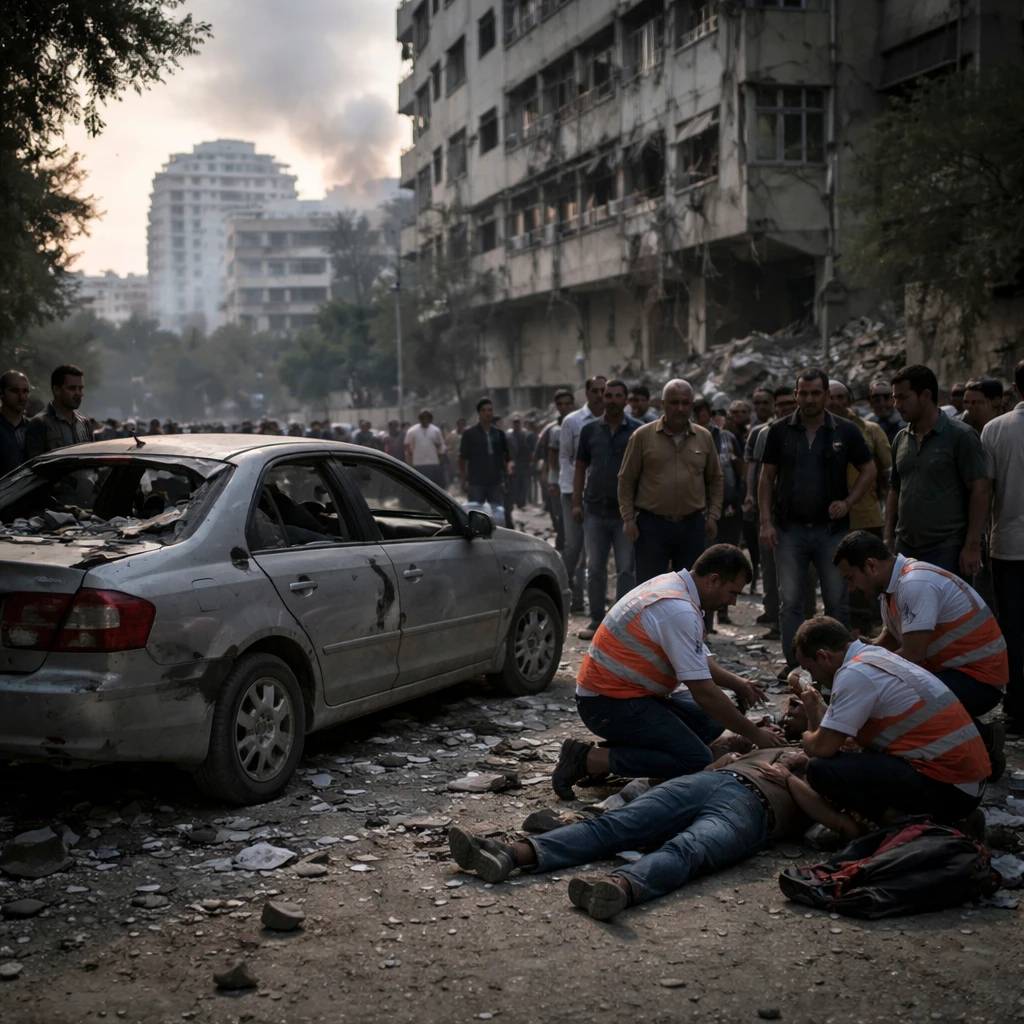
March 8 - Local health officials reported that an Israeli air strike struck a vehicle in western Gaza City on Sunday, killing at least two Palestinians and wounding several others. Medics identified the location as a road near Al-Azhar University, and said the two fatalities were inside the car. Their identities were not immediately clear, and the number of wounded in the vicinity was described as "several" by health personnel.
Context and immediate response
Officials described the attack as the most lethal event in Gaza since Israel and the United States launched a joint campaign against Iran about a week earlier. The Israeli military did not immediately offer a public comment in response to requests for information regarding Sunday’s strike.
Such strikes have reportedly become less frequent since the U.S.-Israeli campaign began, though Israeli forces have nevertheless been responsible for the deaths of several Palestinians over the past week, according to local health sources.
Ceasefire background and casualty tallies
Israel and Hamas entered into a U.S.-brokered ceasefire agreement governing Gaza that went into effect last October. Despite that truce, violence has continued on an almost daily basis, and both sides have accused the other of violating the terms of the agreement.
The Gaza health ministry has stated that at least 640 Palestinians have been killed by Israeli fire since October. Over the same time frame, Israel has reported that four soldiers were killed by militants in Gaza.
Local health authorities also describe Gaza as having endured more than two years of an Israeli onslaught that they say resulted in the deaths of over 72,000 Palestinians and left large portions of the enclave in ruins.
Origins of the recent wider conflict
Officials note that the wider war was precipitated by the October 7, 2023 attack by Hamas on Israel, an assault in which Israeli tallies say militants killed 1,200 people and took more than 250 hostages. The March 8 strike and its casualties occurred against this broader backdrop of prolonged hostilities and contested ceasefire compliance.
Key points
- At least two Palestinians were killed and several wounded when a car near Al-Azhar University in western Gaza City was hit by an Israeli air strike.
- The strike is described by local health officials as the deadliest in Gaza since a U.S.-Israeli campaign against Iran began about a week ago; the Israeli military did not immediately comment.
- Hostilities persist despite a U.S.-brokered ceasefire that began in October; local health authorities report at least 640 Palestinian deaths from Israeli fire since October and say Gaza has suffered over two years of onslaught killing over 72,000 Palestinians.
Risks and uncertainties
- Continued near-daily violence despite the October ceasefire creates sustained humanitarian and security risk in Gaza - this affects humanitarian aid delivery and agencies operating in the enclave.
- The lack of immediate comment from the Israeli military leaves uncertainty about intent, targeting, and potential further operations in the area - this uncertainty has implications for regional security-sensitive markets and defense sector assessments.
- Both sides blaming the other for ceasefire violations adds unpredictability to prospects for de-escalation and raises the risk of additional civilian casualties - this uncertainty could influence donor funding flows and logistical planning for relief efforts.