
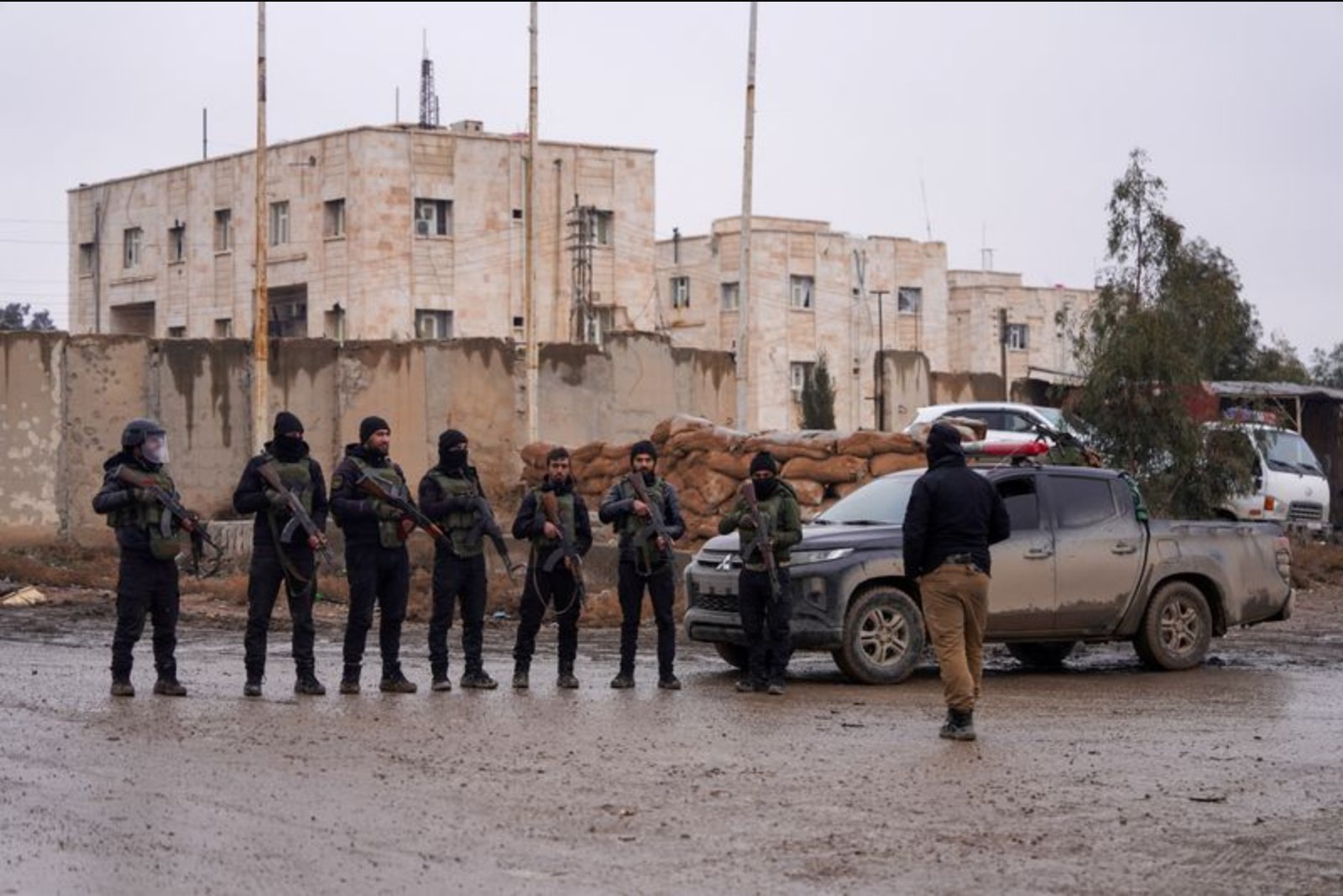
Transfers of Islamic State detainees from Syria to Iraq by U.S. forces, first announced on January 21, have proceeded at a much slower pace than initially anticipated, according to multiple officials and diplomats with direct knowledge of the situation. While U.S. statements suggested that as many as 7,000 fighters could be moved to Iraq within days, Iraqi judicial and security officials, along with diplomats from affected countries, report that just under 500 detainees have been relocated so far.
Seven sources familiar with the transfer operation described a deliberate slowing of transfers this week. Iraqi government figures and diplomatic accounts offer roughly similar totals: two Iraqi judicial officials, two Iraqi security officials and three diplomats put the number of detainees moved at approximately 500, and an Iraqi foreign ministry official described the total as under 500.
Baghdad has publicly and privately urged Washington to slow the pace of transfers to allow for talks with other states about repatriating their nationals held among the detainees and to give Iraq time to prepare additional facilities and legal capacity to host and process the fighters, Iraqi officials and a Western diplomat said. Those already transferred to Iraqi custody include about 130 Iraqi nationals and roughly 400 foreign nationals, according to the Iraqi judicial sources, the Iraqi security officials and a Western diplomat.
The U.S. decision to begin moving detainees followed the rapid collapse of the Kurdish-led Syrian Democratic Forces in northeast Syria, which raised acute concerns about the security of prisons and displacement camps that had been held by Kurdish authorities for years. Most foreign fighters detained in that area were captured in Syria and have been kept in prisons in the northeast for years without trials.
Officials in Baghdad agreed to host the detainees relocated by U.S. forces after a short-lived escape by dozens of fighters from at least one facility in Syria, officials said. But despite prior experience trying and sentencing dozens of foreign fighters, Iraqi authorities have balked at absorbing the full burden of the roughly 7,000 detainees the United States had said it might move in the near term.
"It’s a trap," said one senior Iraqi judicial source, capturing Baghdad’s concern that Western governments object to capital punishment but are unwilling to repatriate their own nationals who joined the Islamic State. The source questioned the fairness of bearing the political and legal consequences alone, saying that Iraq should not be expected to shoulder a burden that could portray it as executioner while other states decline to act.
Iraqi officials and diplomats expressed practical concerns about the capability of Iraq’s court system and prison infrastructure to process and incarcerate large numbers of additional detainees. They warned that an influx on the scale initially discussed could overwhelm courts and correctional facilities, complicating efforts to provide timely trials and appropriate detention conditions.
There are also diplomatic sensitivities for Western governments whose citizens are among those detained. Several diplomats said their governments face a difficult choice: repatriate nationals and carry the domestic political fallout that could follow, or refuse repatriation and risk those citizens being tried and potentially executed in Iraq. One diplomat characterized public reaction as a major deterrent to repatriation, saying it would be difficult to accept transfers if trials in Iraq could lead to executions.
An Iraqi undersecretary in the foreign ministry, Hisham al-Alawi, confirmed that fewer than 500 detainees have been moved to Iraq to date and reiterated Baghdad’s long-standing call for other states to assume responsibility for their citizens. "For years, Iraq has been urging foreign states to assume their responsibilities by taking back their citizens and dealing with them in accordance with their own laws. While some countries have taken the initiative, a large number of states have not responded to our requests," Alawi said.
Western governments’ reluctance to accept repatriations stems in part from legal and evidentiary concerns. Four diplomats from countries with nationals captured in Syria noted that achieving guilty verdicts in their home jurisdictions could be harder than in Iraq, where prosecutions have relied on evidence gathered in theater. Home countries may need to establish direct participation in violent crimes to secure convictions under their own criminal codes, an evidentiary standard that can be difficult to meet for actions that occurred abroad.
High-profile domestic political consequences also complicate the calculation. The return of an Islamic State-linked woman to Norway in 2020, for example, proved politically disruptive and led to a cabinet crisis, demonstrating the domestic risks of repatriation decisions for some Western governments. That episode was cited by diplomats as part of the broader hesitancy to repatriate individuals who had joined the group.
The senior Iraqi judicial source said Baghdad was coordinating with the U.S. State Department to intensify pressure on foreign governments to resume repatriations. In remarks following the start of transfers, Secretary of State Marco Rubio said foreign Islamic State members would be in Iraq temporarily and that the United States was urging countries to take responsibility and repatriate their citizens to face justice.
Two diplomats representing countries with nationals now in Iraq described ongoing conversations with Baghdad about possible repatriations but indicated that their governments’ positions remained unchanged. One diplomat said their government had begun talks with Iraq but had not altered policy. A second diplomat said their public would be outraged if nationals were sent to Iraq and then faced execution.
Human rights and legal experts cited in the discussions warn that mass transfers to Iraq carry significant legal and humanitarian risks. Letta Tayler, an associate fellow at the International Centre for Counter-Terrorism, described the mass transfer plan as having "mind-boggling legal implications, none of them positive." She warned that transfers could prolong indefinite detention without trial and place detainees at risk of torture and executions based on flawed convictions.
Those concerns dovetail with U.S. officials' own worries about the fairness of trials for Islamic State detainees in Iraq. Given the interplay of legal, political and logistical factors, experts and officials alike concluded that repatriation by countries with fair justice systems remains the only viable long-term solution, even as many governments remain reluctant to pursue it.
The pace of transfers, and whether foreign governments will change course in response to diplomatic pressure and public debate, remains uncertain. For now, Baghdad is seeking time to negotiate repatriation agreements and expand its capacity to host and process the detainees moved from Syria, while signaling that it will not absorb the full burden alone without broader international cooperation.
Summary: U.S. transfers of Islamic State detainees from northeast Syria to Iraq began on January 21 but have slowed after Baghdad requested a pause to negotiate repatriations and prepare facilities. Fewer than 500 detainees have been moved so far, including about 130 Iraqis and roughly 400 foreigners. Western governments' reluctance to repatriate nationals who fought for the group, legal evidentiary challenges and domestic political risks are cited as primary reasons for the slowdown.