
World March 27, 2026

Iranian Men's Team Wears Black Armbands and Holds Schoolbags in Protest Ahead of Friendly in Turkey

Players pay public tribute to schoolgirls killed on the first day of the Iran war as questions persist over World Cup participation and ongoing investigations

By Jordan Park
Iranian Men's Team Wears Black Armbands and Holds Schoolbags in Protest Ahead of Friendly in Turkey

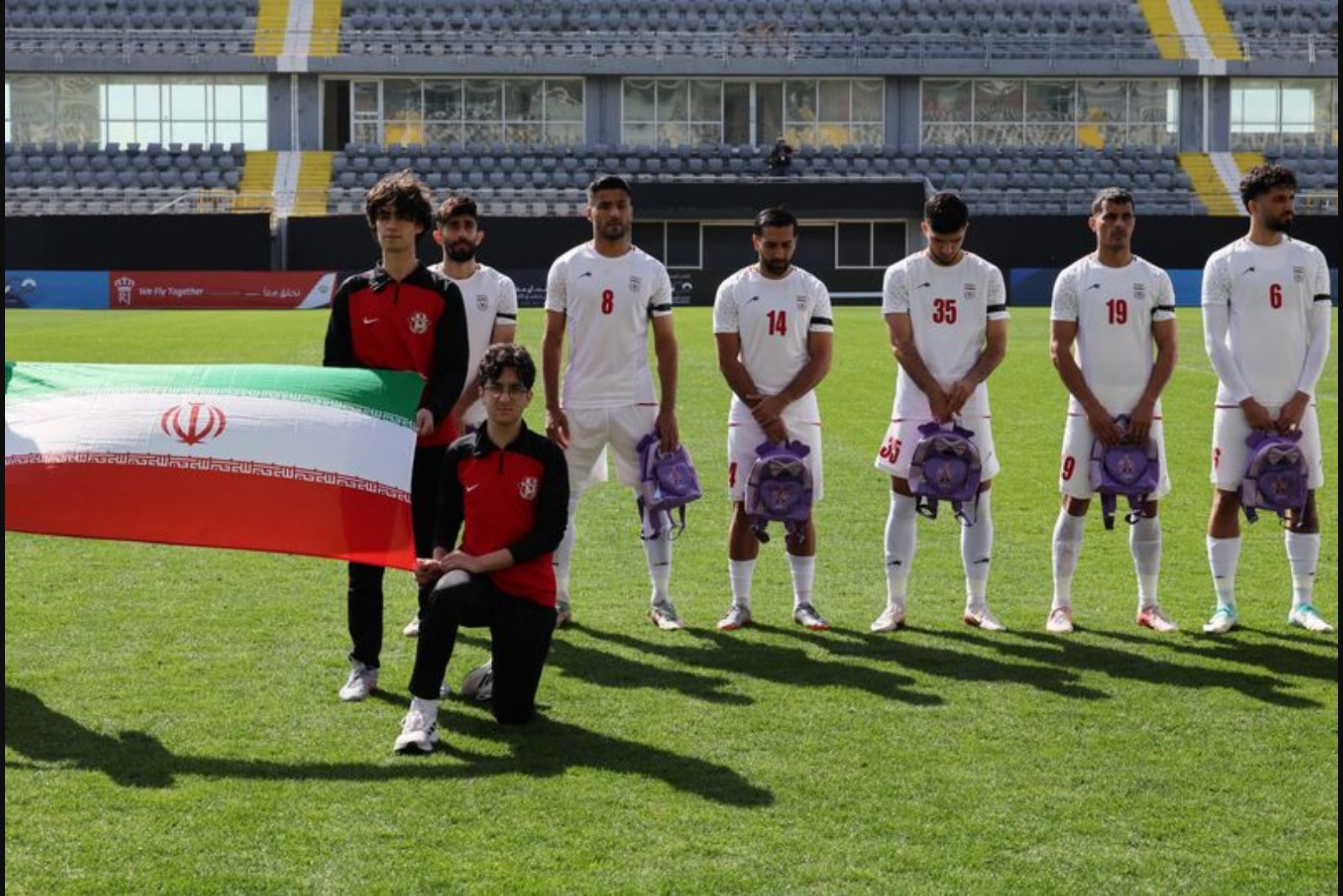
Before a friendly in Belek, Turkey, Iran's men's national soccer team stood with black armbands and held pink and purple schoolbags while the national anthem played, a gesture a team media official described as a protest and a memorial for schoolgirls killed on the first day of the Iran war. The act comes amid unresolved investigations into the attack and uncertainty about the team's participation in the World Cup in the U.S., Mexico and Canada.

Key Points

  • Iran's men's national team wore black armbands and held pink and purple schoolbags during the national anthem at a friendly in Belek, Turkey, as an act described by team officials as a protest and remembrance for schoolgirls killed on the first day of the Iran war - sectors impacted: sports, security.
  • Tehran says the attack on Shajareh Tayyebeh School killed more than 175 people including children and teachers; a team media official cited 165 girls in a public statement - sectors impacted: defense, diplomatic relations.
  • Iran is in talks with FIFA about potentially moving World Cup matches from the U.S. to Mexico; the national team also has a scheduled friendly against Costa Rica in Turkey - sectors impacted: sports events, travel and logistics.

In the seaside resort of Belek on Friday, Iran's men's national soccer team lined up for the pre-match formalities wearing black armbands and holding small schoolbags as the national anthem sounded. Team officials said the display was intended as a protest and a remembrance for schoolgirls killed on the first day of the Iran war.

The fixture was a friendly against Nigeria, staged as part of the squad's preparations ahead of the World Cup scheduled to be held in the U.S., Mexico and Canada. The team's presence at the tournament has been clouded by the conflict.

Players were pictured holding pink and purple bags tied with ribbons - an apparent symbolic reference to the assault on the Shajareh Tayyebeh School. Tehran has said the strikes on that day resulted in the deaths of more than 175 people, including children and teachers. A media official for the Iranian team said the players were holding the bags close to their hearts "in remembrance of the 165 girls the Americans killed in an Iranian school."

"The players are holding the school bags close to their heart in remembrance of the 165 girls the Americans killed in an Iranian school," a media official for the Iranian team said.

U.S. military investigators have indicated it is likely that U.S. forces were responsible for the attack, but they have not reached a final conclusion and their investigation remains incomplete. That ongoing inquiry and the unresolved questions around the incident are part of the backdrop to the players' protest.

The gesture follows earlier developments in which some members of Iran's women's national team remained silent during the national anthem at an Asian Cup match. State television in Tehran subsequently labelled those players "traitors."

Concerns over safety and optics have also entered diplomatic and logistical discussions. The Iranian football federation said it is in talks with FIFA about the possibility of moving its World Cup matches from the U.S. to Mexico. Separately, the men's team is scheduled to play another friendly against Costa Rica on Tuesday in Turkey.

U.S. President Donald Trump stated earlier this month that while Iran's national team would be welcome to play in the U.S., there may be questions about whether it would be appropriate for concerns over "life and safety."

The scene in Belek - black armbands combined with the schoolbag symbolism - underscores the intersection of sport, national trauma, and unresolved military inquiries as the World Cup approaches, and highlights ongoing debates about venue, safety, and the status of Iran's participation.

Risks

  • Unresolved investigation into the school attack - U.S. military investigators view U.S. forces as likely responsible but have not completed a final conclusion, leaving legal and diplomatic uncertainty - impacts defense and diplomatic sectors.
  • Potential relocation of World Cup matches and questions over team participation create uncertainty for event planning, broadcasting, and travel logistics - impacts sports events and travel industries.
  • Public and political reactions to player gestures and silence during anthems could heighten domestic tensions and influence state media narratives - impacts media and public affairs sectors.

More from World

U.S. Intelligence Confirms Only About One-Third of Iran’s Missile Stockpiles Destroyed, Sources Say Mar 27, 2026 Russian National Sentenced to Four Years in London After Video Call Witnessed by U.S. President’s Son Mar 27, 2026 UN Rights Chief Presses US to Finish Probe Into Deadly Strike on Iranian School Mar 27, 2026 Ukraine Nears Gulf Security Pacts to Counter Iranian Drone Threats Mar 27, 2026 Frederiksen Opens Coalition Negotiations After Election Setback, Aiming to Stay as Prime Minister Mar 27, 2026