
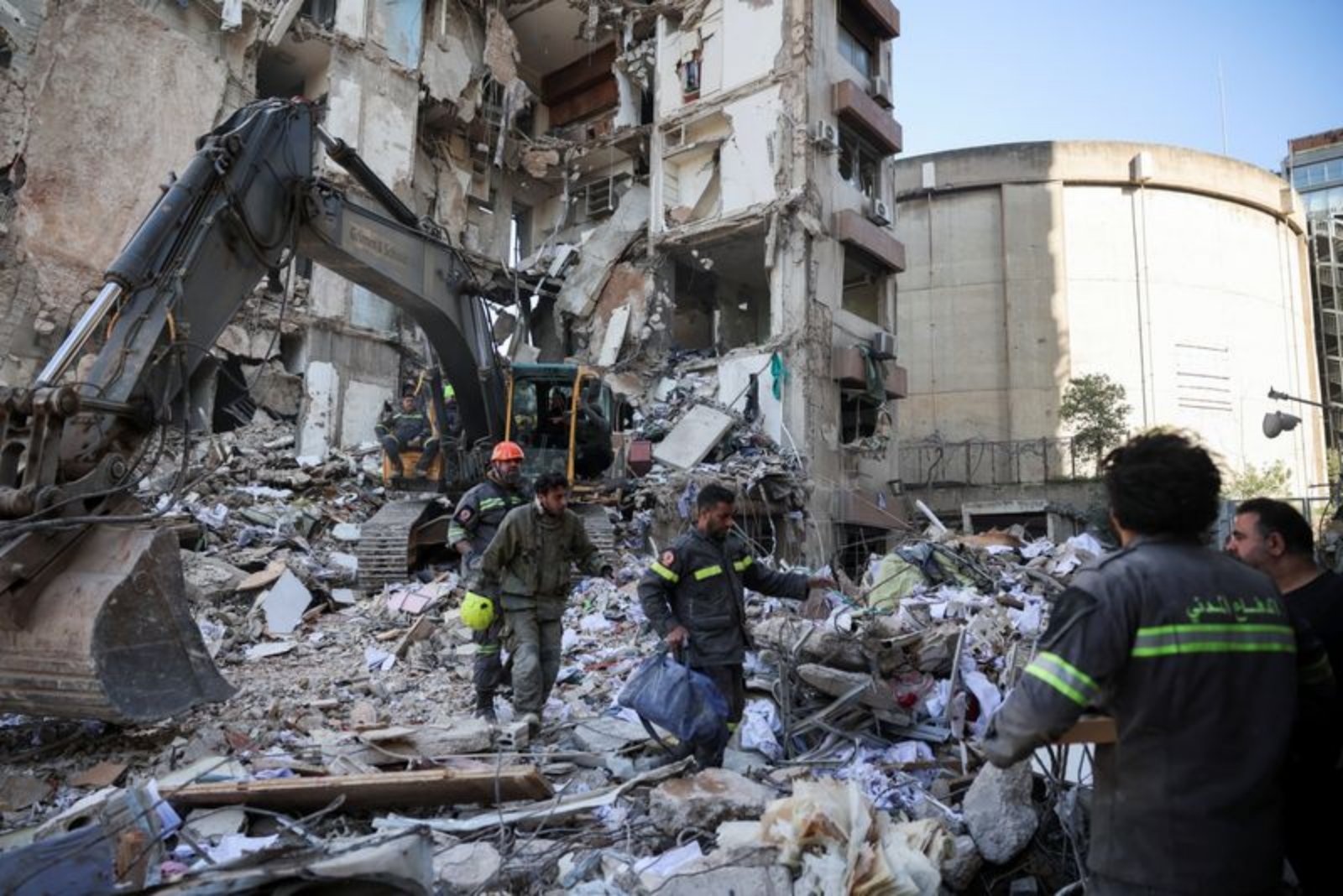
DUBAI/TEL AVIV/BEIRUT/BUDAPEST, April 8 - Israel unleashed its most intense strikes on Lebanon yet on Wednesday, leaving hundreds dead and provoking a pointed response from Iran that called into question the feasibility of immediate peace talks with the United States.
The statement from Iran’s lead negotiator, parliament speaker Mohammed Bager Qalibaf, underscored how fragile the regional situation remains despite a ceasefire announcement a day earlier by U.S. President Donald Trump. Qalibaf said that the combination of Israel’s escalation against Hezbollah and what he described as U.S. insistence that Iran surrender its nuclear ambitions made bilateral negotiations or a ceasefire unreasonable at that time.
"In such a situation, a bilateral ceasefire or negotiations were unreasonable," Qalibaf said in a statement.
Washington and Jerusalem have both maintained that the two-week ceasefire does not extend to operations in Lebanon, and Israeli Prime Minister Benjamin Netanyahu affirmed that strikes would continue. U.S. Vice President JD Vance, who is due to lead the American delegation to talks, told reporters in Budapest that "I think the Iranians thought that the ceasefire included Lebanon, and it just didn’t." The disagreement put in doubt whether the ceasefire would survive until the planned peace talks set to begin on Saturday.
The parties also remained sharply divided over Iran’s nuclear program, which President Trump cited as one of the central reasons for the war. Trump said Iran had agreed to stop enriching uranium and that Tehran had indicated it would surrender existing stocks. The White House said the United States would work with Iran to "dig up and remove all of the deeply buried ... Nuclear 'Dust,'" a phrase used by Trump on social media.
Qalibaf rejected that reading, saying Iran is permitted to continue enriching uranium under the terms of the ceasefire as he interpreted them. Despite both Washington and Tehran declaring victory in a five-week conflict that has killed thousands, the core disputes that led to the war remain unresolved, with each side pursuing divergent demands for any long-term settlement.
The military and civilian toll of the latest Israeli strikes on Lebanon was severe. Lebanon’s civil defense service reported 254 people killed on Wednesday, with the capital Beirut accounting for the highest single-city toll at 91 fatalities. Local residents said some strikes occurred without the customary advance warnings that give civilians time to evacuate target areas.
Hezbollah, the Iran-backed group in Lebanon that has been engaged in parallel fighting with Israel, said early on Thursday that it fired rockets at northern Israel in response to what it described as ceasefire violations.
International political responses included strong criticism from French President Emmanuel Macron, who condemned what he called indiscriminate Israeli attacks on Lebanon and urged that Lebanon be fully covered by the ceasefire. Leaders from 13 European countries, Japan and Canada released a joint statement welcoming the ceasefire and urging a rapid end to hostilities to prevent a severe global energy crisis.
The conflict’s reverberations have already been felt in energy markets and shipping. Oil prices tumbled as much as 14 percent to settle near $95 per barrel after dropping to around $90.40, though benchmark Brent crude remains roughly $25 above pre-conflict levels. World stock indexes moved higher during the same period, reflecting a complex market response to the shifting landscape.
Tehran has demonstrated an ability to affect Gulf energy flows, in part through its influence over the Strait of Hormuz, a critical chokepoint for global oil shipments. Iranian forces struck oil facilities in neighboring Gulf countries, including a pipeline in Saudi Arabia used to route crude around the Strait of Hormuz, according to an oil industry source. Kuwait, Bahrain and the United Arab Emirates also reported missile and drone strikes.
The Strait of Hormuz remained closed to vessels without a permit, and shippers said they needed clearer guidance before resuming transit. Iran’s Revolutionary Guards navy published a map showing alternative shipping routes within the strait to help vessels navigate around potential naval mines, the semi-official Iranian news agency ISNA reported.
Israeli leaders signaled readiness to return to broader combat if necessary. Netanyahu said Israel had its "finger on the trigger" and was prepared to resume fighting "at any moment." The warning came as crowds gathered across Iran to celebrate what many in Tehran saw as a strategic outcome, with demonstrators waving Iranian flags and burning U.S. and Israeli flags in public displays of defiance.
Even as there was public jubilation in parts of Iran, some residents expressed caution about the durability of any deal. One government employee in Tehran, who spoke by phone, said Israel might continue military action and that U.S. policy could change quickly. "Israel will not allow diplomacy to work and Trump might change his view tomorrow. But at least we can sleep tonight without strikes," the individual said.
The war began on February 28, launched by President Trump and Prime Minister Netanyahu with stated aims that included preventing Iran from extending its power beyond its borders, ending Iran’s nuclear program and creating conditions the leaders hoped would lead to political change inside Iran. U.S. Defense Secretary Pete Hegseth called the U.S. campaign a decisive military victory, but Iran still retains a stockpile of near-weapons-grade highly enriched uranium and maintains the capacity to strike neighboring countries with missiles and drones.
Tehran’s clerical leadership, which had faced mass protests months earlier, showed no sign of internal collapse following weeks of military pressure, according to observations reported from inside Iran.
The situation remains fluid. With major disagreements persisting over the scope of the ceasefire, the fate of Iran’s nuclear program, and the geographical limits of the pause in fighting, regional actors and global markets are watching closely for signs of renewed hostilities or progress toward negotiations.
As diplomatic delegations prepare to meet, it is unclear whether the two-week ceasefire will hold long enough for talks to proceed as scheduled or whether further military actions will again reshape the negotiating terrain.