
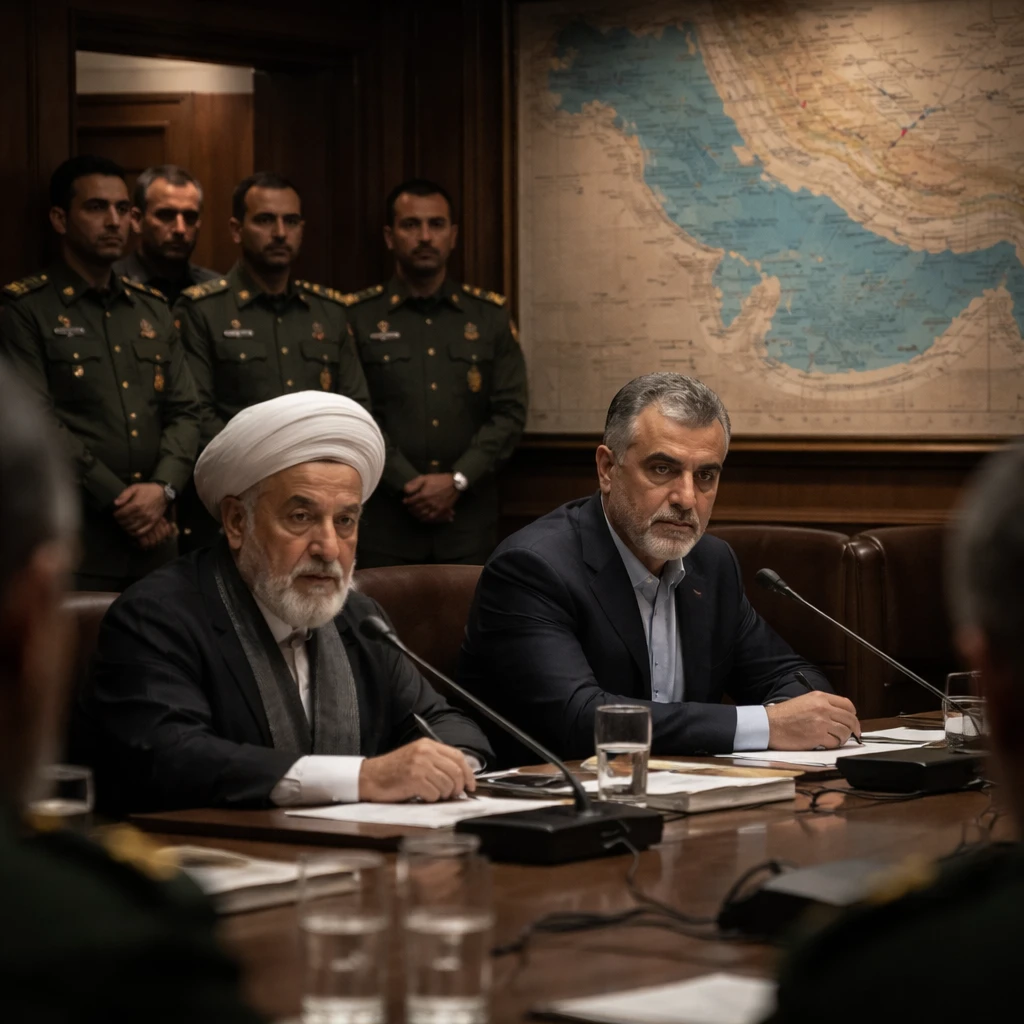
Three senior sources inside Tehran told reporters that Iran's position toward any negotiated end to the conflict has become markedly more rigid since hostilities began, and that the Islamic Revolutionary Guard Corps has assumed a larger role in shaping those positions. They said Tehran would insist on major concessions from Washington if mediators succeed in arranging formal talks.
According to the sources, any substantive discussions with the United States would need to secure not only an immediate halt to the fighting but also guarantees that would prevent future military action against Iran. Tehran would seek recompense for wartime losses and insist on formal control of the Strait of Hormuz as part of any settlement, the sources said. They stressed that Iran would not be willing to negotiate restrictions on its ballistic missile programme, which had been treated as a red line by Tehran during prior talks that were underway when the United States and Israel launched their strikes last month.
Public statements from the United States and Iran have been inconsistent. U.S. President Donald Trump said on Monday that Washington had already held "very, very strong talks" with Tehran more than three weeks into the war, a claim Iran has publicly denied. The three senior Tehran sources clarified that Iran's contacts so far had been preliminary and limited to discussions with potential mediators - Pakistan, Turkey and Egypt - to assess whether the basis existed for direct engagement with the United States on ending the war.
A European official said there had been no direct negotiations between Iran and the United States, and that Egypt, Pakistan and Gulf states were acting as intermediaries relaying messages. A Pakistani official and a second source indicated that direct talks aimed at ending the conflict could be held in Islamabad this week.
If such talks proceed, the three Iranian sources said the delegation would include Parliament Speaker Mohammad Baqer Qalibaf and Foreign Minister Abbas Araqchi. They cautioned, however, that any final decisions would rest with the Islamic Revolutionary Guard Corps.
Israeli officials have expressed scepticism about the prospects for an agreement. Three senior Israeli officials told reporters that although the U.S. president appeared intent on securing a deal, they considered it unlikely that Tehran would accept the kinds of demands they expected Washington to press - demands they believed would encompass an end to Iran's ballistic missile and nuclear programmes.
Iran's deployment of ballistic missiles and its capacity to threaten closure of the Strait of Hormuz - a chokepoint through which about a fifth of the world's oil and liquefied natural gas normally passes - have been among Tehran's most potent responses to U.S.-Israeli strikes, the sources said. Analysts cited by the sources argue that Iran could not agree to surrender those capabilities without leaving itself vulnerable to further attacks.
The sources also said Iranian strategists remained wary of relying on agreements with the United States and Israel after experiencing attacks following an earlier deal last year, even while they were engaged in talks at that time. They pointed to continued Israeli strikes in Lebanon and Gaza after declared ceasefires as part of the context shaping Tehran's reluctance to place trust in guarantees.
Domestic factors within Iran, the senior Iranian sources added, have narrowed Tehran's room for manoeuvre in any negotiations. These constraints include the growing influence of the Revolutionary Guards, uncertainty at the top of the political system given that the newly appointed Supreme Leader Mojtaba Khamenei has not yet appeared in official photographs or video since his appointment, and a publicly cultivated narrative of resilience in the conflict.
For now, mediators appear to be carrying messages and exploring whether direct talks are feasible. The Iranian sources framed any future engagement with the United States as contingent on significant concessions that Tehran considers essential to its security and sovereignty, and they warned that the Revolutionary Guards will be decisive in approving any agreement.