
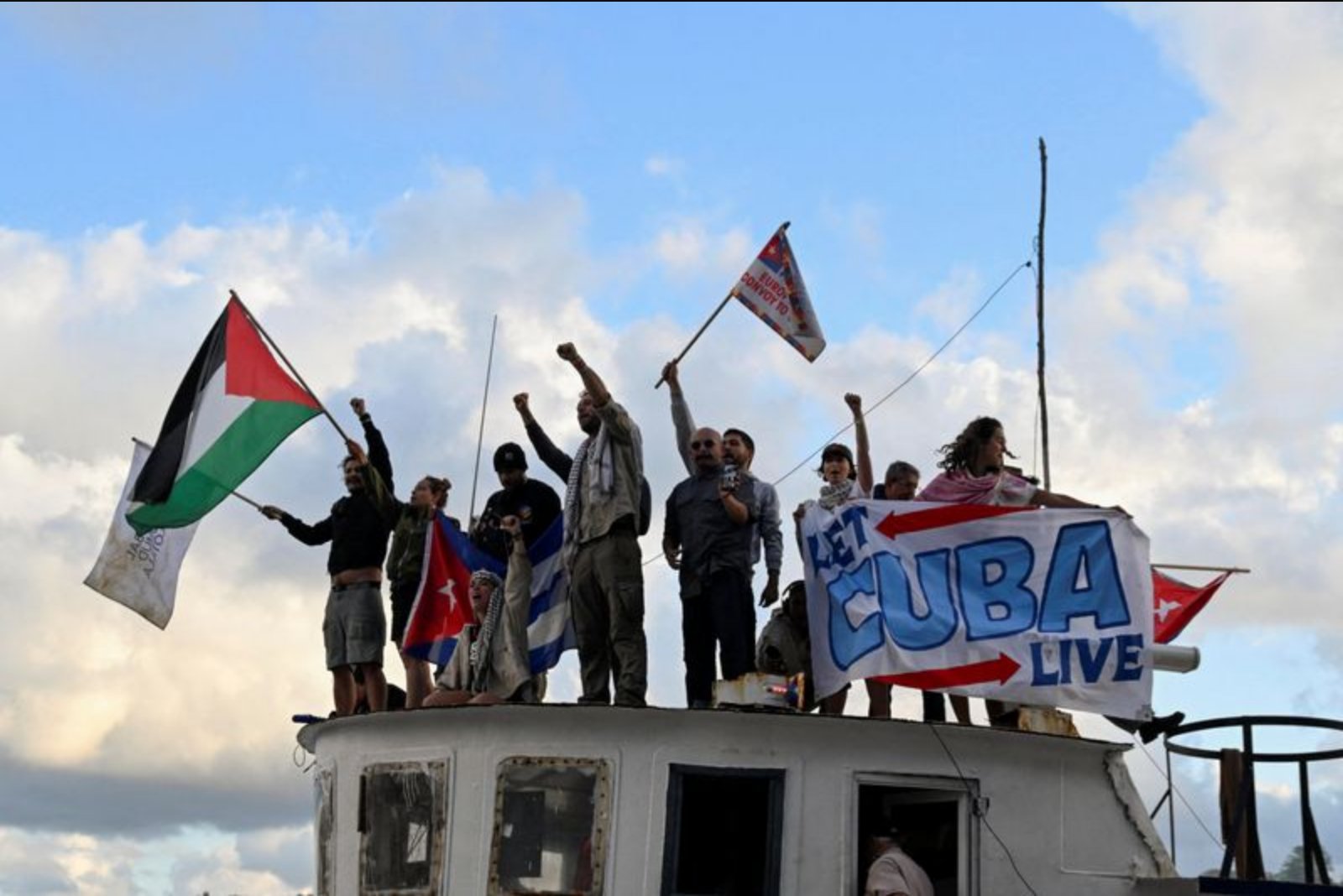
Cuba received a small ship in Havana Harbor on Tuesday carrying 14 tons of humanitarian supplies sent by the Nuestra America Convoy, an international activist effort aimed at delivering goods despite strict U.S. restrictions on fuel and other shipments to the island. The vessel left the Mexican port of Progreso last week and entered the harbor early on Tuesday, handing over consignments that included food, medical supplies, solar panels and bicycles to Cuban authorities.
The arriving ship was one of three vessels in a flotilla that departed from Progreso, with the remaining two scheduled to arrive at a later time. The maritime delivery added to a separate effort by activists that had flown roughly 6 tons of goods into Cuba over the previous week. Those airlifted supplies received prominent coverage on Cuban state television, particularly the distributions to hospitals.
Members of the convoy were received at the presidential palace last week by Cuban President Miguel Diaz-Canel. The delegation included international figures such as former British Labour leader Jeremy Corbyn, reflecting the broad coalition behind the initiative. The Nuestra America coalition comprises nearly 300 organizations across more than 30 countries, made up of non-governmental groups, trade unions, political parties and lawmakers.
Brazilian activist Thiago Avila, who sailed from Mexico with the convoy, said after disembarking:
"It’s only a first step. Much more support will follow."
The ship that arrived on Tuesday is named "Maguro" and was rechristened "Granma 2" by its crew, a reference to the yacht used by Fidel Castro in 1956. The delivery was delayed by several days because of poor sailing weather in the Caribbean, underscoring operational challenges that can affect maritime aid movements in the region.
Organizers and Cuban state outlets framed the arrival as a meaningful expression of international solidarity. Yet the shipment’s material impact is limited in scale when viewed against the island’s broader needs. Cuban officials and state media portrayed the deliveries as important, but observers inside Cuba characterize the one-ship delivery as largely symbolic in the face of a near-catastrophic economic crisis.
The economic emergency cited in Cuba has had pronounced effects on multiple public services, sharply impeding transportation networks, healthcare delivery and electricity generation. Compounding these shortages are U.S. policy measures that have cut off fuel supplies to the island and included threats of tariffs on countries that provide oil to Cuba. Those restrictions have been central to the convoy organizers’ efforts to publicly demonstrate alternative supply routes.
The convoy’s appearance comes on the heels of diplomatic shifts in the region: Costa Rica recently followed Ecuador in severing diplomatic relations with Cuba, a development that adds a layer of international isolation for Havana at a time of pressing domestic strain.
Summary: A small ship from the Nuestra America Convoy docked in Havana on Tuesday with 14 tons of humanitarian supplies, joining earlier airlifted goods and forming part of a three-ship flotilla from Progreso, Mexico. The delivery, described by activists as an initial step, is largely symbolic amid a severe economic crisis and U.S. curbs on fuel supplies.
- What arrived: 14 tons of food, medicine, solar panels and bicycles by sea, plus about 6 tons flown in earlier.
- Who is involved: The Nuestra America coalition of nearly 300 organizations from more than 30 countries, including NGOs, unions, political parties and lawmakers.
- Context: Deliveries occurred against a backdrop of U.S. fuel restrictions and recent diplomatic breaks by Costa Rica and Ecuador.