
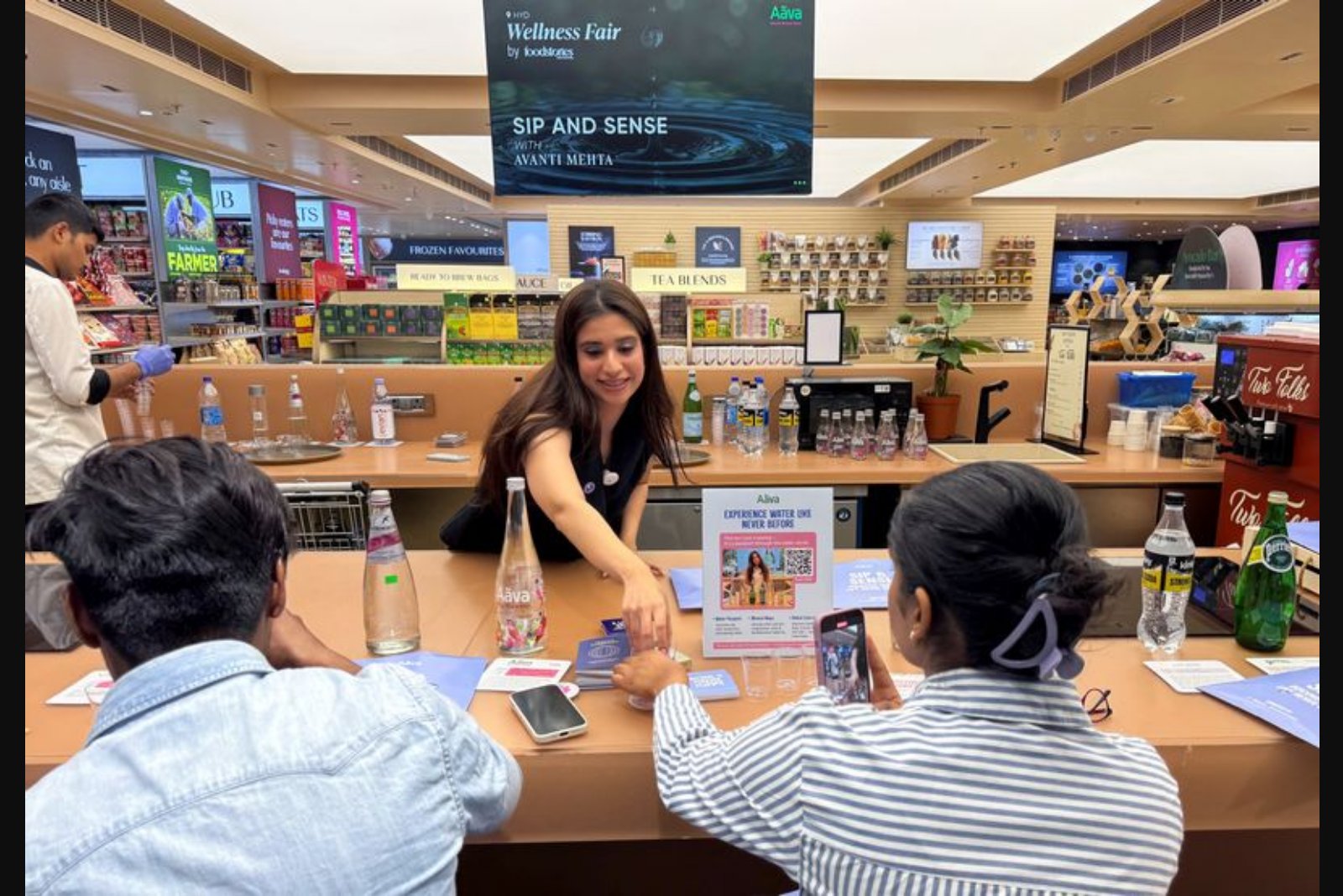
At a gourmet store in New Delhi, a small gathering is sampling water from several countries and regions - not as an accompaniment to food, but as the focal point of a tasting. Participants sip tiny portions to assess minerality, carbonation and salinity across bottles from the French Alps, southern France, Italy and India’s Aravalli foothills.
"They will all taste different ... you should be choosing a water that can give you some sort of nutritional value," said Avanti Mehta, 32, who identifies herself as India’s youngest water sommelier. Mehta’s family owns the Aava mineral water brand, and she conducts tastings that treat water with the same sensory scrutiny often reserved for premium wines.
Premium bottled water has grown into a roughly $400 million business in India and is widening as a status symbol aligned with an expanding wellness trend among wealthier consumers. In practical terms, premium Indian mineral water typically retails at about $1 for a one-litre bottle. Imported premium waters commonly sell for more than $3, which is about 15 times the price of the country’s lowest-priced basic bottled water.
Those price differentials are taking shape against a backdrop of limited access to safe municipal drinking water for many Indians. Researchers cited in market commentary estimate that roughly 70% of the country’s groundwater is contaminated. Tap water is widely regarded as undrinkable, and contamination has had deadly consequences - 16 people died in Indore city after consuming contaminated tap water in December.
Given that context, many Indians treat bottled water as essential. Standard, low-cost 20 U.S.-cent bottles are sold extensively at convenience stores, restaurants and hotels. The bottled water market overall is valued at nearly $5 billion annually in India and is projected to grow at about 24% a year - among the fastest expansion rates globally, according to Euromonitor.
Euromonitor’s analysis contrasts India’s dynamic premium growth with more mature markets. In the United States and China, bottled water demand is predominantly convenience-driven, producing markets in excess of $30 billion each that are expected to expand at roughly 4-5% annually. By contrast, India’s premium segment is outpacing the market; it represented 8% of bottled water sales last year versus 1% in 2021.
"Distrust of municipal water in some areas has escalated the demand for bottled water. Now, people understand how mineral water has more health benefits. It’s expensive, but the category will boom," said Amulya Pandit, a senior consultant at Euromonitor who specializes in the drinks market.
Among consumers who have adopted premium water as a household staple is New Delhi-based real estate developer B.S. Batra. He says his family purchases only premium water at home for perceived nutritional advantages and health protection. "You feel different, more energetic during the day," Batra, 49, said, adding that he drinks mineral water even with whisky at home and that his children use it for smoothies.
Lower-priced bottled water in India is largely produced by multinational beverage firms such as Pepsi and Coca-Cola, alongside domestic leader Bisleri. Many middle- and upper-income households also install home purifiers that remove impurities but often strip out minerals as well.
That perceived mineral loss is part of the rationale for consumers prepared to pay for premium waters, whether imported or domestic. Celebrity-backed and corporate players are entering and expanding in the segment. Bollywood actor Bhumi Pednekar and her sister have launched Backbay, selling 750 ml cartons of mineral water priced at $2.2. Tata, India’s conglomerate, is enlarging its premium water portfolio, while some retailers and businesses report a sharp rise in premium water sales.
Tata Consumer Products, which also sells mainstream 20-cent bottled water, has made premium water a strategic priority. CEO Sunil D’Souza said in an interview that affluent, health-focused consumers appear ready to buy premium water without price sensitivity. "I don’t have to push water uphill...I see a long, long, long runway for the business," he said.
Tata’s premium "Himalayan" mineral water is bottled at a plant in Himachal Pradesh located near the Himalayan foothills. A Reuters photographer who visited the factory observed largely unattended machines filling plastic and glass bottles with water drawn from a natural underground aquifer.
Retailers say demand is broadening. At three Foodstories gourmet outlets, sales of premium waters tripled in 2025, prompting the chain to import Saratoga Spring Water from New York. The 355-millilitre bottles, described as "light and creamy," retail at 799 rupees ($9) and sold out within days, according to co-founder Avni Biyani.
Domestically produced premium brands are also posting rapid growth. Aava, the Indian mineral water brand owned by Mehta’s family, reported sales of 805 million rupees ($9 million) last year and has been expanding at about 40% annually since 2021. Tata said its combined basic and premium water business has grown tenfold to $65 million over six years and expects to expand at roughly 30% a year going forward.
Imported premium waters remain comparatively costly, in part due to taxation. Imported bottled waters attract more than 30% tax, elevating retail prices for international staples such as Perrier, San Pellegrino and Evian to over 300 rupees - more than $3.20 - for a 750 ml bottle. Nestle declined to comment on the Indian market, while Danone described the market as growing at a "robust" pace but characterized imported waters as tending to be "niche and boutique."
For some consumers, however, the premium price tag is a barrier. At the tasting event, several attendees enjoyed the exercise but questioned whether premium water makes sense for daily consumption. "To be honest, it is kind of expensive," said executive Hoshini Vallabhaneni, one of 14 people present. "For everyday use - it will burn a hole in the pocket."
Industry participants are pursuing several routes to capture demand: launching new premium and sparkling products, scouting for natural springs to secure sources, investing in bottling capacity and leveraging celebrity and corporate brands to build prestige. Yet the market’s rapid premiumization also raises questions about affordability and the long-term mix between convenience-priced bottles and higher-end offerings in India’s vast and growing bottled water market.