
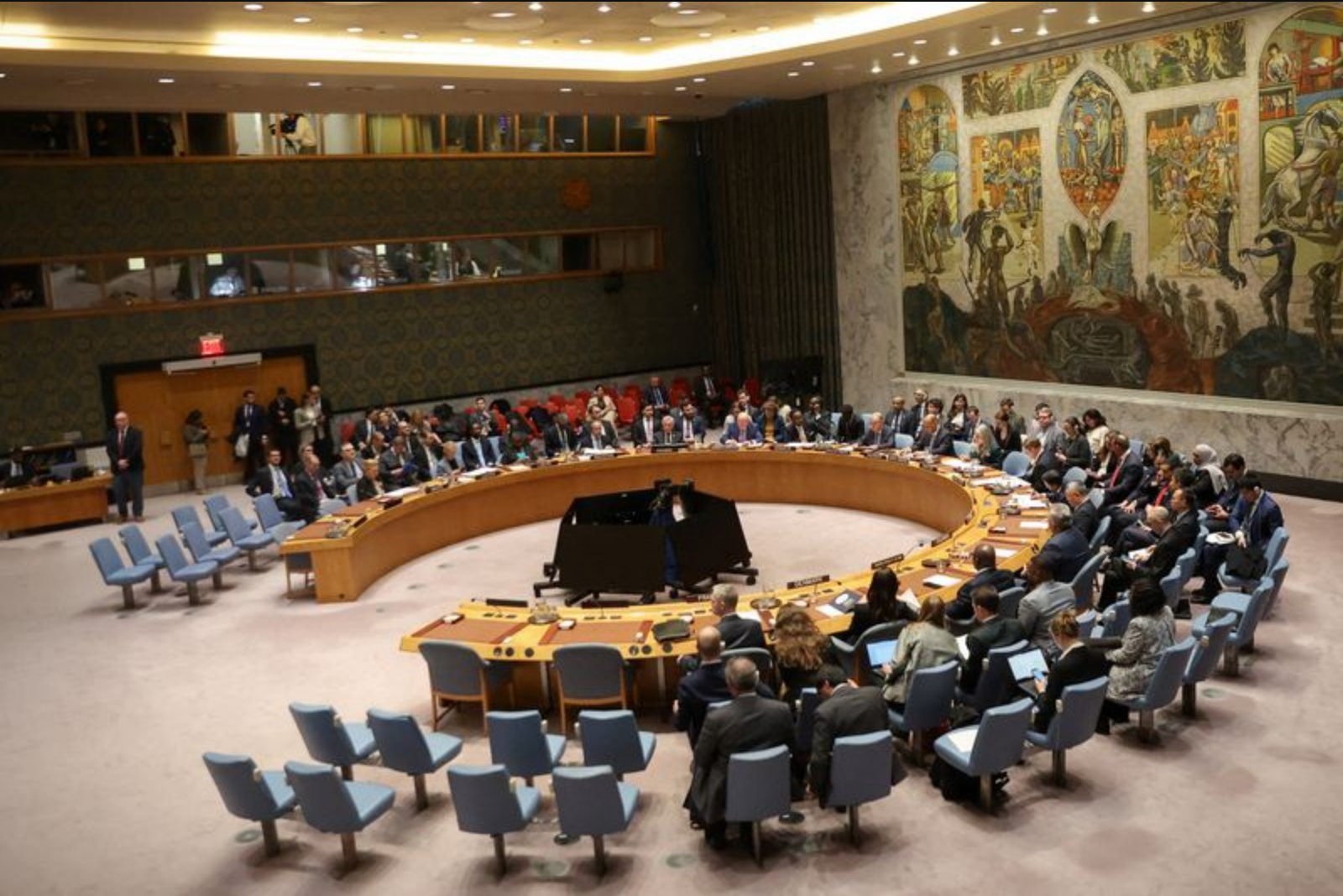
The United Nations will elect a new secretary-general for a five-year mandate that begins on January 1, 2027. The formal selection process began with a joint solicitation for nominations issued by Sierra Leone, which at the time was president of the 15-member U.N. Security Council, together with Annalena Baerbock, the president of the 193-member General Assembly.
The joint letter that opened the race was sent on November 25. Under United Nations practice, any candidate must be put forward by a U.N. member state. Although there is a tradition of rotating the post among geographic regions, the informal sequence of regional consideration has not rigidly constrained nominations in recent cycles.
When António Guterres of Portugal was chosen in 2016, that selection followed a convention that had indicated Eastern Europe’s turn; the next region in sequence is Latin America. Diplomats, however, have indicated that nominees from other regions may also enter the contest.
Nomination timetable and public engagement
General Assembly President Baerbock set an early deadline for formal nominations so candidates could take part in a series of public interactions. Countries were asked to nominate candidates by April 1 in order for those individuals to participate in so-called interactive dialogues during the week of April 20. Those dialogues will be broadcast online and give each formally nominated candidate an opportunity to present a written vision statement and answer questions from U.N. member states.
The interactive dialogues are intended to increase public-facing engagement between the candidates and the membership. The General Assembly resolution adopted in September 2025 also required the publication of vision statements on a dedicated United Nations web page and called for candidates to disclose sources of funding. The Assembly advised that candidates who currently hold U.N. positions should consider suspending their duties while campaigning to avoid conflicts of interest.
Who has been formally nominated so far
- Rafael Grossi - Argentina: Grossi, a career Argentine diplomat who has served as director-general of the International Atomic Energy Agency since 2019, was formally nominated by Argentina on November 26, 2025. In his vision statement for the job, he characterized the United Nations as still relevant but in need of "a purposeful, performance-driven renewal," and he urged that the UN80 reform initiative be followed by "a wider process of rightsizing, which is sustainable and reconciles mission with available resources."
- Michelle Bachelet - Chile: Bachelet, Chile’s first female president who served two terms and later held senior U.N. posts, was jointly nominated by Chile, Brazil and Mexico on February 2. She served as U.N. high commissioner for human rights from 2018-22 and as executive director of U.N. Women from 2010-13. In a written statement, she said her experience had prepared her "to confront a moment in which the international system faces challenges unprecedented in scale, urgency, and complexity," and pledged to focus on "rebuilding trust in the United Nations." On March 24, Chile withdrew its formal backing following a change in national leadership and a political shift to the right; Bachelet said she would continue her campaign with the support of Brazil and Mexico.
- Rebeca Grynspan - Costa Rica: Costa Rica nominated Grynspan, its former vice president, and a U.N. spokesperson confirmed that nomination in early March. Grynspan, an economist and politician, is the Secretary-General of the U.N. Conference on Trade and Development. In her vision statement she warned that trust in the U.N. was eroding and argued that restoring belief in the organization’s capacity to deliver peace and development would require courage and change.
- Macky Sall - Senegal: Sall, the former president of Senegal, was nominated by Burundi. In his vision statement he warned of a deep crisis and mounting mistrust toward the U.N., and he urged that the organization be reformed, streamlined and modernized to address 21st-century challenges.
- Virginia Gamba - Argentina (nomination withdrawn): Argentina had put forward Virginia Gamba, who previously served as the U.N. secretary-general’s special representative for children and armed conflict. On March 26, a U.N. spokesperson said the Maldives had withdrawn its nomination for Gamba.
The Security Council’s role and voting mechanics
The Security Council plays the pivotal formal role in advancing a candidate to the General Assembly. It will conduct secret ballots - known within the council as straw polls - and repeat them until a consensus emerges. In those straw polls each council member indicates one of three options for each candidate: encourage, discourage or no opinion.
There is a distinctive procedural feature for the five permanent members of the council - the United States, Russia, China, Britain and France. The ballots cast by those veto-wielding members are traditionally on a different color paper during the straw polls so their positions are separately visible to their colleagues. Ultimately, a candidate must be acceptable to those five permanent members because any one of them can block the council’s recommendation with a veto.
When António Guterres was selected in 2016, the Security Council conducted six straw polls before reaching agreement. After the council settles on a candidate, it adopts a resolution - typically behind closed doors - recommending that person to the General Assembly. The council’s resolution requires at least nine affirmative votes and no veto by a permanent member to pass.
The General Assembly then votes to appoint the secretary-general. In practice, assembly approval has long been regarded as formal confirmation of the Security Council’s recommendation.
Transparency reforms and campaign disclosures
The United Nations has sought to make this traditionally opaque selection process more transparent. A General Assembly resolution passed in September 2025 set out several procedural requirements: publication of candidates’ vision statements on a dedicated U.N. web page, opportunities for candidates to present those statements publicly, disclosure of campaign funding sources, and guidance that candidates holding U.N. posts should consider temporary suspension of their functions to avoid conflicts of interest and associated advantages.
Those measures are intended to make the process more open to member states and the public, and to reduce perceptions that selections are conducted solely by a small group of actors behind closed doors.
What the secretary-general’s job entails
The U.N. Charter designates the secretary-general as the "chief administrative officer" of the organization. The United Nations describes the role as combining diplomacy and advocacy, civil service and chief executive responsibilities. The secretary-general manages thousands of civilian staff and oversees 11 peacekeeping operations.
Budgetary responsibilities are substantial: the U.N.’s core annual budget stands at $3.45 billion while the peacekeeping budget is $5.4 billion. Despite those administrative and managerial duties, the secretary-general does not hold the authority to deploy military force or impose sanctions; those powers rest with the Security Council. Diplomats have often observed that the five veto-holding members prefer a candidate suited to the role of secretary rather than a more independent general.
Gender milestone that has yet to be reached
No woman has ever been appointed U.N. secretary-general in the organization’s roughly 80-year history. The General Assembly resolution of September 2025 noted that reality "with regret" and encouraged member states to "strongly consider nominating women." The push to select the first female secretary-general has become a visible theme of this cycle, reflected in both the language of the assembly’s resolution and the presence of female contenders among those formally nominated.
As the process unfolds, member states will weigh each candidate’s vision statements and public responses during the April dialogues, while the Security Council conducts its private straw polls. Even with expanded transparency requirements, the final outcome will turn on the political calculations of the Security Council’s permanent members and the broader dynamics among the U.N. membership.