
CAIRO/DUBAI, March 28 - Yemen’s Iran-aligned Houthi forces launched missiles toward Israel on Saturday in what officials described as their first attack on the country since the onset of the Iran war. The strike increases the risk that the conflict, now in its fifth week, could spread further across the region.
Speaking before the Houthi strike, Secretary of State Marco Rubio said the United States expected to conclude military operations within weeks. The Houthis, for their part, stated they would persist in their actions until the "aggression" on all fronts ceased.
Meanwhile, Iranian President Masoud Pezeshkian held talks with Pakistan’s prime minister Shehbaz Sharif. Sharif’s government is hosting a meeting on Sunday with the Turkish and Saudi foreign ministers aimed at easing regional tensions. Despite these diplomatic efforts, there was no immediate sign of a breakthrough in a war that has already spread across the Middle East, caused thousands of deaths and inflicted what officials describe as the largest-ever disruption to global energy supplies.
Escalating strikes and reported casualties
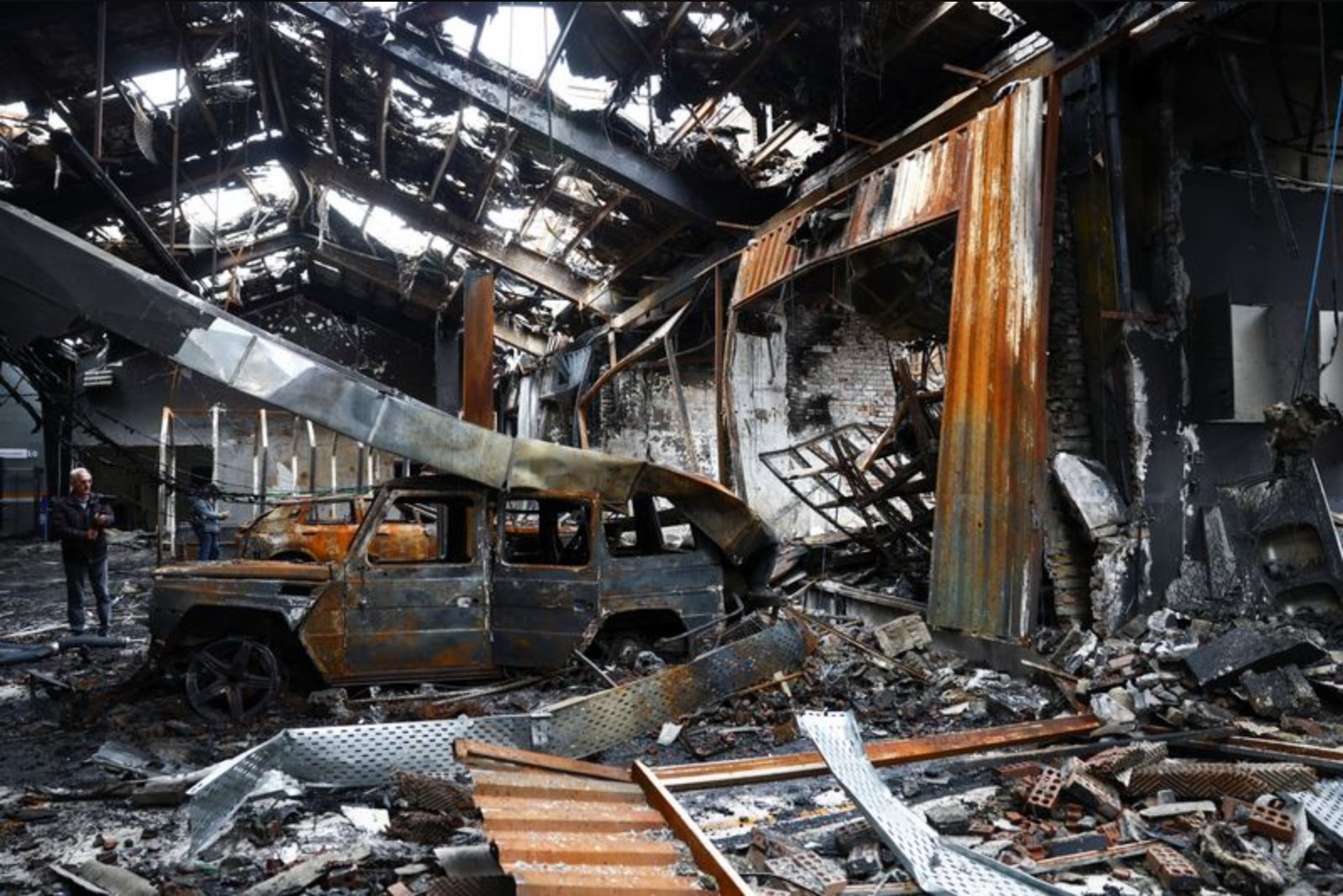
Israel said it had struck more than 100 targets in Iran since Friday, naming ballistic missile production and storage facilities and government infrastructure sites in Tehran among the locations hit. Iranian state media reported casualties from the strikes in the provinces of Lorestan and Zanjan, with nine people killed in the western city of Borujerd and five killed in Zanjan in the northwest, stating both strikes hit residential areas.
At the same time, Israel reported it had struck more than 170 targets in Lebanon as it renewed its campaign against Iran-backed Hezbollah. Lebanese reports described civilian harm: three journalists were killed in a strike on a media vehicle, according to Lebanon’s Al Manar TV, and a Lebanese soldier also died.
Iran continued attacks on Israel and several Gulf states after striking an air base in Saudi Arabia on Friday, an attack that wounded 12 U.S. military personnel - two of them seriously - and was described by officials as one of the most serious breaches of U.S. air defences so far.
Regional incidents included drones that damaged the radar system at Kuwait’s International Airport and reports of fires near the Khalifa container port in the United Arab Emirates’ capital, Abu Dhabi, after a missile was intercepted. In Israel, seven people were hospitalised after an Iranian missile struck the village of Eshtaol, near Jerusalem.
Houthis' reach and implications for maritime routes
Israel, which has previously faced missile attacks from the Houthis, confirmed that a missile had been fired at it from Yemen. There were no immediate reports of casualties or damage from that specific attack.
Analysts and officials say the strike highlights a potential new threat to global shipping, already hit by the effective closure of the Strait of Hormuz - the conduit for about a fifth of global oil and liquefied natural gas supplies. The Houthis have demonstrated an ability to hit targets at long range and to disrupt shipping lanes around the Arabian Peninsula and the Red Sea, actions they carried out in support of Hamas during the Gaza war.
Should the Houthis open a new front in the conflict, a likely maritime focus would be the Bab al-Mandab Strait off Yemen’s coast, a chokepoint for sea traffic bound for the Suez Canal. Such disruptions would further strain global trade routes and energy transport corridors.
U.S. posture, domestic politics, and troop movements
With U.S. midterm elections approaching in November, the conflict, launched with U.S. and Israeli strikes on Iran on February 28, has become a political liability for President Donald Trump and his Republican Party. Trump has signalled an eagerness to bring the fighting to an end soon, while also warning of possible escalation.
On Saturday, demonstrators held "No Kings" rallies in cities across the United States in what organizers described as the third set of protests against the war. Rubio said on Friday that military operations were expected to conclude in "weeks, not months" and echoed calls for European and Asian countries to help secure free passage through the Strait of Hormuz.
U.S. allies have shown reluctance to become directly involved in a conflict that could escalate further, particularly if Trump opted to deploy ground troops to try to reopen the strait. Rubio said the United States could reach its objectives without ground troops but acknowledged the deployment of some forces to the region "to give the president maximum optionality and maximum opportunity to adjust the contingencies, should they emerge." Washington has already dispatched two contingents of thousands of Marines to the region, the first of which arrived on Friday aboard a large amphibious assault ship, the U.S. military said. The Pentagon is also expected to deploy thousands of elite airborne soldiers.
Market and energy ramifications
Financial markets have reacted to signs the war may persist. The Brent crude oil benchmark is reported to be up more than 50% since the war began. In the United States, where rising fuel costs have political implications, diesel prices in California reached a record average high, according to the American Automobile Association.
President Trump has threatened strikes on Iranian power stations and other energy infrastructure if Iran does not open the Strait of Hormuz. He has, however, extended a deadline he had imposed for this week, giving Iran an additional 10 days to respond. Israeli strikes have targeted Iran’s nuclear infrastructure, and the head of Russia’s state nuclear corporation Rosatom - which has evacuated staff from the Bushehr nuclear power plant on the Gulf coast - warned that the attacks risked nuclear safety.
President Pezeshkian said Iran would "retaliate strongly if our infrastructure or economic centers are targeted." He also addressed regional governments directly: "To the countries of the region: If you want development and security, don’t let our enemies run the war from your lands," he said.
Diplomacy and back-channel efforts
Pakistan, Egypt and Turkey have served as intermediaries conveying messages between the opposing parties, though Tehran has said it has not been negotiating directly with Washington. Two people familiar with the back-channel efforts expressed doubt that direct talks would take place soon.
For now, battlefield activity, reciprocal strikes and targeted attacks on infrastructure continue to define a conflict whose trajectory remains uncertain. The Houthi missile fired toward Israel marks a new geographic expansion of active hostilities and underscores how quickly the fighting has moved beyond national borders, increasing the risks to civilian populations, critical infrastructure and global commerce.
Reporting compiled from multiple regional sources and official statements.