
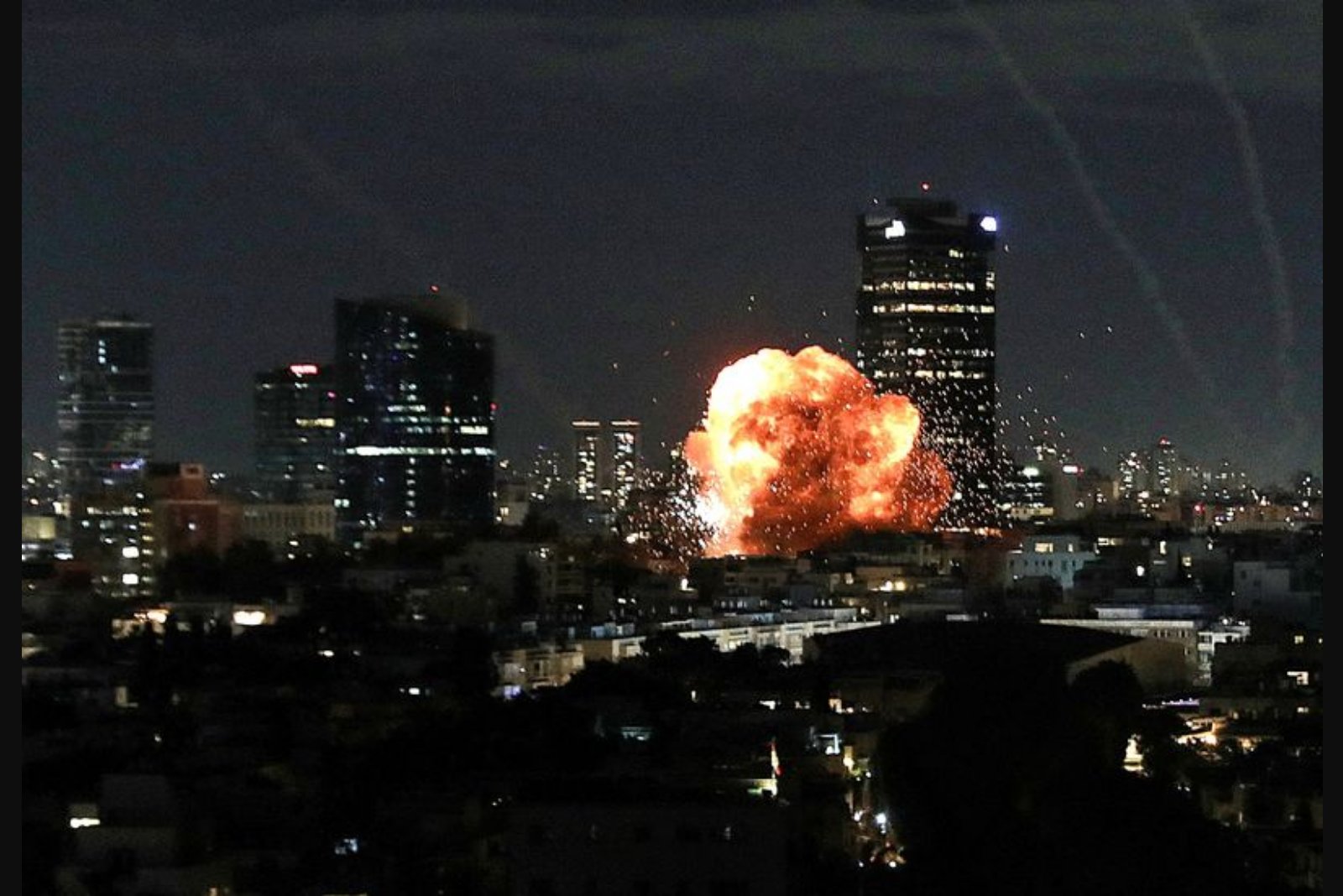
CAIRO/DUBAI, March 29 - The prospect of the conflict with Iran widening into a broader regional war intensified on Saturday as Yemen's Iran-aligned Houthi movement launched its first reported attacks on Israel since the fighting began, while additional U.S. forces reached the Middle East.
Speaking before the Houthi strike, Secretary of State Marco Rubio said the United States expected to conclude its military operations within weeks. At the same time, Washington began delivering fresh forces to the region, with the U.S. military reporting that the first of two large Marine contingents arrived on Friday aboard an amphibious assault ship. The Pentagon is also expected to deploy thousands of soldiers from the 82nd Airborne Division.
The Houthis announced they would sustain operations "until the 'aggression' on all fronts ended," and their military spokesman, Yahya Saree, later said the group had launched a second strike on Israel within 24 hours and pledged further attacks.
Iran's President Masoud Pezeshkian held a telephone conversation with Pakistan's Prime Minister Shehbaz Sharif, whose government is hosting a meeting on Sunday with the Turkish and Saudi foreign ministers aimed at easing regional tensions. However, no immediate diplomatic breakthrough was apparent as the war - which began with U.S. and Israeli strikes on Iran on February 28 - continued to spread across the Middle East, leaving thousands dead and inflicting what has been described as the largest-ever disruption to global energy supplies.
U.S. military movements
Washington has deployed two contingents totaling thousands of Marines to the Middle East. The first contingent disembarked on an amphibious assault ship on Friday, according to U.S. military statements. Rubio said the U.S. could achieve its objectives without committing ground forces, but acknowledged the presence of some troops in the region to give then-President Trump "maximum" flexibility to adapt strategy as needed. Separately, the Pentagon is expected to dispatch soldiers from the 82nd Airborne Division.
Strikes, casualties and scenes of violence
On Saturday, Israel said it had executed a wave of strikes on Tehran, targeting what its military described as infrastructure sites belonging to Iran's government. Israel also struck targets in Lebanon, resuming its offensive against Iran-backed Hezbollah. Lebanese media reported three journalists were killed in a strike on a media vehicle, along with a Lebanese soldier. A subsequent strike on the rescue workers who had gone to assist those injured also caused fatalities.
Israel's military said it had targeted one of the journalists, labeling him a "terrorist" and accusing him of participation in a Hezbollah intelligence unit and of reporting on locations of Israeli soldiers.
Iran continued to strike Israel and several Gulf states after an attack on a Saudi air base on Friday that wounded 12 U.S. military personnel, two of them seriously - an incident described as one of the most significant breaches of U.S. air defenses so far in the conflict.
Security sources told Reuters that air defenses shot down a drone near the residence of the Iraqi Kurdish ruling party leader, Masoud Barzani, in Erbil. Those sources also said a drone attack targeted the home of the president of Iraq's Kurdistan Region.
Houthi reach and maritime threats
Israel, which has previously faced missile attacks from the Houthis, confirmed a missile had been launched at its territory from Yemen; there were no immediate reports of casualties or damage. Analysts and officials have flagged the attack as adding a new dimension to risks for global shipping, which is already suffering from the near closure of the Strait of Hormuz - a chokepoint that handles about one-fifth of global oil and liquefied natural gas shipments.
Houthi forces have demonstrated an ability to strike targets well beyond Yemen and to disrupt shipping lanes around the Arabian Peninsula and the Red Sea, a capability they exercised in support of Hamas during the Gaza conflict.
Market and political repercussions
The ongoing war has become a political liability for President Donald Trump ahead of the U.S. midterm elections in November, with popular opposition to the conflict weighing on his Republican Party. Trump has shown an appetite to conclude hostilities quickly, while also warning of possible escalation. Demonstrations were reported in city streets across the United States on Saturday, with organizers describing the rallies as a call to oppose the war on Iran.
Financial markets have reacted strongly to the possibility of a prolonged war. The Brent crude oil benchmark has risen by more than 50% since the conflict began. Trump has warned that Iranian power stations and other energy infrastructure could be targeted if Iran does not re-open the Strait of Hormuz, although he extended a deadline he had previously set, allowing Iran another 10 days to respond.
Iranian threats to strike vessels in the strait have kept most tankers from using that route. A limited number of ships have transited without incident, including vessels flying the flags of Pakistan and India after receiving Iranian assurances of safe passage. Pakistan's Foreign Minister Ishaq Dar said Iran had agreed to permit an additional 20 Pakistani-flagged ships to pass through the strait, allowing two ships to transit daily.
Nuclear and infrastructure concerns
Israel has targeted sections of Iran's nuclear infrastructure, and the head of Russia's state nuclear corporation Rosatom, after evacuating staff from the Bushehr nuclear power plant on the Gulf coast, warned that the strikes posed risks to nuclear safety. President Pezeshkian said Iran would "retaliate strongly if our infrastructure or economic centers are targeted." Iranian attacks have been reported across multiple Gulf locations, including Kuwait, the United Arab Emirates and Oman.
Recent incidents and casualties
An Iranian airstrike struck the Israeli village of Eshtaol, near Jerusalem, sending seven people to hospital according to Israel's ambulance service. Within Iran, media reported that at least five people were killed in a U.S.-Israeli attack on a residential unit in the northwestern city of Zanjan, and that the Iran University of Science and Technology in Tehran was also struck.
The conflict remains fluid. Multiple lines of military, diplomatic and economic pressure continue to intersect as regional actors and outside powers adjust deployments and rhetoric. With U.S. forces entering the theater in larger numbers and Houthi forces extending their operational reach beyond Yemen, risks to civilians, energy infrastructure and international shipping remain prominent features of the crisis.