
Overview
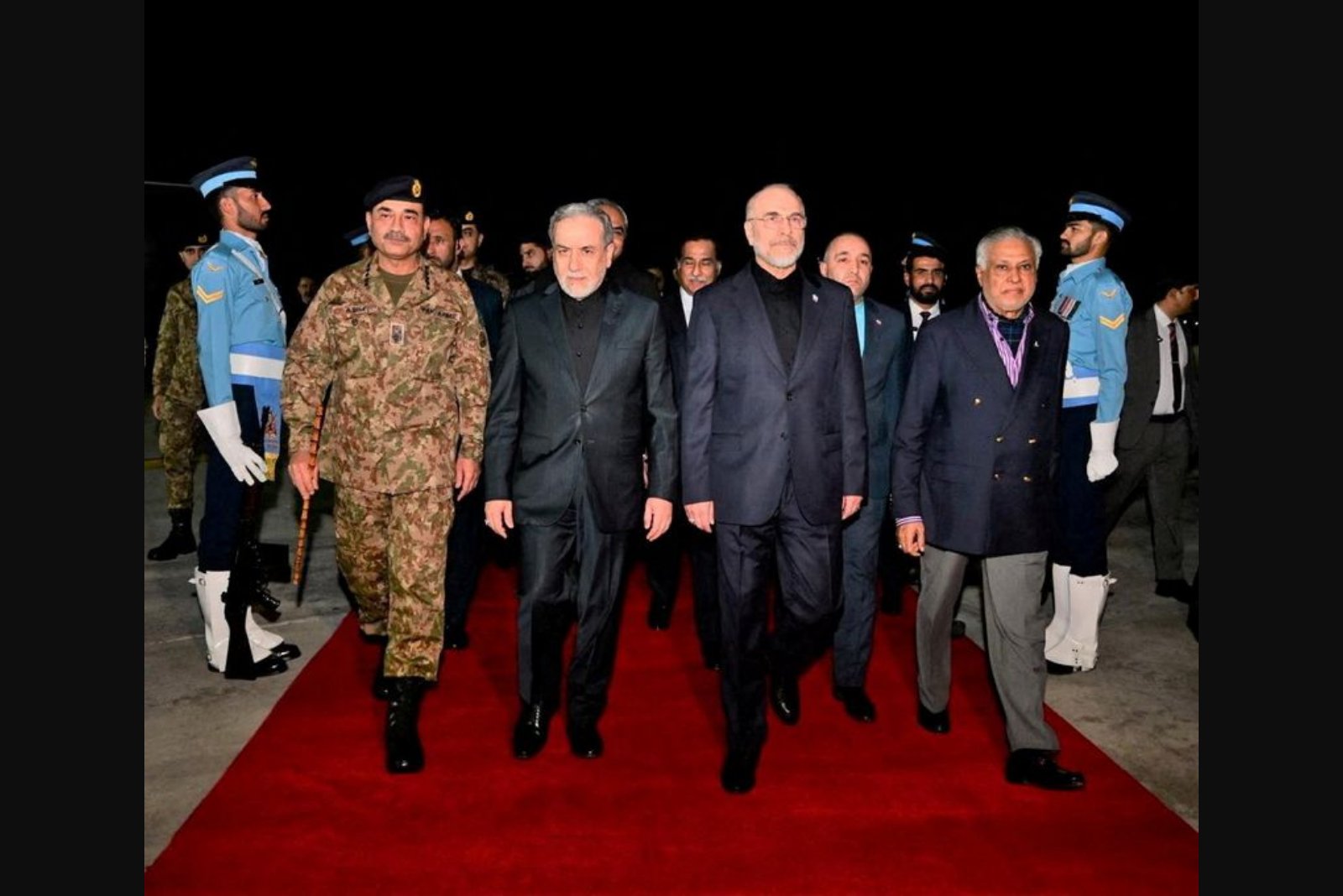
Senior delegations from the United States and Iran were in Islamabad for high-stakes negotiations intended to bring an end to the six-week-old war. The U.S. group, led by Vice President JD Vance and including President Donald Trump’s special envoy Steve Witkoff and Jared Kushner, touched down at a Pakistani air base on the morning of April 11 and were received by Field Marshal Asim Munir, Pakistan’s army chief, and Foreign Minister Ishaq Dar. Iran’s delegation, led by parliamentary Speaker Mohammad Baqer Qalibaf and Foreign Minister Abbas Araqchi, had arrived in the Pakistani capital the previous day.
Context of the talks
These meetings are the highest-level direct exchanges between senior U.S. and Iranian officials since the Islamic Revolution of 1979 and mark the first official, face-to-face dialogue between the two sides since 2015, the year they reached an agreement on Iran’s nuclear programme. The 2015 accord was later abandoned by President Trump in 2018 during his first term. The negotiations in Islamabad come amid intense security measures in the city and a complex set of demands and conditions that have already put the dialogue at risk of stalling.
Iranian preconditions and U.S. response
Iranian leaders signalled that formal talks could not begin without prior commitments from Washington on two key issues: unblocking Iranian assets and achieving a ceasefire in Lebanon. Parliamentary Speaker Mohammad Baqer Qalibaf said on X that past assurances from Washington had included a pledge to unblock Iranian funds and to agree to a ceasefire in Lebanon, where Israeli attacks on Iran-backed Hezbollah militants have caused nearly 2,000 fatalities since the fighting began in March. Qalibaf indicated that negotiations would not commence until those promises were fulfilled.
Iran’s state broadcaster reported that the Iranian delegation planned to meet Pakistani Prime Minister Shehbaz Sharif around noon (0700 GMT) to decide on the timing and format of any possible negotiations. Tehran asserts that the Lebanon campaign is part of what should be covered by an Iran-U.S. ceasefire, a position at odds with U.S. and Israeli statements that the Lebanon conflict is outside the scope of an Iran-U.S. ceasefire.
U.S. public statements and negotiating posture
The White House did not immediately provide a formal response to the specific demands put forward by Iran. President Trump posted on social media asserting that Iran had limited leverage, saying, "The Iranians don’t seem to realize they have no cards, other than a short term extortion of the World by using International Waterways. The only reason they are alive today is to negotiate!"
Vice President Vance, en route to Pakistan, expressed cautious optimism about the outcome while warning that the U.S. negotiating team would not tolerate being misled. He said he expected a positive result but added: "If they’re going to try to play us, then they’re going to find the negotiating team is not that receptive."
Advance teams and logistics
Pakistani officials reported that preliminary discussions had been conducted separately with advance teams from both Washington and Tehran. Iran’s semi-official Tasnim news agency said the Iranian advance group included approximately 70 people, composed of technical specialists across economic, security and political fields, plus media and support staff. A Pakistani government source said roughly 100 members of an advance U.S. team were present in Islamabad.
One Pakistani source close to the talks described the mood as optimistic and said the delegations had clear instructions to either reach a deal or walk away, indicating there was no rush and that negotiating teams had time to press for terms. "Too early to say" whether the talks would conclude on Saturday, the source said.
Security and local preparations
Islamabad was placed under an unprecedented security lockdown ahead of the meetings. Thousands of paramilitary personnel and army troops were deployed across the city. Pakistan’s junior interior minister, Talal Chaudhry, told Reuters that authorities had implemented a multilayered security approach relying on coordination, intelligence and continuous monitoring to ensure there was zero disruption during the event.
Ceasefire, waterways and energy disruption
President Trump had declared a two-week ceasefire earlier in the week that paused U.S. and Israeli airstrikes on Iran. Despite the pause in air operations, Iran’s blockade of the Strait of Hormuz remained in place at the time of the Islamabad meetings. That blockade has produced significant disruption to global energy supplies, described as the largest such interruption on record, and has been accompanied by continued fighting between Israel and Hezbollah in Lebanon.
Iran asserted control over its vessels passing through the strait while vessels from other countries remained confined. The resulting disruption to energy flows has contributed to inflationary pressures and a slowdown in the global economy; analysts and officials cited in the reporting warned that these effects could persist for months even if negotiations succeed in reopening the strait.
Parallel diplomacy on Lebanon
Separately, Israeli and Lebanese officials were scheduled to meet in Washington for talks, amid differing accounts of the agenda. Lebanon’s presidency said both sides had held a phone call and agreed to discuss a ceasefire and set a start date for bilateral talks under U.S. mediation. The Israeli embassy in Washington, however, characterised the engagement as the beginning of "formal peace negotiations" and said Israel had rejected discussing a ceasefire with Hezbollah.
Tehran’s wider demands
Iran’s agenda in Islamabad included broader demands beyond an immediate ceasefire. Iranian negotiators sought major concessions such as the lifting of sanctions that had long damaged Iran’s economy, and formal recognition of Iranian authority over the Strait of Hormuz, including a plan to collect transit fees and control access. Acceptance of such terms would represent a major shift in regional power dynamics, according to the positions outlined by Iranian officials.
Military posture and leadership statements
Iran’s hard line ahead of the negotiations followed a forceful message from its new Supreme Leader, Ayatollah Mojtaba Khamenei, who addressed the nation while reported to be recovering from severe facial and leg injuries sustained in the attack that killed his father six weeks earlier. The new leader insisted Iran would seek compensation for wartime damage and warned that those who attacked Iran would not go unpunished, a stance signalling Tehran’s determination to press for significant concessions.
Assessment of war aims and military capabilities
Although President Trump declared victory and maintained that U.S. actions had degraded Iran’s military capabilities, the war had not fulfilled many of the strategic objectives set at its outset. Iran continued to possess missiles and drones capable of striking neighbouring countries and maintained a stockpile of over 400 kg (900 pounds) of uranium enriched near weapons-grade levels. Iran’s clerical rulers, who had faced a popular uprising in recent months, remained in power with no sign of organised opposition.
Key takeaways
- Top-level U.S. and Iranian delegations met in Islamabad for negotiations to end the six-week conflict, marking the highest-level bilateral engagement since 1979.
- Tehran set preconditions on Lebanon and sanctions that threatened to delay or block the start of formal talks.
- Security for the talks in Islamabad was tightened with large deployments by Pakistani forces while parallel diplomatic efforts took place regarding Lebanon.