
BEIRUT/JERUSALEM, March 9 - Hezbollah said on Monday that its fighters clashed with Israeli forces in eastern Lebanon after an Israeli airborne raid during the night, describing the incident as the second operation of its kind in that area in recent days. The group said its fighters "confronted the helicopters and the infiltrating forces with appropriate weapons." The Israeli military had no immediate comment when approached about the statement.
The exchange is part of a wider escalation that has drawn Lebanon deeper into the confrontation. According to the public statement by Hezbollah, the incident took place in eastern Lebanon just after midnight when fighters observed a formation of 15 helicopters flying over the area and dropping troops who were seen approaching Lebanese territory from a location on the Syrian side of the border.
The location cited by Hezbollah is in Lebanon's Bekaa Valley region, which the group identifies as one of its political and security strongholds. The Israeli military conducted an airborne operation in the same general area near the village of Nabi Chit overnight Friday-Saturday. Lebanon's health ministry reported that 41 people were killed in Israeli attacks in the Nabi Chit area on Saturday.
The Israeli military characterized that prior raid as an operation to search for the remains of Ron Arad, an Israeli air force navigator who has been missing in Lebanon since 1986, but said no findings related to him were recovered.
Earlier in the conflict timeline, Lebanon became directly involved after Hezbollah, which the group says was founded by Iran's Revolutionary Guards in 1982, opened fire to avenge the killing of Iran's former supreme leader. That follow-up action has coincided with an intensifying Israeli offensive against the group, including sustained airstrikes in Hezbollah-controlled areas.
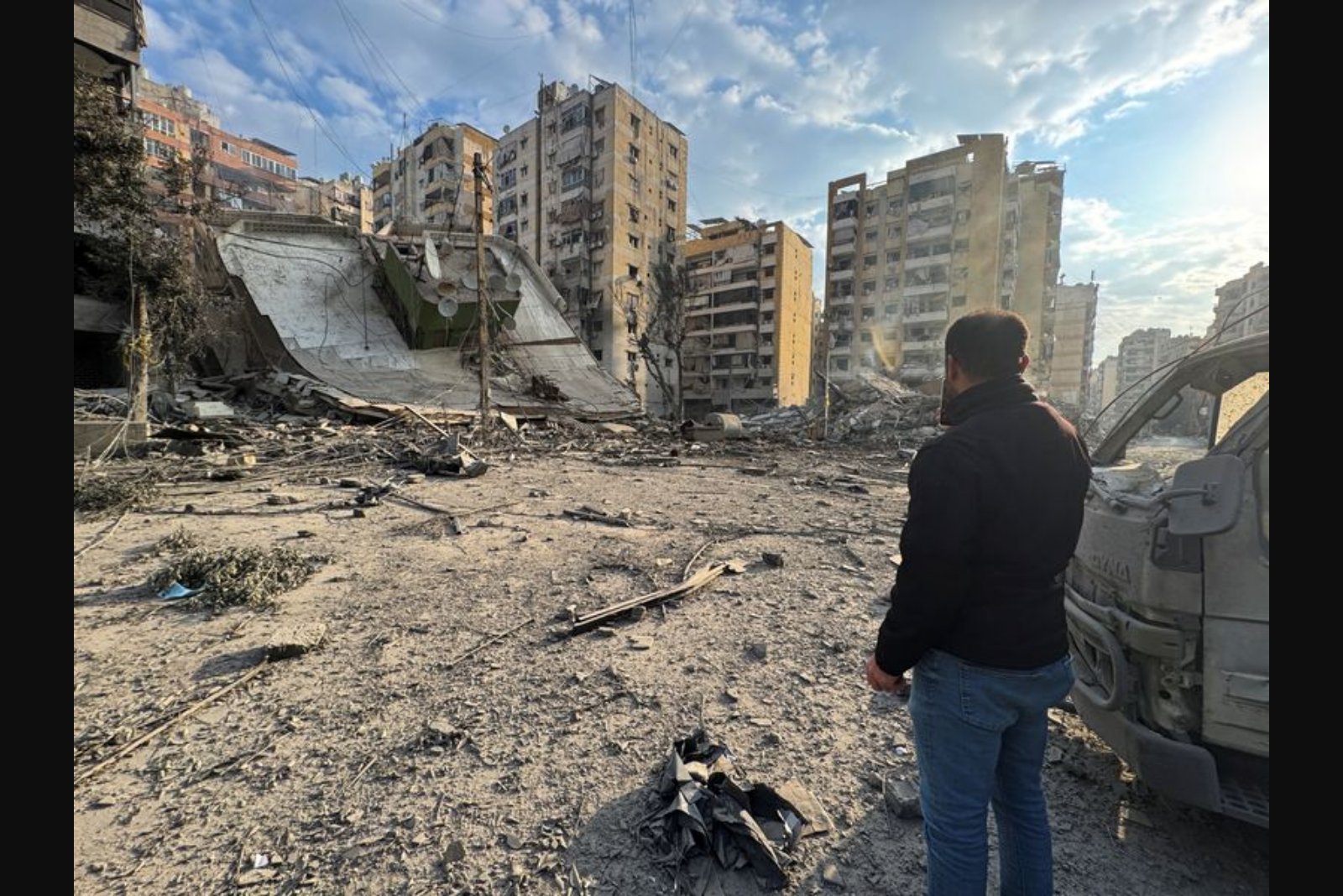
On Monday the Israeli military continued airstrikes in the southern suburbs of Beirut, an area often referred to by residents as Dahiyeh, producing visible plumes of smoke across parts of the city. Military communications urged residents to evacuate and announced planned action against a Hezbollah-linked financial institution, Al-Qard Al-Hassan.
Lebanon's health ministry reported on Sunday that nearly 400 people have been killed in Lebanon by Israeli strikes since March 2, including at least 83 children and 42 women. The ministry's casualty figure does not separate combatants from civilians, leaving that distinction unspecified in the reported toll.
Israel's military also announced on Sunday that two Israeli soldiers had been killed in southern Lebanon, noting these as the first fatalities in the Israeli army since the war began. Separately, the Israeli military said a drone strike on Sunday hit a hotel in Beirut's seafront Rouche district, and that the strike killed five senior commanders of what it described as the Lebanon Corps of Iran's Revolutionary Guards Quds Force.
The conflict has prompted large-scale displacement within Lebanon. Hundreds of thousands of people have fled their homes since the start of the hostilities, with many leaving the predominantly Shi'ite areas of southern Lebanon and the southern suburbs of Beirut. Movement of civilians away from those zones has been a prominent feature of the humanitarian situation as strikes have occurred beyond those traditional strongholds.
On the ground, the Israeli military has increased its troop presence in southern Lebanon, establishing what it described as forward defensive positions intended to guard against Hezbollah attacks into Israel. The military said it had maintained soldiers at five positions in southern Lebanon since a conflict with Hezbollah in 2024, and has sent additional forces since the current war began.
Context and immediate developments
- Hezbollah reports a clash after an overnight airborne raid in eastern Lebanon involving 15 helicopters and troops dropped from them.
- Israel maintains airstrikes in Beirut's southern suburbs and announced action against a Hezbollah financial institution.
- Lebanon's health ministry reports nearly 400 killed by Israeli strikes since March 2, without distinguishing combatant status.