
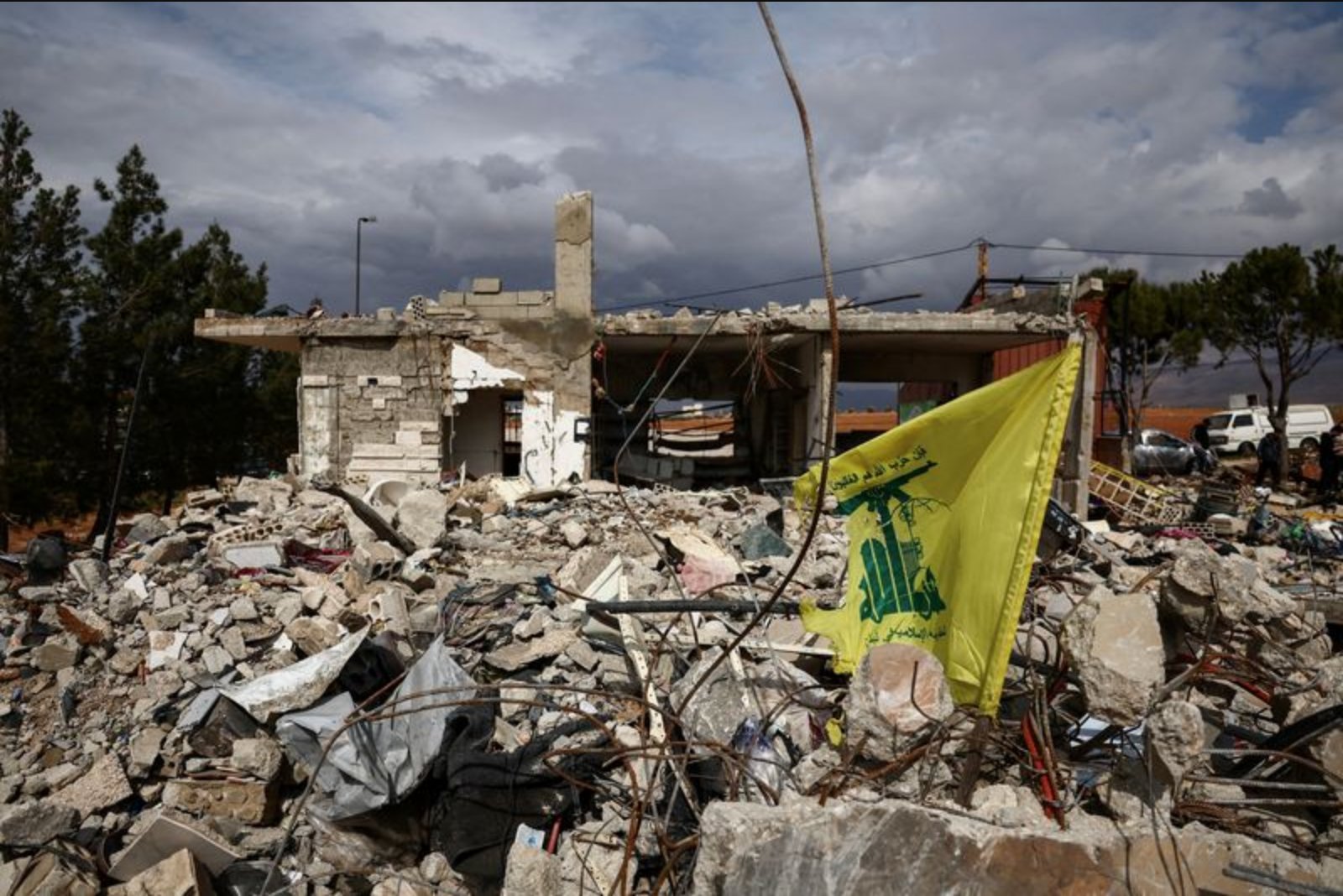
War between Israel and Hezbollah that reignited on March 2 is deepening fractures across Lebanon's political system and society, driving mass displacement and intensifying animosities between the Iran-backed militia and its domestic rivals.
Lebanese commentators and figures from across the political spectrum describe the latest round of fighting as among the most destabilising of the country's crises since the 1975-90 civil war. The current conflict has exacerbated long-standing tensions over Hezbollah's weapons and role, and has placed unprecedented strain on communal relations as residents from Hezbollah's Shi'ite base are forced to relocate to Christian, Druze and other areas.
Israel has warned of Gaza-like devastation and has floated the prospect of occupying parts of southern Lebanon. Those threats, coupled with intense Israeli bombardment and evacuation orders, have propelled many Shi'ite families to seek refuge elsewhere in the country, triggering suspicion and hostility in hosting communities who often blame Hezbollah for initiating the war in allegiance with Tehran just 15 months after the last round of heavy fighting.
Local administrations in areas receiving the displaced have tightened screening for those seeking rented accommodation, citing security concerns and the potential presence of individuals who might be targeted by Israel. These measures have included forwarding identity documents to security agencies for checks and adopting stricter vetting processes in rental markets.
Tensions between Hezbollah and the national administration have worsened in recent weeks. The cabinet headed by Prime Minister Nawaf Salam and President Joseph Aoun has taken steps including banning Hezbollah's military wing, calling for negotiations with Israel, and demanding the departure of Iran's ambassador. Hezbollah official Mahmoud Qmati drew a sharp rebuke when he likened the government to the Vichy France leadership sentenced to death for collaborating with Nazi Germany. "We are capable of turning the country upside down," he told a Lebanese outlet, though he later said his remarks had been taken out of context.
Druze lawmaker Wael Abu Faour warned that internal tensions were increasing because of political divisions over the war and displacement and "the defiant rhetoric from more than one side". "This exacerbates fears for internal stability," he said.
Scale of displacement and casualties
More than 1,000 people have been killed in Lebanon and over a million citizens - more than a fifth of the population - have been displaced since Hezbollah opened fire on Israel on March 2 and Israel responded with strikes. A foreign official cited the scale of displacement as straining communal ties and warned it could become "a ticking bomb" if the displaced are unable to return home.
Israeli military orders have covered much of the south as well as Beirut's Hezbollah-influenced southern suburbs and the group's strongholds in eastern Lebanon. Israel's defence minister has publicly stated an intention to create a "security zone" extending to the Litani River, which reaches the sea around 30 km north of the Israeli border, and has said that hundreds of thousands of Shi'ites will not return south of the Litani until northern Israel is secure.
Nadim Gemayel, a Christian lawmaker opposed to Hezbollah, voiced concern that Israel's actions could deliberately channel Shi'ite populations into other Lebanese regions, thereby provoking clashes with other communities. Gemayel noted that Hezbollah possesses an arsenal judged more powerful than the Lebanese army's and recalled past episodes when Hezbollah's forces routed state efforts at containment.
"If the Israelis stay long, very long in the south, this will be catastrophic for everyone ... Lebanon cannot assimilate such a displacement of people," Gemayel said, urging the government to "disarm Hezbollah and terminate this war".
In response to accusations that Israeli tactics were intended to foment sectarian tensions, an Israeli official said the only fight in Lebanon was the one started by Hezbollah and urged Lebanon to remove the group. The Israeli military stated it was operating solely against Hezbollah and that any allegations it was targeting a specific population were "false and misleading." However, an Israeli military official said evacuation notices had been issued only to Shi'ite villages in the south, while Christian villages remained populated and were not being targeted.
Community frictions and local responses
Hezbollah lawmaker Hassan Fadlallah condemned what he described as some Lebanese treating displacement "with sectarian logic." He offered an assurance that those displaced would return "to their land and their homes as soon as the aggression ceases."",
Incidents of local confrontation have already occurred. Residents of a mostly Christian district north of Beirut clashed with displaced people after fragments from an Iranian ballistic missile that had been intercepted over Lebanon fell on the area. Plans to set up a shelter for displaced people in Beirut's Karantina district - situated in a predominantly Christian area near the port - sparked objections from Christian politicians and prompted Prime Minister Salam to decree the site would instead be used to store aid.
In Dekwaneh, an eastern suburb of Beirut with a predominantly Christian population, roughly 2,000 displaced Shi'ites are sheltering in a vocational college. Zeinab al-Meqdad, 50, said her family had encountered no trouble in Dekwaneh since fleeing the southern suburbs on March 2. Local official Antoine Abu Aboud reported another 1,000 displaced people lodging in hotels and rented accommodation in Dekwaneh and urged patience, saying "There is a war, and the situation is bigger than us. Today, we Lebanese must be patient with one another." He added that the local council had tightened vetting for prospective renters and was sending identity documents to security services for checks because residents feared anyone who might "represent a danger to their building or lives."
State cohesion and the future of Hezbollah's armament
Political divisions reflect and amplify societal splits. The state itself has been shaken by the conflict's consequences. Hezbollah exerted decisive influence over state institutions until it suffered heavy losses in the 2024 fighting with Israel. In the aftermath of that conflict, the government sought to disarm Hezbollah, yet the barrage of rockets launched by the group since March 2 and its rapid redeployment of fighters to southern positions have undermined confidence in the state's capacity to assert control.
Hezbollah figures expressed confidence that government measures, such as the ban on its military wing, will not endure. "All the measures taken by the government will be reversed when Israel fails to achieve its objectives," Fadlallah said. "When we finish confronting this aggression, we, as Lebanese, will address our internal problems."
Israeli officials have signalled that their offensive could extend beyond the duration of the Iran-Israel confrontation, and observers note that much will depend on developments in the broader regional conflict. Israeli cabinet sources described a US 15-point proposal for ending the war that reportedly included Iran cutting off funding to allies such as Hezbollah, while Iran has indicated Lebanon should be included in any ceasefire.
Christian lawmaker Alain Aoun characterised Lebanon as being in transition, with the ultimate arrangement to be shaped by the war's outcome. "The coexistence between the state and Hezbollah arms which we witnessed for decades is nearing its end in one way or another, with all the potential repercussions for society and the political system," he said.
Outlook and immediate pressures
The immediate pressures on Lebanon are multi-layered: large-scale displacement has strained community relations and public services; local authorities have implemented stricter rental vetting and altered use of public facilities in response to security concerns; and the political standoff between state institutions and Hezbollah risks further eroding the fragile balance that has held in place for decades.
As this conflict continues to evolve, Lebanon faces a range of difficult questions about return and resettlement for the displaced, the state's capacity to reassert control over armed groups, and the potential for localized clashes where displaced populations take refuge. Several Lebanese voices across the political divide are warning that prolonged occupation of southern areas or sustained displacement will carry catastrophic social and political consequences if not addressed.