
Overview
Public and private debates among Iran’s hardline factions over whether Tehran should actively pursue a nuclear weapon have moved to the forefront of political discourse, according to senior Iranian sources. The conversation has become both louder and more insistent, carried by state outlets and amplified by figures linked to the Revolutionary Guards.
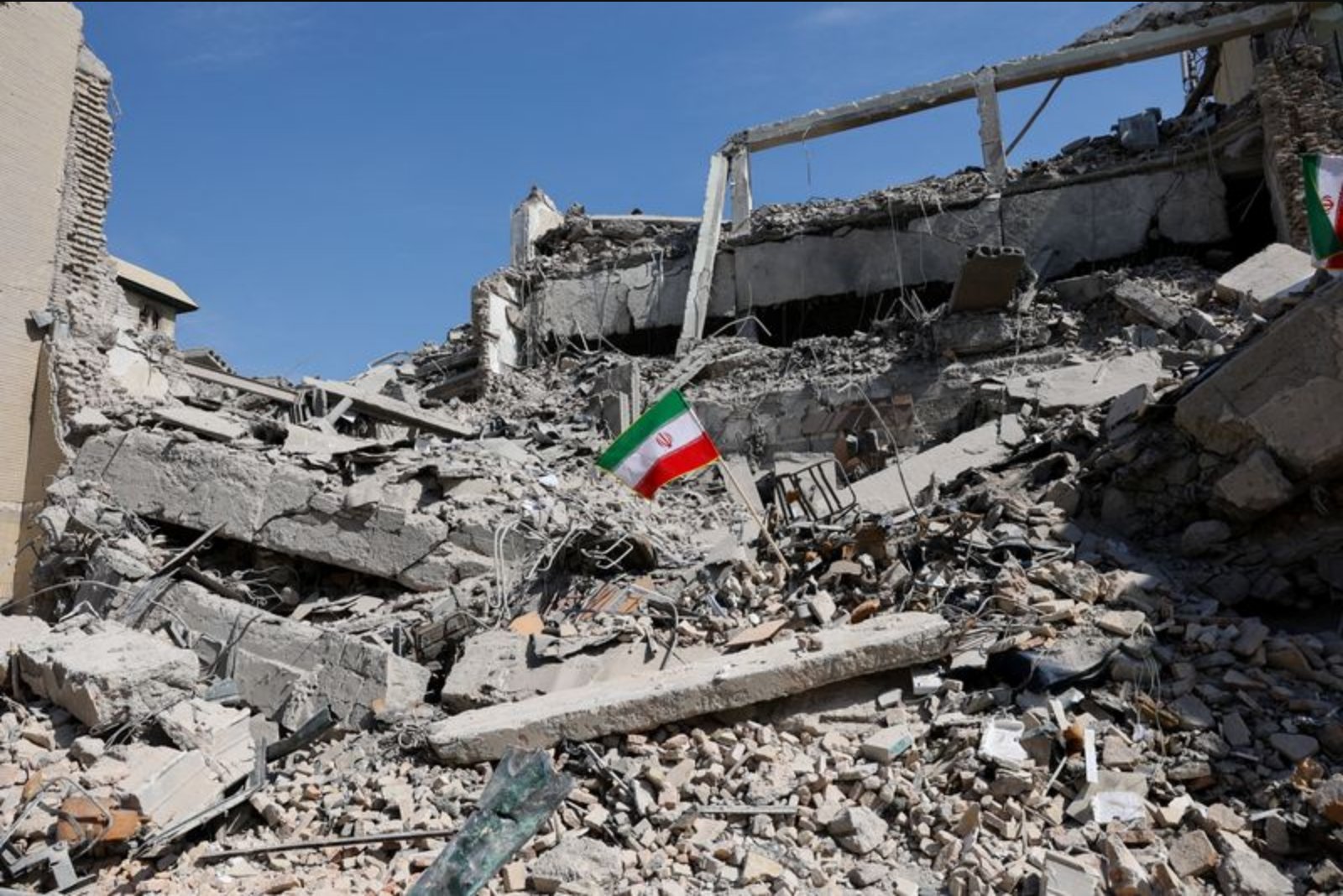
Sources inside the ruling establishment say the Guards have gained a dominant position after the killing of veteran Supreme Leader Ayatollah Ali Khamenei at the start of the war on February 28. That shift in power dynamics, combined with a recent series of U.S.-Israeli attacks on Iranian targets, has hardened calls among some in the security apparatus to abandon previous nuclear constraints.
Shifting balance within the ruling elite
Two senior Iranian sources described a growing ascendancy of hardline views on nuclear policy. Those views are now more visible on state-aligned media platforms and in statements from politicians and commentators close to the Guards.
Historically, Western governments have long suspected Tehran of seeking a nuclear weapon or at least the capability to assemble one quickly if desired. Iran has consistently denied those claims, invoking a religious prohibition reportedly issued by Khamenei that bars nuclear arms as forbidden in Islam, and pointing to its membership in the NPT.
Despite that longstanding public posture, one of the sources said there was no formal plan yet to change Iran’s nuclear doctrine and that no decision had been taken to pursue a weapon. Nonetheless, the source added, influential and increasingly vocal figures within the establishment are openly questioning the existing policy and pressing for a reassessment.
Public advocacy for quitting the NPT and seeking a weapon
State media and outlets aligned with the Guards have elevated previously private suggestions into more overt proposals. The idea of suspending or quitting the NPT - which hardliners had mentioned in the past as a negotiating lever - has appeared more frequently on state platforms alongside commentary that had earlier been taboo in public.
For example, Tasnim News Agency, affiliated with the Guards, published an article urging an immediate withdrawal from the NPT while maintaining a civilian nuclear program. State media also quoted hardline politician Mohammad Javad Larijani - brother of senior official Ali Larijani, who was killed in a strike this month - calling for suspension of Iran’s membership. He was quoted as saying: "The NPT should be suspended. We should form a committee to assess whether the NPT is of any use to us at all. If it proves useful, we will return to it. If not, they can keep it."
State television earlier this month aired a segment featuring conservative commentator Nasser Torabi, who said the Iranian public demanded: "We need to act in order to build a nuclear weapon. Either we build it or we acquire it."
Divergence within ruling circles and capability questions
The two senior sources noted that debates on nuclear policy are occurring not only in public forums but also behind closed doors within the leadership. There is reported divergence between elements close to the Guards that favor a more hawkish course and other members of the political hierarchy who caution against such a step.
Analysts, as cited by the sources, have previously described Iran’s strategic aim as achieving "threshold state" status - retaining the ability to produce a weapon quickly if required while avoiding the international isolation that would flow from actually becoming a nuclear-armed state. Guards commanders and other senior figures have on prior occasions said Iran might proceed directly to a bomb if the Islamic Republic’s survival were threatened - a threshold that sources say the current war could meet.
At the same time, it remains uncertain how swiftly Iran could move toward building a weapon, particularly after weeks of air strikes that hit its nuclear, ballistic and other scientific facilities, and following a shorter air campaign by Israel and the United States last year. The article observed that the more public debate over the NPT may be, at least in part, a negotiating tactic as had been the case in prior decades of talks with Western countries.
Religious prohibition and succession questions
Khamenei’s reported fatwa declaring nuclear weapons impermissible in Islam dates to the early 2000s and was reiterated in 2019, though it was never issued in written form. One of the senior sources told reporters that the death of Khamenei and of Ali Larijani - who the source said had been a counterweight to hardliners - makes it more difficult for moderating voices to prevail.
The same source said it was unclear whether the obligation to obey Khamenei’s unwritten fatwa continued after his death. The source noted that such an obligation would likely remain valid unless a new supreme leader explicitly revoked it. The successor named in the reporting, Mojtaba Khamenei, has not been seen in public since the death of his father, according to the reporting.
Conclusion
In sum, while no formal change to Iran’s nuclear policy has been announced, the internal discourse has shifted. Hardline arguments favoring suspension of the NPT and pursuit of a weapon have become more open and prominent within state media and among Guards-aligned figures, even as other officials and analysts question both the wisdom and the feasibility of such a move given recent strikes on Iran’s scientific infrastructure.