
Hamas has informed mediators that it will not enter discussions on disarmament until Israel guarantees a complete withdrawal from Gaza as described in the disarmament provisions of the U.S. "Board of Peace" plan, three sources told Reuters.
The question of Hamas surrendering its arms has become a central obstacle in talks intended to implement the U.S.-backed plan for Gaza and lock in the October ceasefire that halted two years of open warfare.
A Hamas delegation met with Egyptian, Qatari and Turkish mediators in Cairo on Wednesday and Thursday to convey its initial response to a disarmament proposal that was presented to the group last month, two Egyptian sources and a Palestinian official said. During those sessions, Hamas presented a set of demands and proposed amendments to the board's plan, the two Egyptian sources said.
Among the demands relayed by Hamas were calls for an end to what it described as Israeli violations, full implementation of all the plan's provisions and a clear Israeli withdrawal from Gaza, the Egyptian sources said. The movement also sought clarification on what it called Israel's ongoing expansion of areas under its control, the sources added.
Hamas has accused Israel of breaking the ceasefire with a series of attacks that, the group says, have killed hundreds in Gaza. Israel, for its part, characterizes its strikes as actions aimed at preventing imminent attacks by militants.
The mediators' sources said Hamas would not enter into disarmament talks until the issues it raised - including the alleged violations, full implementation of the plan's provisions and an Israeli withdrawal - were addressed. Two Hamas officials declined to comment on the content of the meetings, while Israel's government did not immediately respond to a request for comment. Representatives for the Board of Peace also did not immediately reply to requests for comment.
Another source with direct knowledge of the Board of Peace's internal thinking said Hamas' response indicated that any immediate breakthrough on disarmament was unlikely. That source added that the delegation was due to meet again with mediators next week.
The same source said the United States might proceed with reconstruction work even without Hamas laying down its arms, but only in areas that are under full Israeli military control. The source also said that funding pledges that are important for reconstruction - many of them from Gulf Arab states - were being held up during the Iran war.
A Palestinian official close to the talks told Reuters that while Hamas was unlikely to reject the plan outright, "it will not say yes until the remarks and demands of Palestinian factions are addressed." The official's comment underscored the internal and inter-factional dimensions that negotiators say must be resolved alongside the broader implementation process.
Israel has repeatedly said it will not withdraw from Gaza until Hamas is fully disarmed. In a social media post on Wednesday, Nickolay Mladenov, the Board of Peace's top envoy in the Middle East, said all mediating parties had endorsed the plan. "(The) international community has supported it, now is the time to agree to the framework for its implementation. For the sake of both Palestinians and Israelis, there is not time to lose," Mladenov wrote on X.
Casualty and humanitarian toll stated in brief:
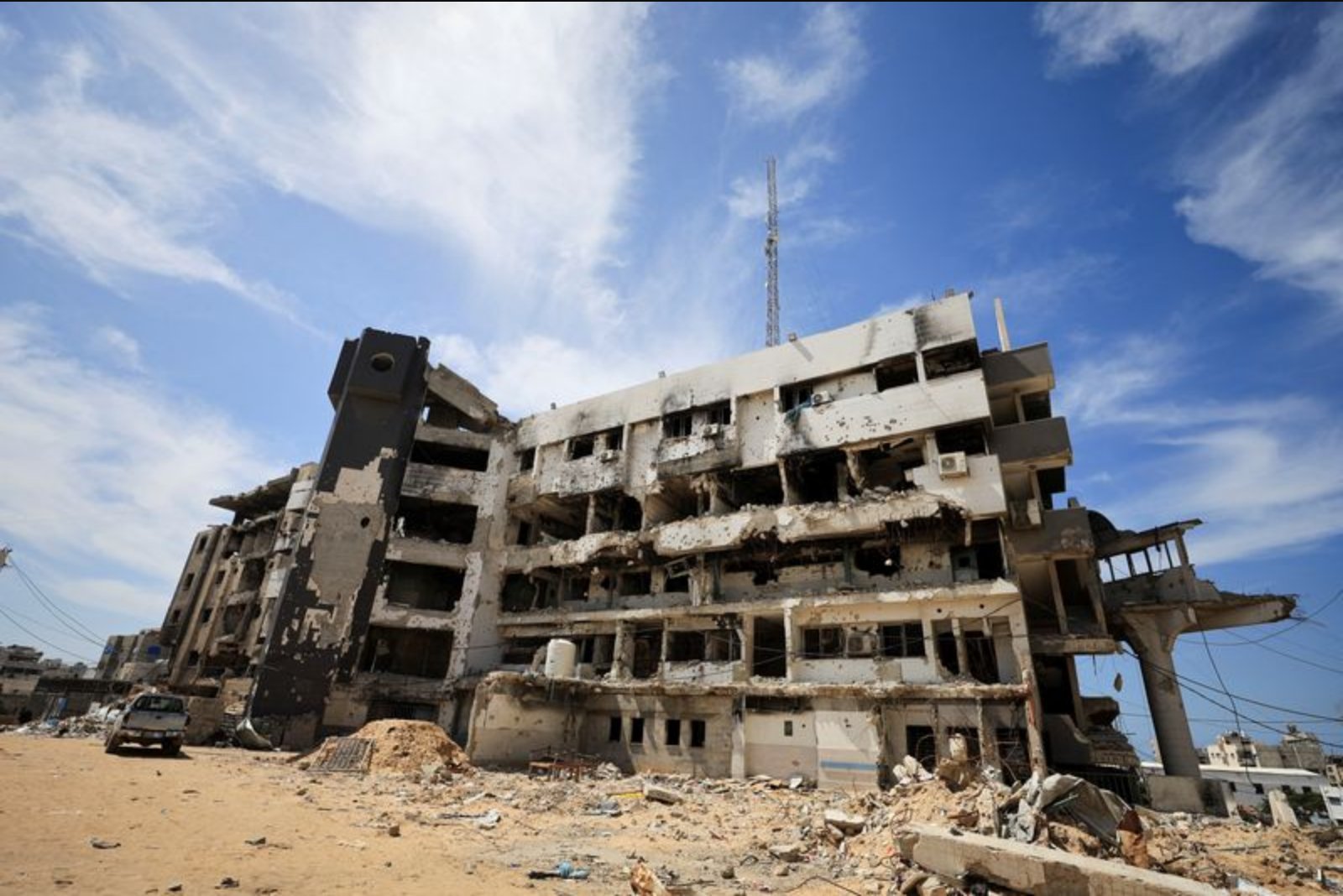
Israeli tallies put the number of people killed in Hamas' October 7, 2023 attacks on Israel at 1,200. Gazan health authorities report that Israel's subsequent two-year military campaign has killed more than 72,000 Palestinians, most of them civilians, and has contributed to famine conditions, the destruction of most buildings and repeated displacement of the territory's population.
Next steps and context for negotiations
Negotiators say the coming week will include further meetings between Hamas and mediators in an attempt to clarify positions and address the movement's demands. Observers involved in the discussions told Reuters that the interplay between demands for Israeli withdrawal and Israel's insistence on preconditioned disarmament by Hamas creates a reciprocal stalemate that complicates immediate implementation of the Board of Peace plan.
Officials participating in or close to the talks have highlighted two parallel pressures: a desire by mediators and the Board of Peace to anchor the October ceasefire in a concrete implementation framework, and the practical constraint that reconstruction financing and activity may be limited by security and control considerations on the ground.
How those pressures are resolved in the coming sessions will shape whether reconstruction can proceed in parts of Gaza and whether the truce can be transformed into a stable arrangement supported by international funding and on-the-ground guarantees.