
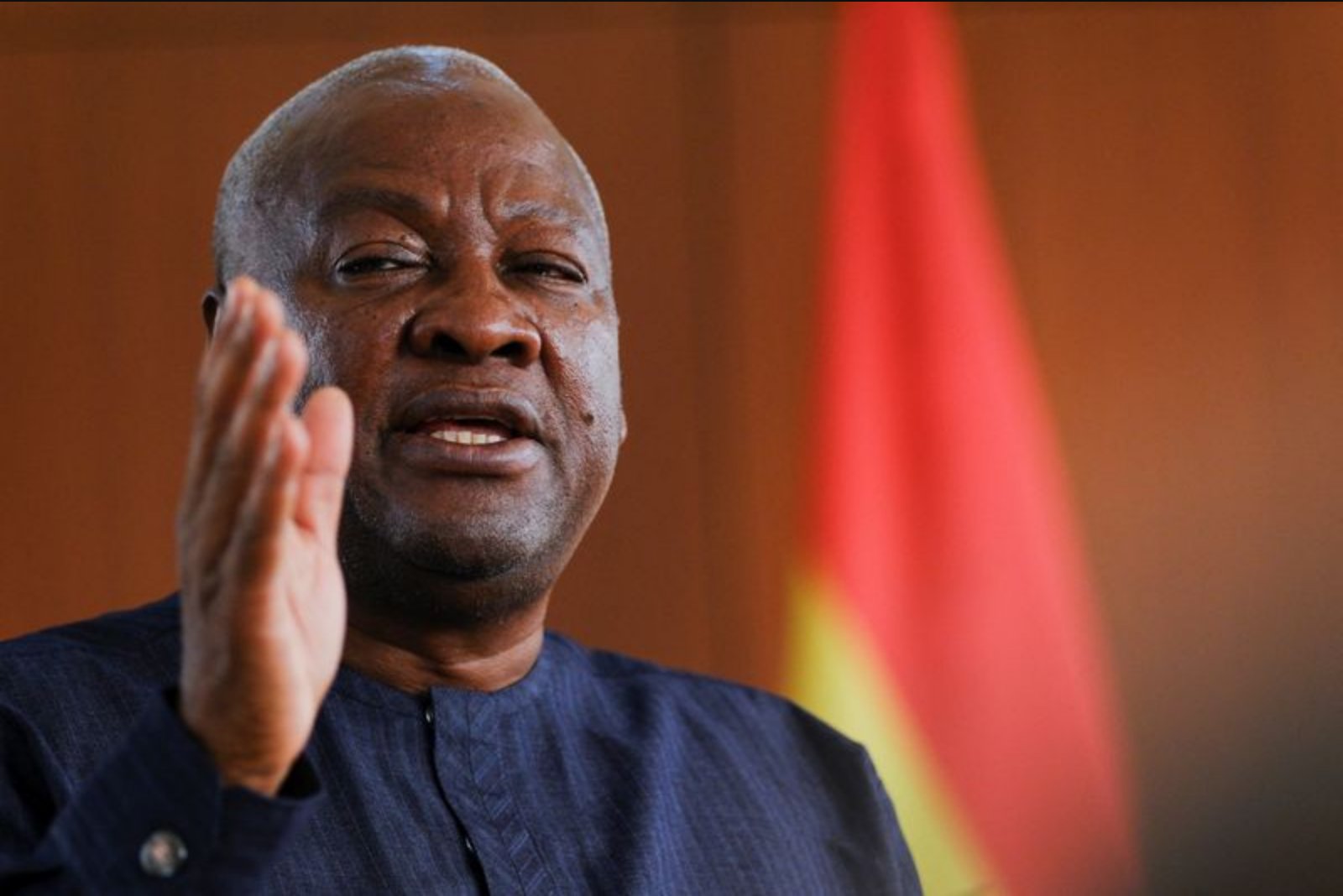
Ghana’s President John Dramani Mahama used a United Nations event on reparations in New York to sharply criticise policies in the United States that he said are contributing to the gradual erasure of Black history. Speaking on Tuesday, Mahama warned that shifts in how cultural institutions and school systems address slavery, segregation and racism were not confined to U.S. borders - they were becoming a potential template for other governments and private organisations.
"These policies are becoming a template for other governments as well as some private institutions," Mahama said. "At the very least, they are slowly normalising the erasure." He spoke at an event focused on slavery reparations, where he laid out concerns about changes he says are taking place within U.S. cultural and educational institutions.
According to Mahama, since President Donald Trump resumed office, the U.S. administration has targeted a range of cultural and historical institutions - from museums to monuments to national parks - in moves described as aimed at removing what the administration characterises as "anti-American" ideology. Mahama characterised some of the actions that followed as including the dismantling of slavery exhibits, the restoration of Confederate statues, and broader steps that civil rights advocates argue risk reversing decades of social progress.
He further claimed that Black history courses were being removed from school curricula in the United States, that institutions were being required to stop teaching "the truth of slavery, segregation and racism," and that books addressing those subjects were increasingly subject to bans. The White House did not immediately respond to a request for comment.
Mahama is in New York to table a resolution at the U.N. General Assembly that would formally recognise transatlantic slavery as the "gravest crime in the history of humankind" and call for reparative measures. The proposed resolution urges member states to enter into dialogue on reparations that could include formal apologies, the return of stolen artefacts, financial compensation, and guarantees of non-repetition.
The draft resolution has attracted support from regional blocs and countries including the African Union and the Caribbean Community, as well as nations such as Brazil. At the same time, the proposal faces significant opposition: Ghana’s foreign minister Samuel Ablakwa said the European Union and the United States have already indicated they will not support the resolution. The missions of the EU and the U.S. to the U.N. did not immediately reply to requests for comment.
Mahama also referenced his recent bilateral actions and prior criticisms of U.S. policy, noting that he announced, last year, an agreement to accept West Africans deported by the United States. He has previously criticised the U.S. president for what Mahama described as false claims about a purported white genocide and land seizures in South Africa, calling such assertions an insult to Africans.
Reparations as a policy objective has gained traction in recent years, and Ghana has positioned itself as a leading advocate. At the same time, the issue has provoked a notable backlash: some Western leaders have resisted even discussing reparations, arguing that contemporary states and institutions should not be held accountable for historical injustices. The debate thus continues, with the U.N. resolution Mahama is presenting intended to broaden international dialogue on the subject.
Context and next steps
Mahama’s presentation to the U.N. General Assembly seeks to elevate international discussion of reparations and to press for concrete measures countries could adopt in response to the transatlantic slave trade. The immediate political reality, however, includes formal indications from powerful actors that they will not back the resolution, a factor likely to shape the prospects for any consensus at the Assembly.
Observers inside and outside government institutions will be watching how member states respond to the resolution and whether the debates it spurs translate into specific policy proposals such as apologies, the return of cultural artefacts, or financial redress.