
BERLIN — Allegations that a television actor's former spouse used artificial intelligence to create and post sexually explicit images and videos resembling her have focused public attention on legal protections against digital violence in Germany.
In an interview published in a weekly magazine, actor Collien Fernandes accused her ex-husband, television presenter and producer Christian Ulmen, of creating fake online profiles that impersonated her and of sharing sexually explicit AI-generated content - commonly called deepfakes - on those accounts. The accusation has triggered a public debate over how the law handles new forms of online violence, particularly those that sexualise and humiliate women.
Ulmen has not commented publicly on the allegations. His lawyer, Christian Schertz, issued a statement saying his client would take legal action in response to what Schertz described as "inadmissible coverage based on suspicions." Schertz also accused the magazine of publishing "untrue facts" founded on a one-sided narrative. Fernandes did not immediately reply to requests for comment via her social media channels or through her agents.
Mass protest at Brandenburg Gate
More than 10,000 people gathered at Berlin's Brandenburg Gate on Sunday to call for an end to violence against women and to show public support for Fernandes. Demonstrators carried placards and chanted slogans decrying the practice of producing and distributing non-consensual sexual imagery. Reporters at the scene noted signs expressing gratitude and support for the actor and messages rejecting the sexual exploitation enabled by artificial intelligence.
The demonstration comes amid heightened public sensitivity to violent and sexual crimes against women. Some placards echoed a broader international conversation about shifting the burden of shame away from victims.
Government response and proposed legal changes
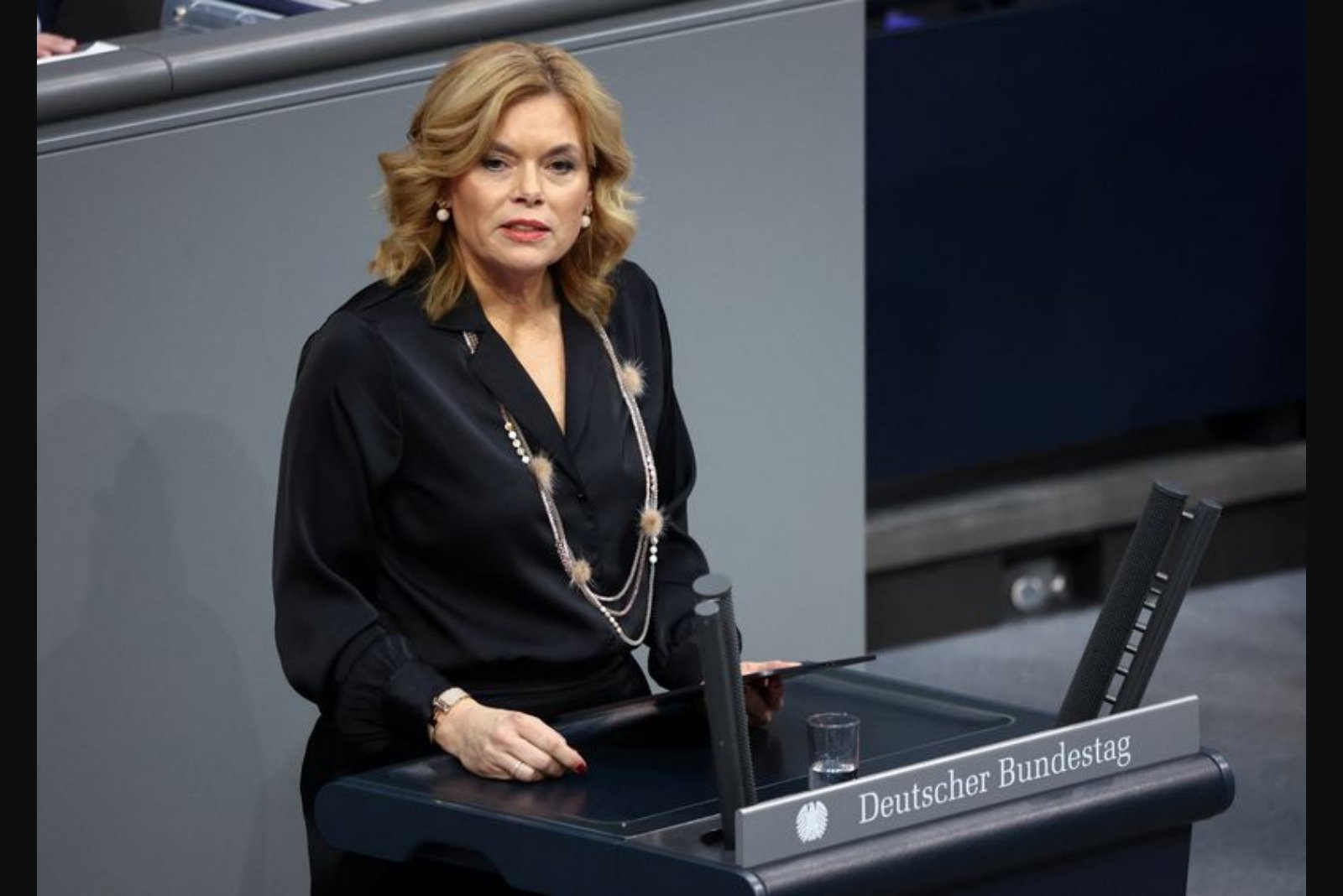
Justice Minister Stefanie Hubig told parliament that her ministry is preparing legislation to criminalise the production of pornographic deepfakes and voyeuristic recordings, with penalties of up to two years in prison for offenders. Under current law, only distribution of such material is clearly prohibited.
"The technology is new. But the underlying motive is ancient. It’s about power, humiliation, and control," Hubig said during a parliamentary debate on violence against women, in which 13 of 14 speakers were women.
Her proposal aims not only to make creation of explicit deepfakes an explicit criminal offence but also to simplify the process for victims to identify account holders behind illegal content, to pursue damages and to obtain blocking of accounts. A further parliamentary debate on the subject was scheduled for Thursday.
Platform accountability and AI tools
Hubig urged greater responsibility from online platforms in handling manipulated sexual imagery, warning that "digital violence must not be a business model." The debate singled out social media services where manipulated images and videos can be disseminated rapidly.
The article referenced the use of an AI chatbot, Grok, from the platform X to flood the site with manipulated sexualised images. In response to criticism, the company behind Grok introduced restrictions on its image-generation capabilities.
Legal action and cross-border proceedings
Fernandes said she lodged criminal charges in Spain, where she and Ulmen previously resided, citing what she perceives as stronger legal protections for women's rights than in Germany. "Germany is an absolute haven for perpetrators," she told a television news program.
Spanish authorities have specialised courts for gender-based violence; since 2025, their remit has included digital violence such as cyberstalking and the non-consensual sharing of private images. The judiciary in Mallorca confirmed that preliminary proceedings opened in December are ongoing. The complaint filed there lists allegations including misrepresentation of marital status, disclosure of secrets, public defamation, habitual abuse and serious threats.
Legal and social implications
The case has prompted lawmakers, victims' advocates and the public to re-examine how legal systems and online platforms should respond to AI-enabled violations of privacy and dignity. Proposed legislative changes aim to address the production of manipulated sexual content, the rights of victims to seek redress, and platform obligations to prevent distribution.
Parliamentary debate and draft legislation are under way, but the timeline for any final law change was not specified in the coverage. Meanwhile, criminal proceedings continue in Spain and public protests underscore broad demand for stronger protections against digital forms of violence.