
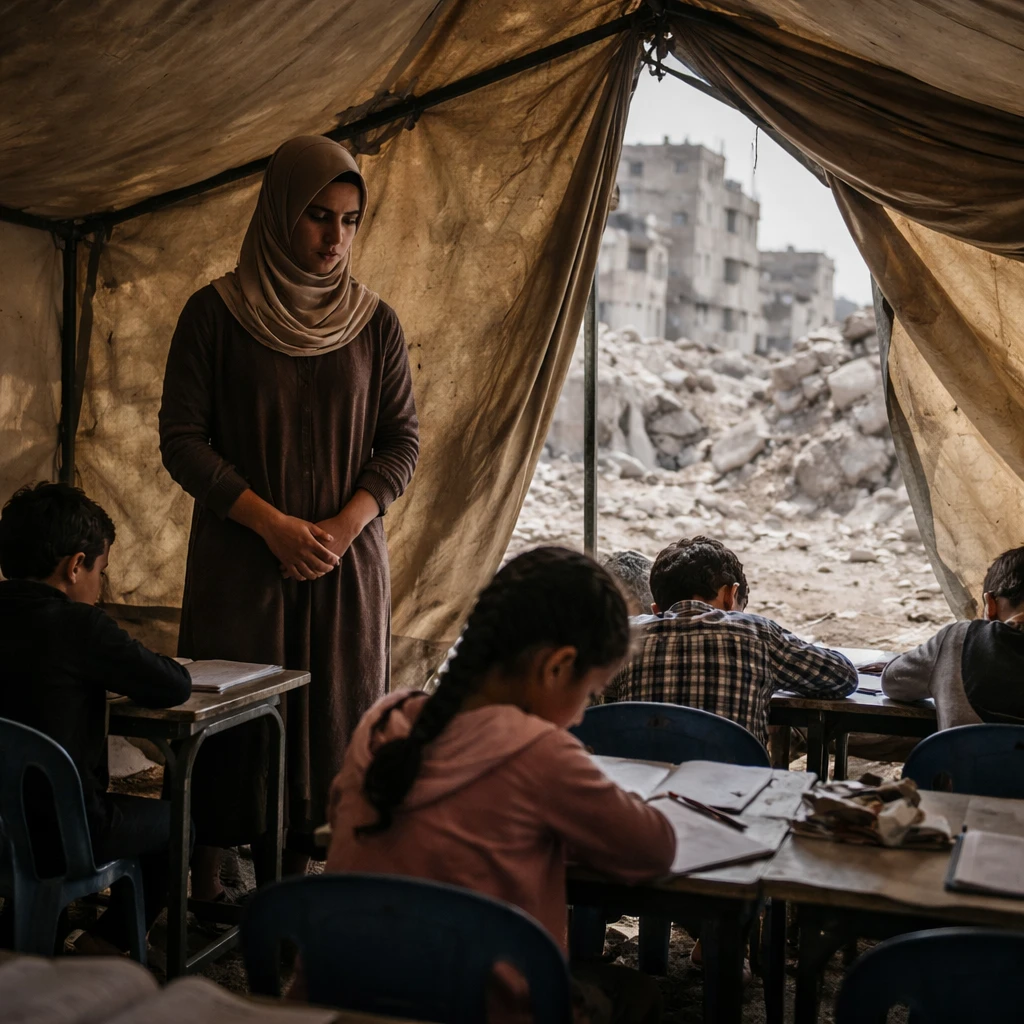
Health and education officials in Gaza reported that Israeli forces shot and killed a young female student on Thursday while she was participating in a tented class in the town of Beit Lahiya in the northern Gaza Strip.
The Gaza education ministry identified the girl as third-grade student Ritaj Rihan, saying she was struck by a bullet in front of her classmates. The ministry added that the shooting left those children experiencing "a strong psychological shock." The Israeli military did not immediately issue a comment on the incident.
Under a ceasefire that has been in place since last October, Israel continues to occupy more than half of the Gaza Strip. Officials say that nearly all buildings in the Israeli-controlled sector have been levelled and residents displaced. As a result, nearly the entire population of more than 2 million people now lives within roughly a third of Gaza’s territory, much of it in makeshift tents and damaged structures.
Life in the reduced area of Gaza has largely resumed under the administration led by Hamas, while residents cope with limited space and damaged infrastructure. Displaced children are attending classes in crowded tents where volunteer teachers attempt to maintain education despite the destruction of formal schools.
These improvised classrooms face multiple, acute challenges. They confront harsh weather conditions, shortages of essential supplies and teachers, and continuing security risks that can interrupt schooling and threaten the safety of pupils and staff. The ministry statement emphasized the trauma inflicted on children attending such sessions.
Casualty figures noted by Gaza officials underline the continued human cost since the ceasefire took effect. More than 700 Palestinians have been killed during the period of the October deal, while militants have killed three Israeli soldiers. Palestinian authorities have also accused Israeli forces of moving yellow concrete markers westward, an action they describe as encroachment into unoccupied territory - an allegation Israel denies.
Broader casualty totals remain stark: Gaza’s health ministry reports that more than 71,000 people have been killed in the assault on the enclave. The conflict itself began after a Hamas-led attack on southern Israel on October 7, 2023, which Israeli tallies say resulted in about 1,200 deaths.
This incident highlights the fragility of civilian life in Gaza and the particular vulnerability of displaced children trying to continue their education amid destruction and ongoing security concerns.