
JERUSALEM/CAIRO, March 9 - Negotiations aimed at advancing President Donald Trump’s proposal to end the Gaza war have been suspended since last week after a joint U.S.-Israel strike on Iran set off a broader regional conflict, three sources with direct knowledge of the talks said. The interruption threatens momentum for the administration’s flagship Middle East peace effort, which had recently attracted commitments for Gaza from Gulf Arab states.
The pause relates principally to discussion of a key, sensitive element of the plan: whether Hamas militants would relinquish their weapons in return for amnesty. That disarmament undertaking is designed to create conditions for reconstruction in Gaza and for further Israeli military pullbacks. White House mediators had been conducting backchannel exchanges between Israel and Hamas to explore the contours of that provision.
According to the three sources who spoke on condition of anonymity because the negotiations are sensitive, talks on disarmament and other components of the plan were halted when the Iran war began on February 28. The pause in the disarmament discussions has not been previously disclosed.
One interlocutor directly involved with the Trump administration’s Board of Peace mission characterized the delay as brief and largely caused by operational disruptions. Flight cancellations and difficulties moving mediators and representatives across the region have, in that person’s account, led to an immediate stoppage of planned meetings, many of which have been held in Cairo.
Over the longer term, that same source suggested the unfolding conflict might, paradoxically, clear political space to resolve the disarmament question by diminishing Iranian influence, which has been a financial backer of Hamas. The source framed this as a possible longer-term outcome envisioned by the Board of Peace, rather than an immediate expectation.
A Palestinian official close to the mediation effort said Hamas had been expected to meet with mediators from Egypt, Qatar and Turkey on the day the Iran war erupted, but that the meeting was canceled and no replacement date had been set. A Hamas official confirmed there is currently a freeze on talks related to Trump’s Gaza plan, but declined to provide further details. The Israeli government did not immediately respond to a request for comment, and the White House did not immediately reply to a request for comment.
The conflict that ensued after the joint strike has not halted all Israeli operations targeting Gaza, though Israel has reduced the intensity of strikes. Citing threats from Hamas, Israel has continued attacks while also conducting bombing runs in Iran and Lebanon. Palestinian health officials report that at least 16 Palestinians have been killed in Gaza since February 28.
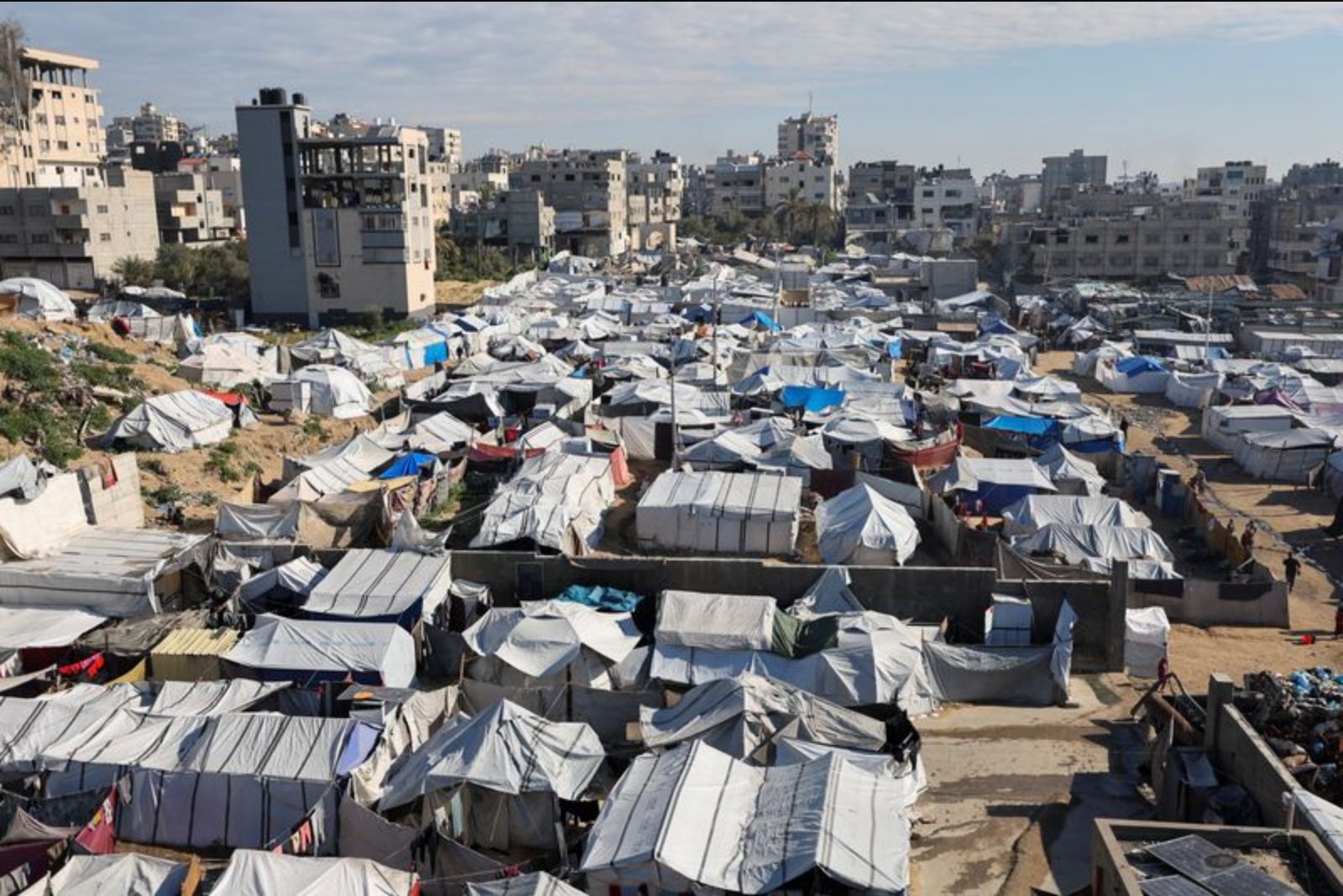
On the ground in northern Gaza residents expressed concern about the future. Talal Hamouda, 46, who lives in Jabalia with his wife and five children, said: "The moment the war on Iran is over, (Israel) will come back at us with the same frequency, with the same violence." That sentiment reflects the uncertainty felt by civilians living under the shifting dynamics of Israeli operations and escalations in the wider region.
Hamas, meanwhile, has continued to exert control in areas it governs within Gaza since the broader conflict began. Sources close to the group reported that Hamas fighters in recent days ambushed several members of Israeli-backed militias in the north and south of Gaza, killing at least two people. These actions underscore ongoing armed contestation inside the territory even as diplomatic channels are in abeyance.
Trump’s Gaza plan had taken shape after an October ceasefire that left Israel in control of more than half of the territory and Hamas maintaining control over the remainder. In the weeks before the Iran war, the initiative appeared to regain momentum, with the reopening of Gaza’s border crossing with Egypt and fresh pledges from Gulf states for reconstruction.
Much of Washington’s coordination on Gaza policy has been conducted out of a U.S.-led military compound in southern Israel. Foreign diplomats based at that compound indicated that momentum behind the plan appeared to falter as the Iran war escalated. Three diplomats said the Civil Military Coordination Centre there scaled back to minimal operations when the conflict began, and that there were concerns it could be targeted by Iranian missiles.
These diplomats also said that senior U.S. officials seem to have shifted their primary focus to the Iran war, leaving Gaza with less high-level attention. Despite that shift at senior levels, working-level conversations among countries involved in the initiative have continued, with participants hoping the plan can be revived once the Iran war concludes.
Natan Sachs, a senior fellow at the Middle East Institute in Washington, said the plan requires sustained attention from the Trump administration to remain viable. He warned that the Iran conflict has the potential to undermine that focus and thereby jeopardize efforts to secure a stable outcome. Sachs noted that without continued U.S. engagement, the competing objectives of the parties involved could lead to divergent results and possibly a resumption of broader fighting.
Contextual note: The details above are drawn from sources directly involved in the mediation effort and from statements by officials and analysts cited in the discussions. Working-level talks continue, but their progress remains contingent on the cessation of broader hostilities tied to the Iran war.