
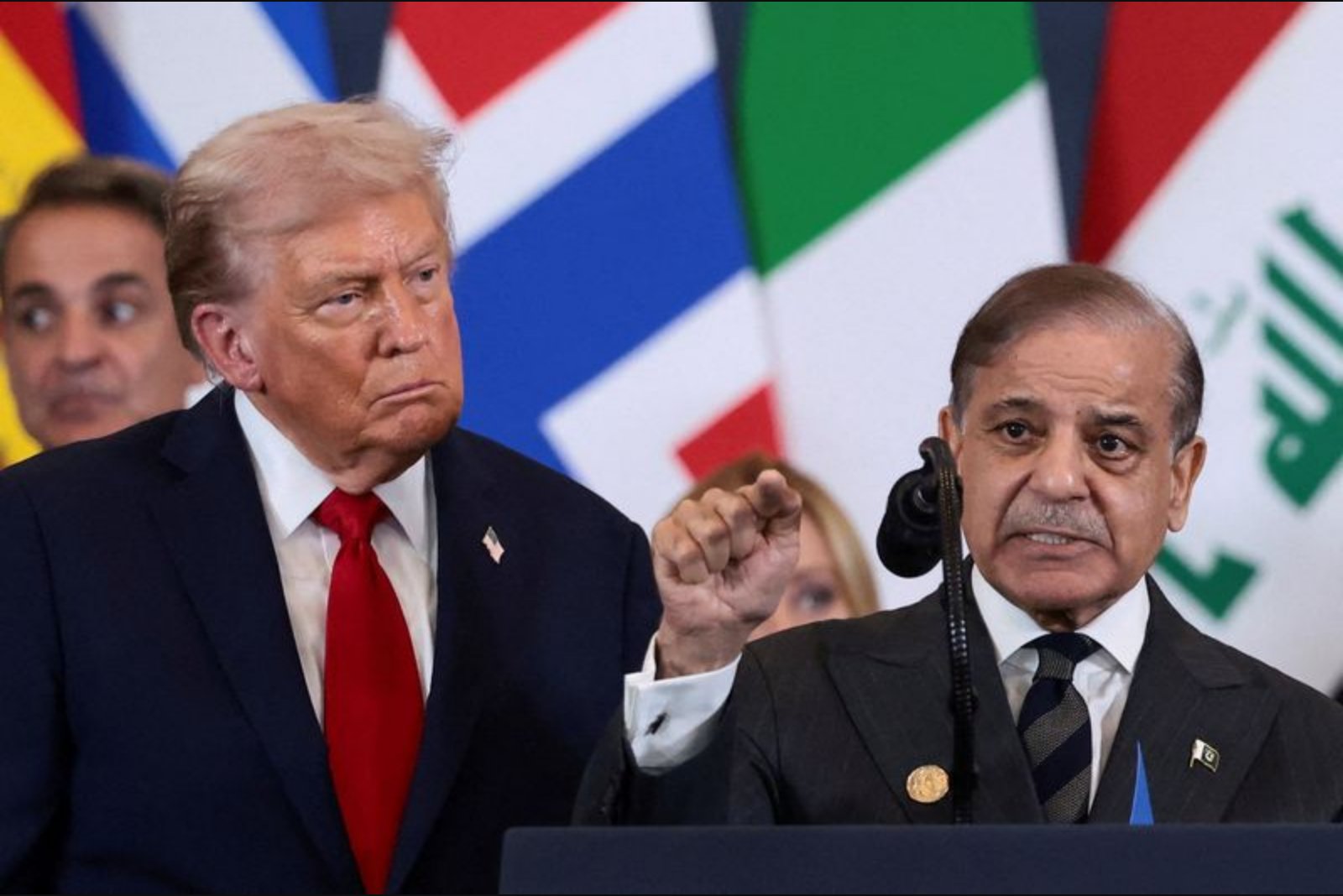
Once widely viewed as a diplomatic outlier, Pakistan has remade its international posture over the past year, positioning itself as a mediator in the conflict involving Iran and as a renewed partner to the United States. The turnaround is widely credited to an assertive civil-military approach, with Field Marshal Asim Munir at its center.
Munir has met repeatedly with former U.S. President Donald Trump, including an unprecedented private lunch at the White House, and Pakistan’s security services recently detained an Islamic State suicide bomber accused of killing American troops and transferred him to U.S. custody. Alongside those actions, Pakistan’s diplomatic corps launched an expansive outreach effort to world leaders and has worked to consolidate its relationship with China.
"Pakistan’s civil-military leadership has been on a charm offensive primarily balancing relations between the U.S. and China as it seeks to employ a diversified foreign policy," said Arsla Jawaid, a global risk analyst at Control Risks. "All these efforts are beginning to show some signs of success." The assessment underscores the deliberate, multifront nature of Islamabad’s push to rebuild credibility.
Historical strains and an economic nadir
Ties with Washington had deteriorated significantly since the 2011 killing of Osama bin Laden by U.S. Navy SEALs on Pakistani soil, and later episodes deepened the rift. The imprisonment of former Prime Minister Imran Khan and allegations from U.S. officials that Pakistan covertly supported the Taliban during the two-decade Afghan war compounded mistrust.
Economically, Pakistan also faced acute peril, coming close to debt default before securing a new International Monetary Fund package following protracted negotiations about 18 months ago. That macroeconomic fragility has shaped Islamabad’s foreign policy calculations.
Two diplomatic turning points
Officials and analysts point to two episodes that helped restore trust with Washington. The first occurred in March of last year, when Pakistani authorities aided in the capture of a suspect tied to the 2021 Kabul airport bombing that killed 170 Afghans and 13 U.S. service members. The arrest prompted a public expression of gratitude from Trump and led to renewed intelligence cooperation.
"The cooperation was critical in reversing decades of mistrust," said Maleeha Lodhi, a former Pakistani ambassador to the United States. Her comment highlights how actionable security collaboration can reset diplomatic dynamics.
The second inflection point came in May, during a 90-hour aerial clash with India. Pakistan’s foreign office said the episode bolstered Islamabad’s diplomatic standing because the military "showed tremendous restraint after successfully downing Indian fighter jets." The restraint, officials argue, allowed Pakistan to step into mediation efforts between the nuclear-armed neighbours and to engage U.S. interlocutors on de-escalation.
Both Munir and Prime Minister Shehbaz Sharif subsequently nominated Trump for the Nobel Peace Prize, signaling how the leadership sought to convert security cooperation into broader political capital.
Levers of power and the White House visit
Even when civilian governments hold office in Islamabad, Pakistan’s military has long retained decisive influence over national policy. That internal power dynamic helps explain why Munir’s reception in Washington - the first time a sitting U.S. president hosted Pakistan’s military chief privately without visible civilian counterparts - was widely interpreted as recognition of the military’s central role.
Government sources portray Pakistan’s makeover as the product of a close civil-military partnership capable of synchronising diplomacy with the Gulf states, the United States and China. Mosharraf Zaidi, the prime minister’s spokesperson, said that if there is a unifying factor behind Islamabad’s widened diplomatic opportunities, it is "the trust and symbiosis between the field marshal and prime minister." Zaidi emphasized a flurry of engagements and frequent phone contact with international leaders as evidence of an active, coordinated outreach.
Region-wide engagement and mediation efforts
Pakistan’s recent diplomatic calendar has included meetings with counterparts from Turkey, Saudi Arabia and Egypt. Foreign Minister Ishaq Dar hosted regional ministers for discussions directed at ending the war in Iran, and Pakistan’s foreign office said Dar’s regular interactions create space for candid exchanges.
Munir and Sharif have framed Islamabad’s emergence in both commercial and security terms. Talks with the U.S. covered investment opportunities, a crypto-related deal with a Trump family-linked business, and regional security arrangements. Munir was the sole serving military chief to attend this year’s World Economic Forum in Davos, where he continued discussions with Trump, and he has spoken multiple times with U.S. Vice President JD Vance since hostilities involving Iran began.
According to a source briefed on the matter, Vance communicated with Pakistani intermediaries about the Iran conflict as recently as Tuesday, indicating that Washington remained in active contact about ceasefire possibilities subject to conditions. Pakistan also signed a mutual defence agreement with Saudi Arabia last year, an arrangement that further anchors Islamabad’s security relationships in the Gulf.
Regional reactions and strategic frictions
Pakistan’s enhanced international profile has generated unease in New Delhi, which traditionally projects greater diplomatic influence in the region. Indian opposition figures criticised their government’s absence from mediation initiatives, pointing to Pakistan, Egypt and Turkey taking lead roles in talks to halt the Iran conflict. "Now, apparently, Pakistan, Egypt and Turkey have done it. Good luck to them...but India gets no credit while Pakistan is holding the peace talks," said opposition lawmaker Shashi Tharoor, reflecting domestic frustration over perceived diplomatic passivity.
Domestic vulnerabilities and exposure to conflict
Despite gains in foreign policy, Pakistan’s economy remains weak. Analysts warn that the country could be drawn deeper into regional hostilities by its defence pact with Saudi Arabia, a step that may incite protests among Pakistan’s Shi’ite population, reported to be substantial. Islamabad is also contending with renewed tensions with Afghanistan, which escalated days before air strikes by the U.S. and Israel on Tehran.
Strategic advisers argue Islamabad must prioritise internal capacity — strengthening core national institutions and shoring up the economy — while developing a durable defence-industrial partnership with Saudi Arabia and Turkey. "Pakistan has to continue to look inwards to bolster its own pillars of national power, especially its economy," said Uzair Yunus of The Asia Group. He added that an integrated defence industrial complex with Riyadh and Ankara would be advisable.
Arsla Jawaid warned the civil-military leadership to calibrate Pakistan’s mediator role carefully. "The civil-military leadership will need to be very careful of the role and extent of Pakistan’s involvement. Overplaying the mediator card could prove to be more damaging if not managed astutely," she said, pointing to the reputational risks of misstepping in a volatile conflict.
Outlook
Pakistan’s diplomatic renaissance has been built on a sequence of security cooperation measures, visible high-level meetings and a deliberate balancing act between major powers. Those steps have delivered immediate gains in international trust and brought Islamabad into the center of regional crisis diplomacy.
Yet the same mix of defence obligations, economic fragility and unresolved border tensions means Pakistan’s recent progress carries inherent uncertainties. The leadership’s ability to sustain this diplomatic momentum without exacerbating internal divisions or becoming entangled in military commitments abroad will determine whether the country’s transformation endures.