
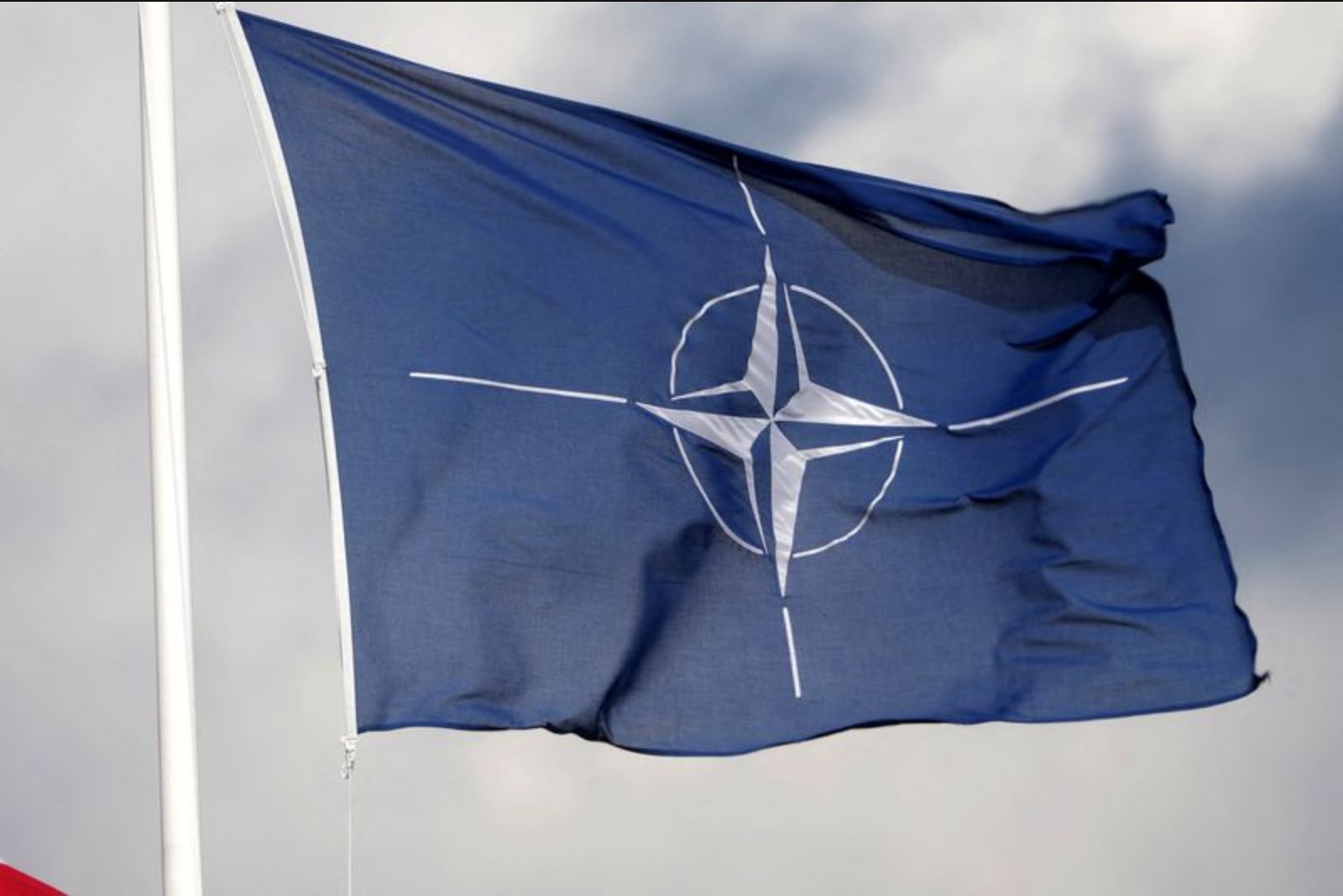
France responded on Wednesday to remarks by the U.S. President about possibly withdrawing from NATO, insisting the North Atlantic Treaty Organization exists to guarantee security in the Euro-Atlantic area and is not intended to mount offensive operations in the Strait of Hormuz.
The U.S. President told reporters he would announce later on Wednesday that he was "absolutely" considering pulling the United States out of the alliance, remarks that echoed comments made in a recent interview after some allies declined to support U.S. plans for military action against Iran.
French President Emmanuel Macron has proposed that any intervention related to the Strait of Hormuz should be framed within a United Nations mandate. He has said that international measures could only proceed after hostilities calm, when insurance and shipping companies have been consulted, and with Iran's consent.
Speaking at the War & Peace conference in Paris, Junior Army Minister Alice Rufo outlined France's position, saying: "Let me remind you what NATO is. It is a military alliance concerned with the security of the Euro-Atlantic region. It is not designed to carry out operations in the Strait of Hormuz, which would be a breach of international law."
Rufo, described as a close ally of President Macron and formerly one of his senior diplomats, acknowledged American frustration over France's decision not to join a coalition aimed at immediately reopening the strait. She said Paris preferred to pursue measures to restore transit and freedom of navigation by means "not of an offensive nature."
"I understand this irritation, but I am not speaking on behalf of the United States," Rufo added. "I am speaking for a country that is a founding member of the Atlantic Alliance (NATO) and a founding member of the European Union, and which for the past 20 years has been saying that Europeans must take a greater share of responsibility for collective defence in Europe."
The row between Paris and Washington intensified after France refused Israel use of its airspace to transfer American weapons destined for the war in Iran, a decision that drew the U.S. President's ire on Tuesday, according to three sources.
France’s public stance frames NATO as an organisation whose operational focus is the Euro-Atlantic theatre rather than projecting offensive force into other regions. Paris is pressing for a multilateral, legally framed approach toward the Strait of Hormuz while emphasising consultation with commercial stakeholders and the need for de-escalation before any intervention.
The exchanges underscore a broader diplomatic tension over burden-sharing and the role European states should play in regional security, with senior French officials reiterating a long-standing call for Europe to assume greater responsibility for its defence within the Atlantic alliance framework.