
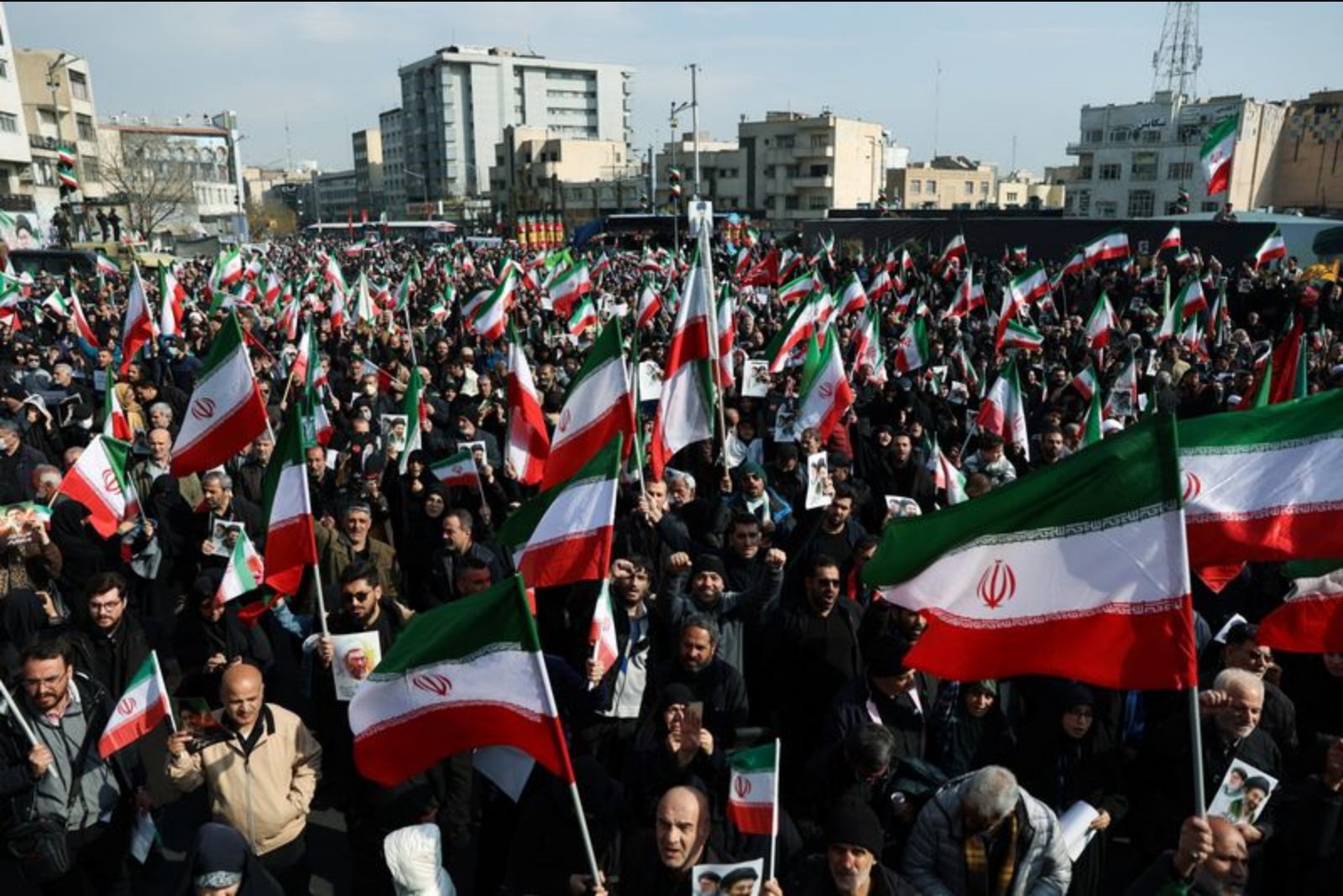
The appointment of Ayatollah Mojtaba Khamenei as Iran’s new supreme leader has been accompanied by public displays of support, including footage broadcast on state television showing people taking to the streets in celebration. Yet interviews with members of the Basij volunteer militia, ordinary citizens, officials, insiders and analysts suggest that the pool of committed supporters for the Islamic Republic has contracted significantly compared with earlier decades.
Mojtaba Khamenei, described in interviews as having deep influence within the Islamic Revolutionary Guard Corps and its extensive business networks, took the leadership role after the U.S. and Israeli airstrikes that killed his father, Ayatollah Ali Khamenei, more than a week ago. The attacks and the sudden death of Iran’s previous supreme leader have thrust the new leadership into an environment of acute external pressure and rising internal discontent.
A narrower core of support
Analysts and on-the-ground sources portray a regime that no longer commands the broad popular base that buoyed its rise after the 1979 revolution. "The strategy in choosing a hardliner as the new leader would be to consolidate the base, but they’re ending up with an increasingly small circle of supporters," said Ali Ansari, a modern history professor at the University of St Andrews in the UK. "And the longer this goes on, the more it will all fray at the edges," he added.
That core, however, remains tangible: people who reliably vote for the system and who mobilise to suppress dissent on the streets. Supporters interviewed for this reporting include students and Basij members who framed Mojtaba Khamenei’s elevation as a rebuke to external adversaries and a continuation of the previous leadership’s path.
"I am so happy that he (Mojtaba Khamenei) is our new leader. It was a slap in the face to our enemies who thought the system will collapse with the killing of his father. Our late leader’s path will continue," said Zahra Mirbagheri, a 21-year-old university student from Tehran.
Organisation and mobilisation remain an obstacle for external foes
Security and regime loyalists retain highly organised networks that can be mobilised quickly. Members of the Basij, who play a visible role in maintaining public order and deterring protests, emphasise sacrifice and duty. "We have given many martyrs. They have sacrificed themselves for our leader. Now we must show that the path of the leader Khamenei continues," said Mahdi Rastegari, a 32-year-old religion teacher and Basij member. "We will even give our lives for him," he added.
These pledges underline why the United States and Israel have warned they will target or oppose Iran’s new leadership. U.S. President Donald Trump had earlier rejected Mojtaba as a candidate to be Iran’s new supreme leader, and Israel has said it would target whoever leads Iran. When asked about Mojtaba’s naming by the Times of Israel, Trump replied only: "We'll see what happens."
Signals of strain inside the system
Despite visible loyalty, cracks and doubts surface even among those within the regime’s apparatus. Reporting includes accounts from multiple Basij members who expressed varying levels of certainty about the system’s durability.
Ali Mohammad Hosseini, a 29-year-old Basij member who works in his father’s grocery shop in Qom, described a daily routine that mixes work and regime duties. He told reporters he spends evenings manning checkpoints to prevent public unrest and said preserving the regime is paramount. "The most important issue is preserving the regime, which is what the Americans are targeting," he said, framing his support as a religious duty he would even die for.
By contrast, another Basij member who gave only his first name, Hassan, and said he was in Mashhad, voiced skepticism about the Islamic Republic’s prospects. He pointed to sustained U.S. pressure and the destructive consequences of the strikes as reasons to doubt long-term survival: "We need to be realistic," he said, referring to the ruinous aftermath of pulverising airstrikes.
Economic pressures threaten patronage networks
For decades, loyalty to the system has been reinforced by tangible benefits: preferential access to university spots, employment opportunities and subsidised loans for those aligned with the regime. Several interviewees warned that a collapsing economy could erode these incentives and test the durability of loyalty among beneficiaries.
"We do not even have airports any more. No ports. How are they going to rebuild this economy?" Hassan, 29, asked, underscoring concerns about the state’s capacity to restore infrastructure and sustain economic privileges that have supported the regime’s social base.
Such economic dislocation would not only affect those who have relied on regime patronage but also wider commercial activity tied to ports, airports and state-linked business networks. Interviewees described a landscape of fear among citizens who see the Guards and the state apparatus as powerful and capable of violent repression, while also noting ordinary Iranians feel powerless to challenge that dominance.
"The Guards and the system are still powerful. They have tens of thousands of forces ready to fight to keep this regime in place. We, the people, have nothing," said Babak, a 34-year-old businessman in Arak who asked to withhold his family name.
Networks of control reach deep into society
The reach of hardline loyalists extends from central institutions to local neighbourhoods. Members of the Basij and other supporters carry out nightly state-backed mourning ceremonies for the late leader and maintain visible presences in cities and towns despite continued bombardment. Interviewed hardliners include both those motivated by ideological conviction - a readiness to sacrifice life for what they regard as divinely guided clerical rule - and those who have derived material advantage from their status as regime supporters.
With the supreme leader killed in the opening day of the war and the country under assault, the internal cohesion of the hardline leadership and the broader loyalist ecosystem is likely to be tested. How long the remaining core of steadfast supporters can sustain levels of mobilisation and whether economic collapse further weakens patronage-based loyalty are open questions reflected in the interviews collected for this report.
What remains uncertain
Interviews indicate two central uncertainties: whether the narrower circle of committed loyalists is sufficient to maintain regime control against intense external pressure, and whether the economy - facing infrastructure damage and disruptions to ports and airports - can be restored well enough to preserve the patronage that helps sustain political loyalty.
For now, state-backed displays of loyalty continue, and organised elements of the regime retain the ability to respond forcefully to dissent. But multiple voices in this reporting caution that the longer external pressure and internal strains persist, the more brittle the structure of support could become.
Reporting for this article drew on interviews with Basij members, ordinary citizens, officials, insiders and political analysts.