
World January 21, 2026

Former Uvalde School Police Officer Found Not Guilty of Child Endangerment in 2022 Shooting

Jury clears officer accused of delaying intervention during tragic attack that claimed 21 lives

By Priya Menon
Former Uvalde School Police Officer Found Not Guilty of Child Endangerment in 2022 Shooting

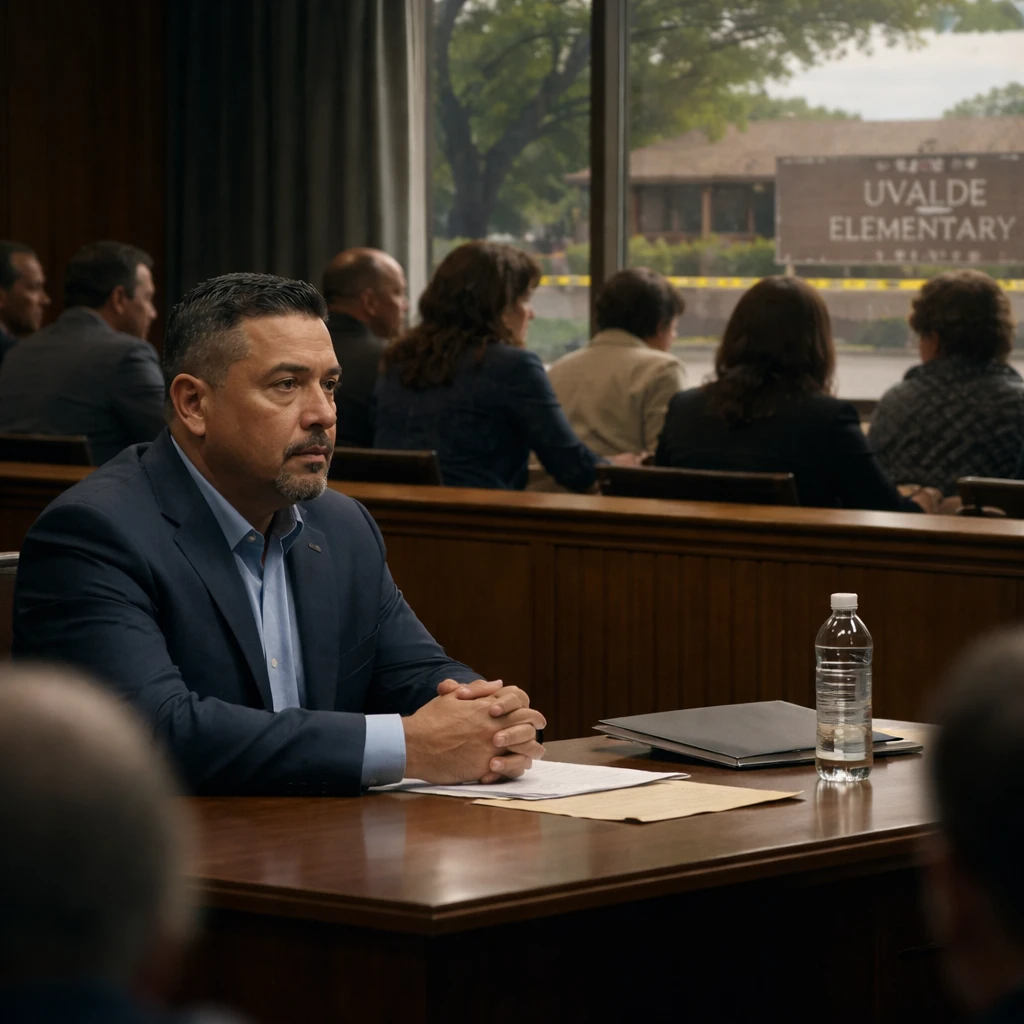
A jury in Texas has acquitted ex-police officer Adrian Gonzales of child endangerment charges related to the 2022 Uvalde school shooting, in which 19 children and two teachers lost their lives. After deliberating for seven hours, the jury found Gonzales not guilty on all 29 felony counts, each tied to alleged failures to confront the shooter promptly. The 18-year-old gunman, who was a former student at the elementary school, was killed by other responding officers. Prosecutors claimed Gonzales neglected his critical duties during the early moments of the incident, while his defense emphasized his role as a scapegoat for the tragedy’s pain.

Key Points

  • Adrian Gonzales was acquitted of 29 felony child endangerment charges related to the 2022 Uvalde school shooting.
  • The charges stemmed from allegations that Gonzales failed to act immediately against the attacker during the critical initial minutes of the incident.
  • The jury deliberated for seven hours before acquitting Gonzales on all counts, each carrying up to two years imprisonment.

In a significant legal proceeding related to the tragic school shooting in Uvalde, Texas, a former member of the school district police force has been acquitted of serious criminal charges. Adrian Gonzales, 52, faced 29 felony counts of child endangerment linked to his actions during the 2022 shooting that resulted in the deaths of 19 students and two teachers at an elementary school in Uvalde.

The prosecution accused Gonzales of failing to intervene promptly once he arrived on the scene, thereby not stopping the gunman in the critical earliest minutes of the shooting. The gunman, an 18-year-old former student at the school, was eventually neutralized by other law enforcement officers, but not before inflicting one of the deadliest mass school shootings in U.S. history.

The case was notably rare, as it involved charges against a law enforcement officer for allegedly neglecting to prevent a violent crime and failing to save lives. The jury from Corpus Christi, after approximately seven hours of deliberation, returned a verdict of not guilty on all charges. Each count carried potential prison sentences of up to two years.

During the trial, the prosecution urged the jury to consider the gravity of standing aside during a crisis, with Special Prosecutor Bill Turner asserting, "You can’t stand by and allow it to happen." In contrast, defense attorney Jason Goss argued that the legal action unjustly targeted Gonzales as a figure to bear the collective anguish following the incident, describing the prosecution’s case as a means to make him "pay for the pain of that day."

The verdict closes a contentious chapter in the aftermath of the 2022 Uvalde school shooting but leaves ongoing questions and impacts for public safety, law enforcement accountability, and community healing.

Risks

  • Potential challenges in law enforcement accountability when officers face complex, high-risk scenarios, as demonstrated in this case.
  • Community tensions and trust issues in police following perceptions of delayed response in critical incidents.
  • Possible implications for protocols and training of local law enforcement in active shooter situations impacting public safety sectors.

More from World

U.S. Olympic hospitality site renamed 'Winter House' after protests over ICE shootings Feb 2, 2026 Greenland’s premier says U.S. still aims for control despite ruling out military action Feb 2, 2026 Kremlin says Russia has long offered to process or store Iran’s enriched uranium Feb 2, 2026 Long-Awaited Rafah Reopening Prompts Hope and Anxiety Among Palestinians Stranded Across Border Feb 2, 2026 Rafah Reopens but Core Questions Persist Over Implementation of Trump’s Gaza Blueprint Feb 2, 2026