
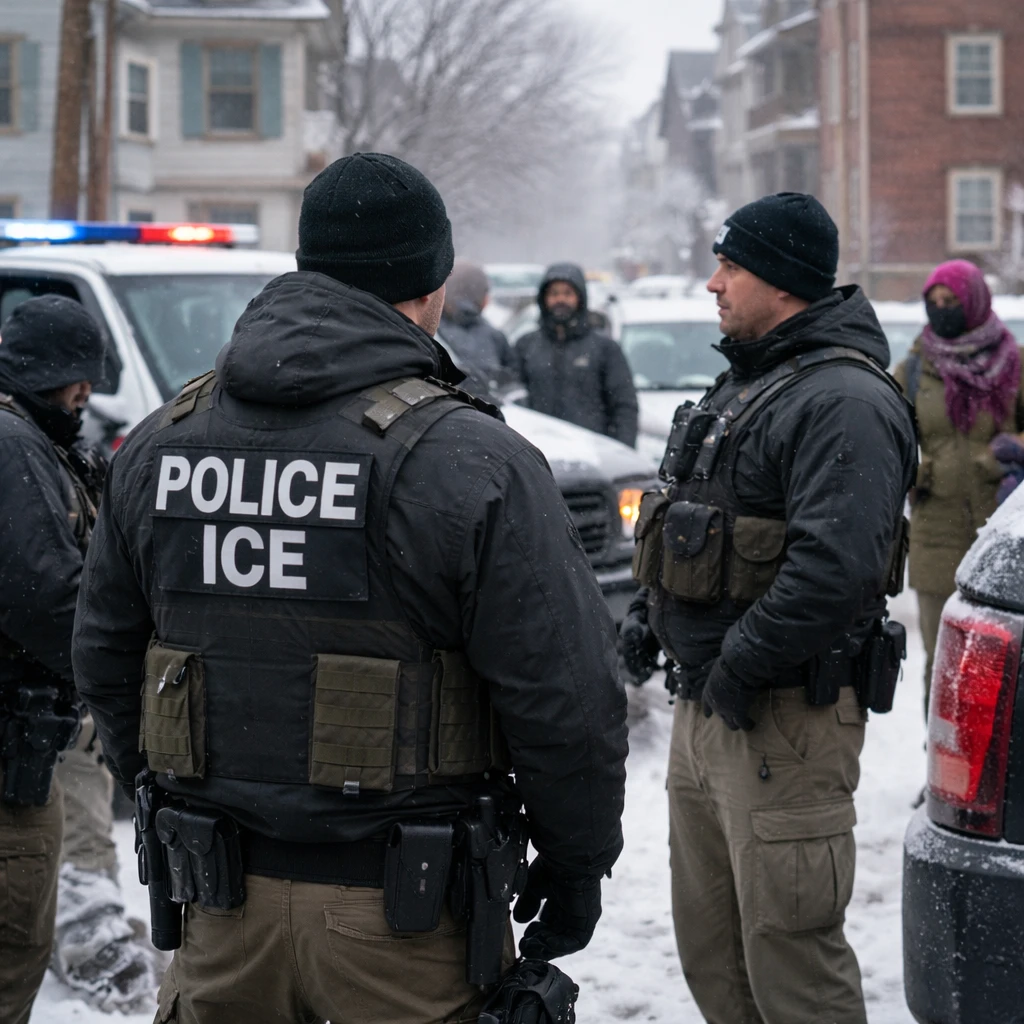
The Trump administration has commenced a targeted immigration crackdown in Maine, as confirmed by the U.S. Department of Homeland Security (DHS) this Wednesday. The operation, dubbed "Operation Catch of the Day," began on Tuesday with the aim of apprehending criminal offenders. More than 100 immigration enforcement agents have been deployed to the state, which hosts several refugee populations including a large Somali community.
Details on the operation’s focus emerged from both a current and a former immigration official, who spoke anonymously. The latter indicated that refugees are central to the operation’s targets. This enforcement effort aligns with President Donald Trump’s broader strategy of increasing immigration agents in states and cities led by Democratic officials, a campaign that has intensified since mid-2025.
Maine’s Governor Janet Mills, a Democrat, has expressed strong opposition to these federally driven enforcement actions. She has publicly stated that the aggressive tactics employed by the Trump administration are "not welcome" in the state. Governor Mills, now in her second term, is currently campaigning for a U.S. Senate seat held by Republican Susan Collins ahead of the upcoming midterm elections. Immigration policy is anticipated to be a significant campaign issue.
The recent buildup of federal immigration agents in Maine follows the recent dispatch of roughly 3,000 agents to Minnesota, another state with a notable Somali population. President Trump defends these operations as critical tools in combating crime, although numerous individuals detained reportedly have no criminal history. His administration’s stance has been sharply critical of Somali immigrants, especially following fraud allegations involving some Somali Americans in Minnesota.
Local responses in Maine have been notably critical. Carl Sheline, the mayor of Lewiston—the state's second-largest city and home to many Somali refugees—reported a perceptible increase in ICE presence. He criticized the tactics as "terror and intimidation" and decried them as lacking in humanity, emphasizing Lewiston’s commitment to the dignity of all residents.
In sharp contrast, DHS spokesperson Tricia McLaughlin reproached Governor Mills, labeling her among the state’s "sanctuary politicians" allegedly obstructing federal enforcement efforts. McLaughlin stated that the government is resolute in its efforts to prevent "criminal illegal aliens" from frightening American citizens.
The deployment of federal agents and the ensuing confrontations have intensified community tensions. This month, following a fatal shooting by a U.S. Immigration and Customs Enforcement officer in Minneapolis of a U.S. citizen, protests and unrest erupted, underscoring the fraught atmosphere surrounding immigration enforcement nationwide.
The political stakes are especially elevated in Maine, where immigration enforcement actions intersect with electoral contests and broader debates about state sovereignty and federal authority. Both communities and political leaders are closely monitoring the impact and consequences of these operations, signaling their potential influence on public opinion and voting behavior in the upcoming elections.