
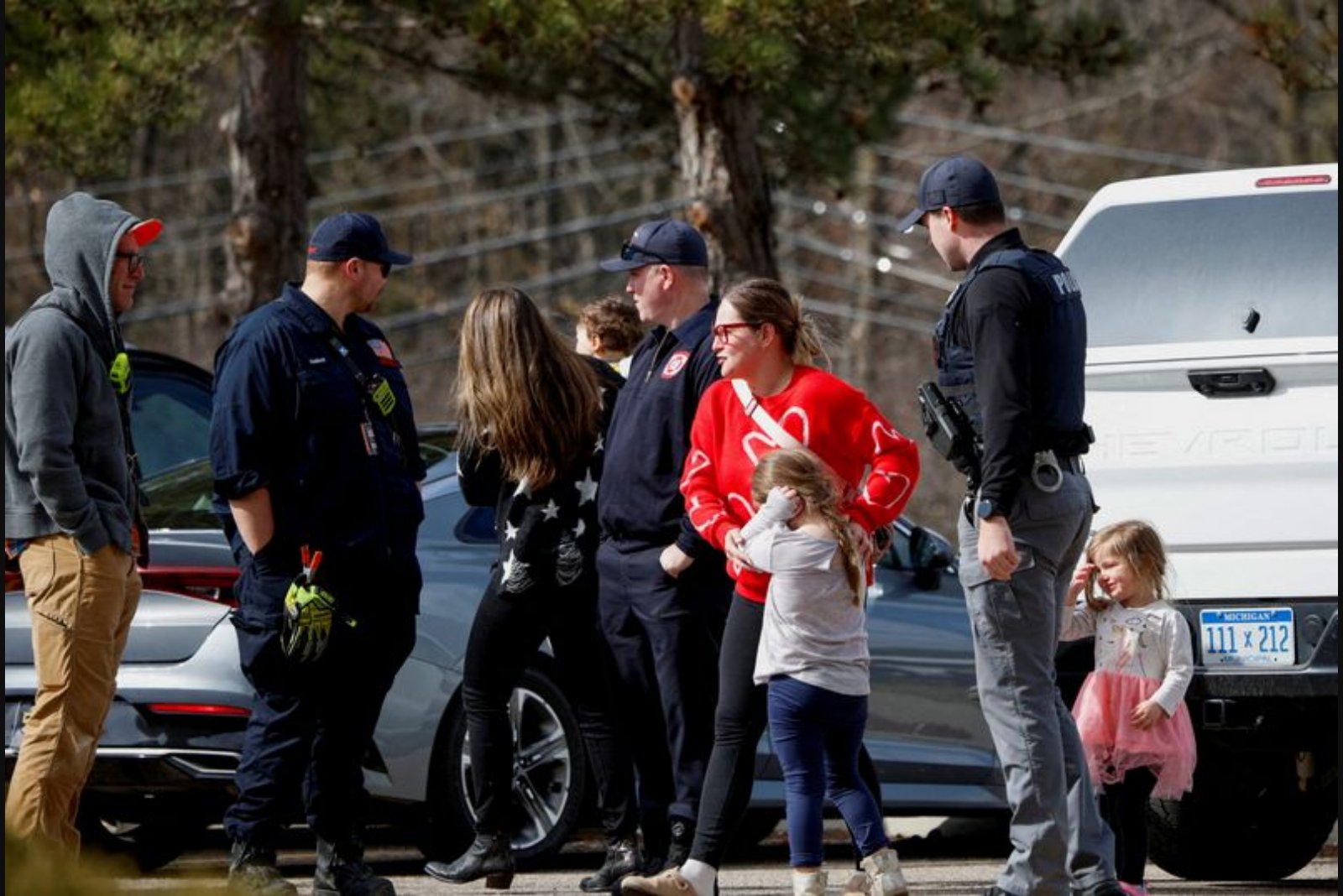
The Federal Bureau of Investigation has determined that the March 12 attack on the Temple of Israel in Michigan constituted an "act of terrorism" motivated by ideology supportive of Hezbollah, officials said.
Jennifer Runyan, the special agent in charge of the FBI's Detroit field office, described the sequence of events in which 41-year-old Ayman Ghazali - who was born in Lebanon and became a U.S. citizen in 2016 - crashed his truck into the synagogue, then opened fire on security guards and caused an explosion using fireworks. Ghazali died by suicide during the incident.
Runyan emphasized that, while Ghazali had consumed pro-Hezbollah ideology before the attack, the FBI has not been able to verify that he was a member of Hezbollah. She also said investigators have found no evidence that he acted with co-conspirators.
Jerome Borgen, the U.S. Attorney for the Eastern District of Michigan, framed the legal view from his office. "Had this man lived, I am convinced that my office would prove beyond a reasonable doubt that he committed the federal crime of providing material support to Hezbollah," Borgen said.
Officials provided additional context about Ghazali's actions in the days around the attack. Runyan said that the day before the assault he began posting images on social media of Iranian Supreme Leader Ayatollah Ali Khamenei, who was killed in U.S.-Israeli strikes last month. On the morning of March 12, while sitting in the Temple of Israel parking lot, Ghazali messaged his sister that he planned "to commit a mass terrorist attack."
The attack occurred at a synagogue that houses a preschool; authorities said no one else died in the incident. The presence of children at the site at the time heightened concerns among investigators and community members, though officials reported there were no additional fatalities.
The FBI's public statements noted Hezbollah's origins and U.S. designations: Lebanese armed group Hezbollah was founded by Iran's elite Islamic Revolutionary Guard Corps in 1982, and both Hezbollah and the IRGC are designated as foreign terrorist organizations by the United States. The public account also referenced broader regional developments, stating that the U.S. and Israel launched a war against Iran on February 28.
Law enforcement figures placed the synagogue assault within a larger pattern of attacks and bias incidents. FBI data cited by officials show that anti-Jewish incidents have risen, accounting for nearly two-thirds of more than 5,300 religiously motivated hate crimes recorded since February 2024.
Investigators continue to examine Ghazali's communications and activities to better understand his motives and any potential links, though, as Runyan said, there is currently no verified organizational membership or evidence of collaborators in the attack.
Key points
- FBI has labeled the March 12 assault on the Temple of Israel an "act of terrorism" inspired by pro-Hezbollah ideology; the attacker died at the scene.
- Authorities have not verified that the attacker was a member of Hezbollah and say there is no evidence of co-conspirators; prosecutors said they would have charged him with providing material support to Hezbollah if he had survived.
- The incident occurred at a synagogue that also hosts a preschool; the attack is noted as part of a rise in anti-Jewish and religiously motivated hate crimes.
Risks and uncertainties
- Uncertainty about any formal organizational ties - the FBI has not verified membership in Hezbollah, leaving open questions about external direction or support; this uncertainty affects intelligence and counterterrorism sectors.
- Potential for continued lone-actor radicalization - investigators report ideological consumption by the attacker, highlighting risks for community security and public-safety service demand.
- Rising antisemitic incidents - increases in anti-Jewish hate crimes could have implications for places of worship, religious education providers, and private security services.