
World March 27, 2026

FAA Suspends Operations at Major Washington-Area Airports After Odor Forces TRACON Evacuation

Potomac Consolidated TRACON evacuated; ground stops placed at Reagan National, Dulles and Baltimore during evening operations

By Hana Yamamoto
FAA Suspends Operations at Major Washington-Area Airports After Odor Forces TRACON Evacuation

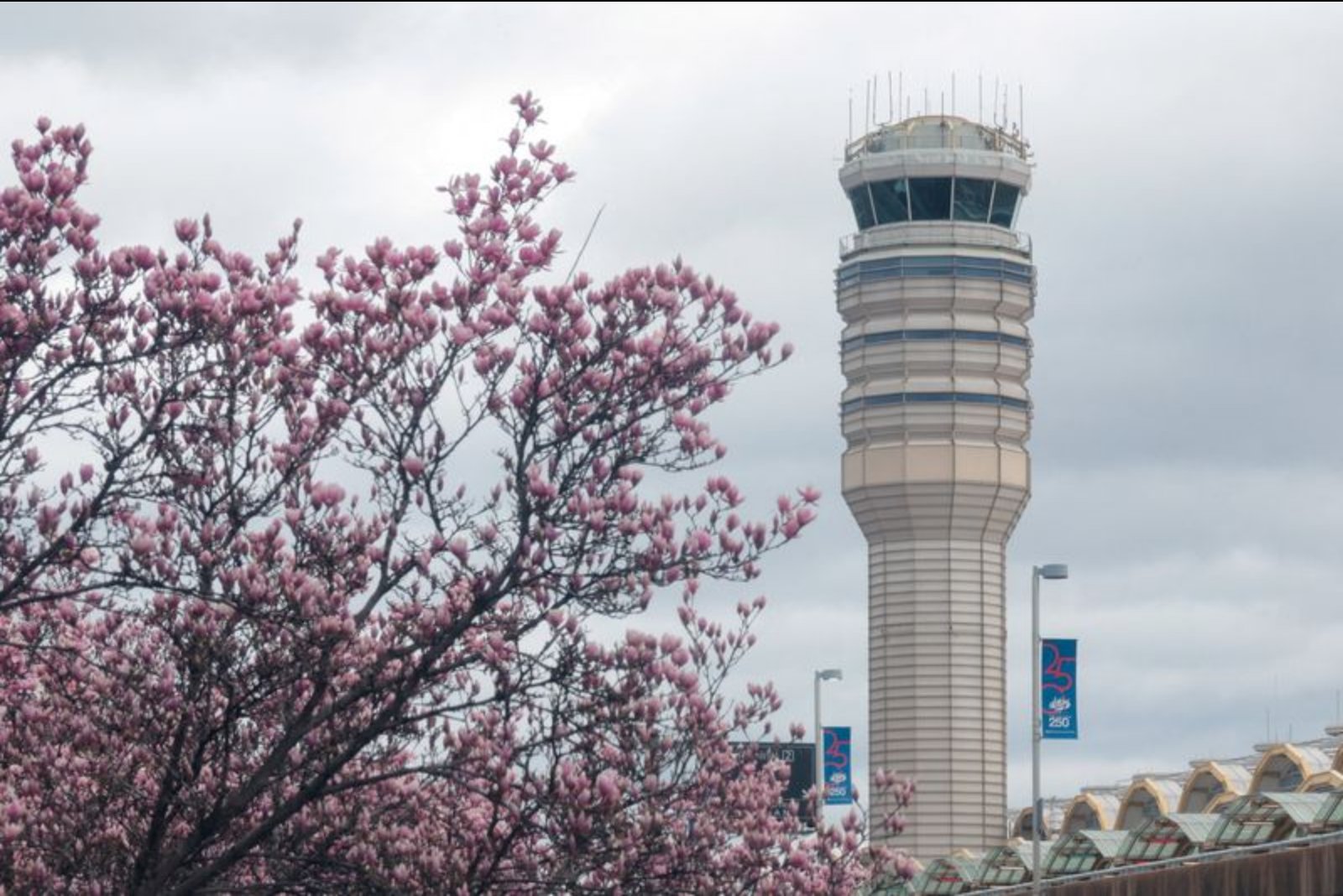
On March 27 the Federal Aviation Administration ordered a halt to air traffic at the region's primary airports after an odor was detected at the Potomac Consolidated Terminal RADAR Approach Control (TRACON) facility in Warrenton, Virginia. The evacuation of the facility led to ground stops at Reagan Washington National, Washington Dulles, Baltimore and smaller regional airports, with inbound flights holding or diverting and departures suspended from about 6:40 p.m. EDT.

Key Points

  • FAA ordered ground stops at Reagan Washington National, Washington Dulles, Baltimore and smaller airports after an odor was detected at the Potomac Consolidated TRACON facility in Warrenton, Virginia.
  • Inbound flights were reported holding or diverting and no departures occurred after ground stops began at about 6:40 p.m. EDT; FlightAware showed delays of roughly 25% at Baltimore and National, and 11% at Dulles.
  • This is the second incident in about two weeks involving an odor at the Warrenton control facility; authorities tied a March 13 stoppage to a strong chemical smell from an overheated circuit board.

On March 27 the Federal Aviation Administration temporarily stopped air traffic at the Washington, DC area's three main airports following the detection of an odor at a Virginia air traffic control facility, the agency said. The smell prompted the evacuation of the Potomac Consolidated Terminal RADAR Approach Control - commonly known as TRACON - which manages airspace for numerous airports across the Washington region.

Ground stops were issued at Reagan Washington National Airport, Washington Dulles International Airport and Baltimore, along with smaller airports in Charlottesville and Richmond. The FAA said these restrictions began at about 6:40 p.m. EDT, and that departures from the affected airports had not taken place since that time.

A person briefed on the situation described the odor as a burning smell, and said it appeared similar to the issue that led the FAA to halt air traffic at the same facility on March 13. In that earlier incident the FAA reported it paused work because of a strong chemical smell that was linked to an overheated circuit board.

Flight tracking information indicated immediate operational impacts. Flightradar24 reported that inbound flights to the region were either holding in the air or diverting to alternate airports. The FAA said an update on the situation was expected around 8:00 p.m. EDT.

FlightAware, which monitors flight status, reported elevated delay rates in the affected airports' operations: approximately 25% of flights at Baltimore and Reagan National were delayed, while Dulles was reporting delays on about 11% of its flights.

This marks the second occurrence in roughly two weeks in which an odor at the Warrenton facility has disrupted regional aviation traffic. Officials provided limited detail about the source of the latest smell beyond the account from the briefed individual comparing it to the prior incident.


Context and operational notes

The Potomac Consolidated TRACON is responsible for sequencing and separating arriving and departing aircraft across a broad swath of Washington-area airspace. Evacuation of such a facility necessitates temporary traffic management actions, including ground stops and holding patterns for inbound flights, which were observed during this event.

Authorities indicated they would provide further information as it became available, with an initial update scheduled for 8:00 p.m. EDT on the same evening as the ground stops.

Risks

  • Recurring odor incidents at the Potomac Consolidated TRACON could cause repeated disruptions to regional flight schedules - impacting airlines, passengers and airport operations.
  • Delays, holds and diversions reported during the event indicate immediate operational strain on carriers and ground handling - affecting airline on-time performance and travel logistics.
  • The precise cause of the latest odor had not been officially confirmed at the time of the update, creating uncertainty about potential remedial actions and timelines for restoring normal operations.

More from World

Former Nepal PM K.P. Sharma Oli Detained as Probe Into Deadly Protests Advances Mar 27, 2026 Trump Says U.S. 'Does Not Have to Be There' for NATO After European Non-Support Mar 27, 2026 Secret Service Agent Assigned to Former First Lady Injures Leg in Accidental Discharge Near Philadelphia Airport Mar 27, 2026 Trump Signals Cuba as Next Focus After Citing U.S. Military Actions Mar 27, 2026 Lavrov and Iran’s Araqchi Explore Diplomatic Path as Middle East Fighting Intensifies Mar 27, 2026