
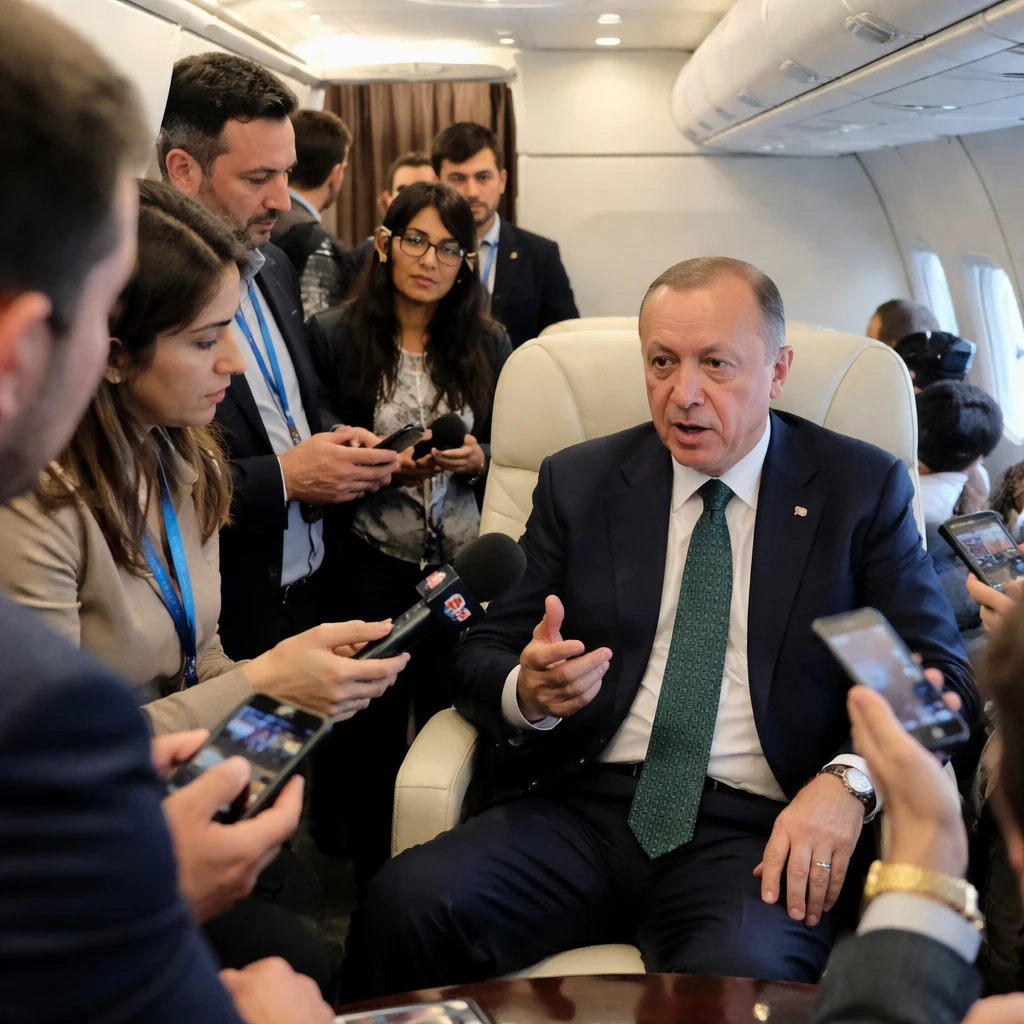
Turkish President Tayyip Erdogan said Turkey is taking steps to prevent rising tensions between the United States and Iran from spilling over into new conflict in the region, and he suggested that speaking directly at the leader level could help de-escalate the situation.
Speaking to reporters while on his return flight from Egypt on Thursday, Erdogan commended diplomatic work undertaken by both sides and signaled support for elevating discussions to the highest level after initial talks at lower levels have occurred.
"Turkey is doing its utmost to prevent U.S.-Iran tensions dragging the region into new conflict and chaos," Erdogan said, according to a transcript of his comments that was shared by his office.
In his remarks, the Turkish president noted that both the United States and Iran appear willing to pursue diplomatic avenues, and he characterized that disposition as a positive development. He also framed leader-to-leader talks as a logical follow-up once preliminary diplomatic channels have been exercised.
The comments were delivered aboard the president's aircraft following his trip to Egypt. Erdogan's office provided a transcript of the conversation with reporters, which included his assessment of the diplomatic posture of the two countries and Turkey's active role in efforts to limit the risk of escalation.
By emphasizing the potential value of high-level engagement - after lower-level negotiations - Erdogan highlighted a sequencing he believes could be effective: allow initial diplomatic exchanges to proceed, then consider direct talks between heads of state to solidify any progress. He explicitly described the willingness of both sides to pursue diplomacy as a positive sign, without offering further details on timing or topics of any potential meetings.
The president's statement reiterated Turkey's stated priority of preventing the emergence of new conflict and chaos in the region amid tensions between Washington and Tehran, and underscored Ankara's active diplomatic posture in relation to the situation.
Summary: President Erdogan said on his return flight from Egypt that Turkey is working to prevent tensions between the United States and Iran from causing new regional conflict, praised diplomatic efforts by both sides, and suggested that leader-level talks would be useful after lower-level negotiations.