
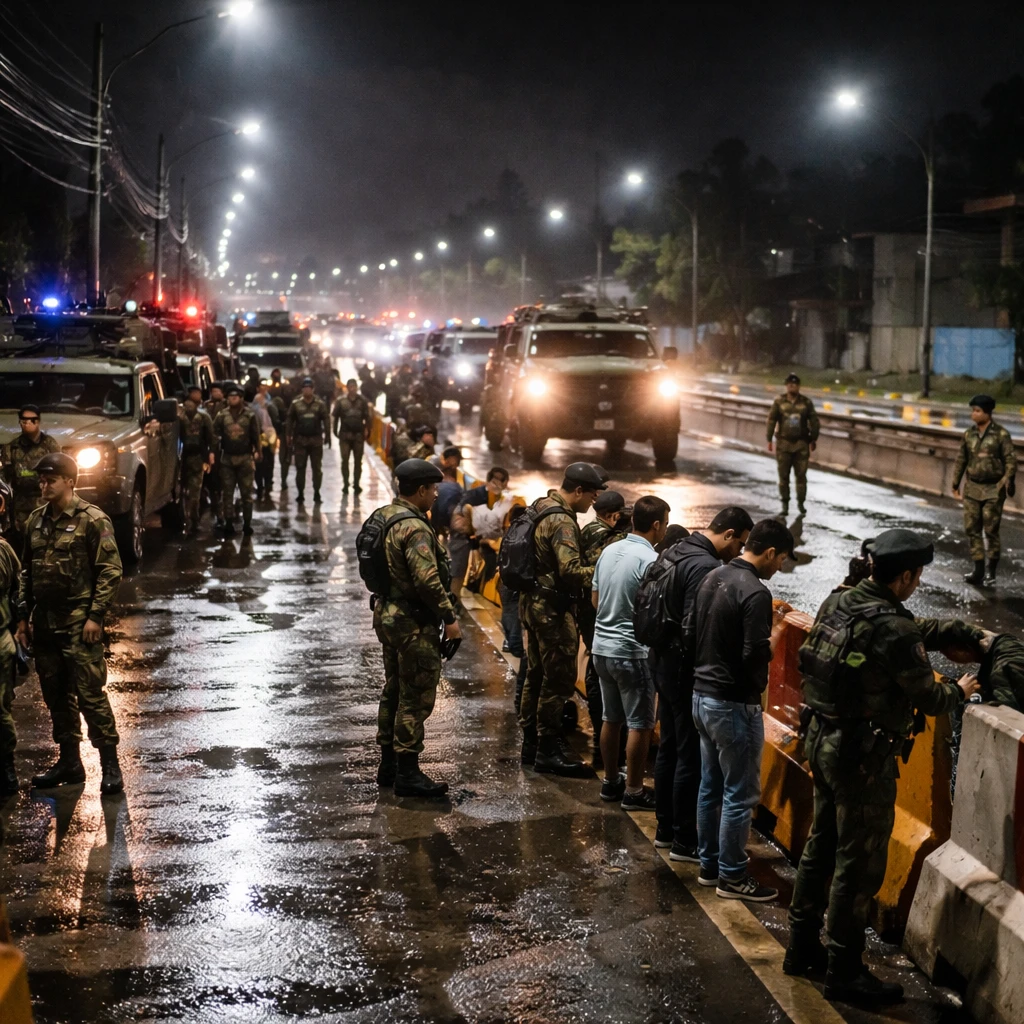
Quito, April 1 - Ecuador's government announced on Wednesday that intentional homicides dropped 28% nationwide in March, a decline officials linked to security operations conducted during a two-week nightly curfew in four provinces.
President Daniel Noboa imposed the curfew in Guayas, Los Rios, El Oro and Santo Domingo - provinces authorities have described as key drug trafficking corridors - and deployed intensified security force operations in those areas.
Interior Minister John Reimberg said the 28% reduction reflects a year-on-year comparison of March 2025 with March 2026. Reimberg added that the operations against crime led to about 4,300 arrests, including the detention of a ringleader.
Defense Minister Gian Carlo Loffredo framed the response as a demonstration of state authority, saying: "Control is not negotiated, it is exercised. And we will not stop. Ecuador is regaining control."
Government statements said the anti-crime actions, which received support from the United States, focused on four criminal groups. Among those cited was Los Lobos, a gang that Washington designated as a terrorist organization last year.
The announcement arrives against the backdrop of a high level of violent deaths in Ecuador during 2025. Official data showed around 9,200 violent deaths that year - a 31% increase over the prior year.
Operational details and scope
Authorities emphasized the geographical focus of the measures, concentrating security operations in provinces the government identifies as trafficking corridors. The curfew was nightly and limited in duration to two weeks, with intensified military and policing activity reported in the designated provinces.
Results reported by officials
- Intentional homicides declined by 28% in March when compared with March of the previous year, according to the interior minister.
- Approximately 4,300 people were arrested as part of the operations, including a ringleader.
- Operations targeted four criminal groups, including one previously labeled a terrorist organization by the United States.
Officials portrayed the actions as part of a continued effort to reassert state control over areas affected by organized crime. The government attribution of the homicide decline places emphasis on the concentrated security measures implemented during the curfew period.