
World January 21, 2026

Ecuador Imposes 30% Import Tariff on Colombian Goods to Pressure Border Security Cooperation

Trade sanctions aim to compel Colombia to jointly address drug trafficking and illegal mining along shared border

By Marcus Reed
Ecuador Imposes 30% Import Tariff on Colombian Goods to Pressure Border Security Cooperation

Ecuador’s new 30% tariff on imports from Colombia, effective February 1, seeks to prompt enhanced collaborative efforts to curb drug trafficking and illicit mining that threaten border security and regional stability. Despite considerable trade between the two countries, Ecuador cites insufficient Colombian cooperation amid rising cross-border crime.

Key Points

  • Ecuador announces a 30% tariff on Colombian imports starting February 1 to compel enhanced border security collaboration between the two countries.
  • Despite a significant trade deficit over $1 billion, Ecuador highlights insufficient Colombian cooperation in addressing drug trafficking and illegal mining along the 600-kilometer border.
  • Joint Colombian-Ecuadorian military operations continue, exemplified by the recent seizure of 2.2 tons of marijuana, indicating ongoing security collaboration amid increased punitive measures.

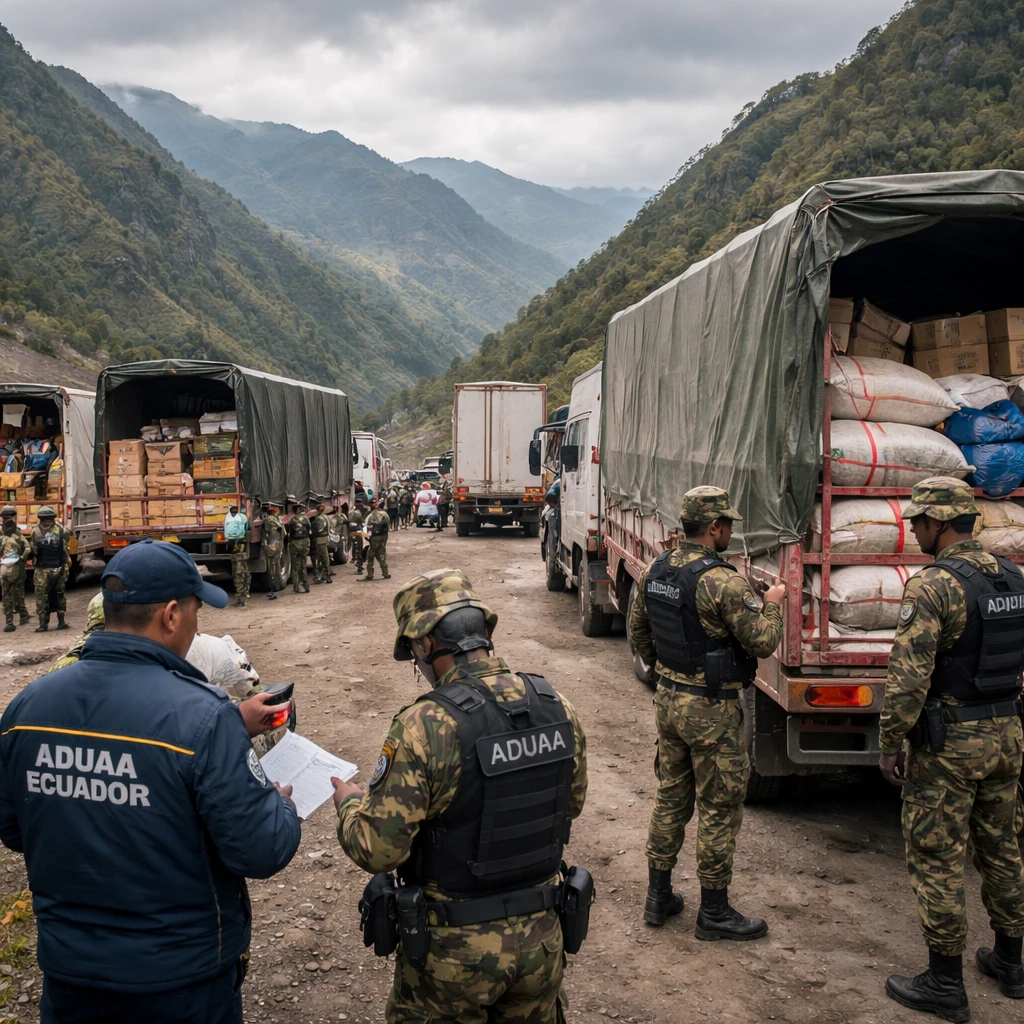
Ecuadorian President Daniel Noboa has declared a 30% additional tariff on goods imported from Colombia, scheduled to take effect starting February 1. This measure serves as a coercive tactic to urge Colombia into stronger partnership on border enforcement and crime control.

In a message posted on social media platform X, Noboa emphasized Ecuador's ongoing "genuine efforts at cooperation" with its neighbor despite a persistent trade deficit topping $1 billion annually. The president explicitly criticized Colombia’s apparent failure to match Ecuador’s commitment while Ecuador's military actively confronts criminal organizations linked to drug trafficking on their shared border.

Noboa affirmed that the punitive tariff will remain until Colombia demonstrates a firm, collaborative stance to jointly tackle drug trafficking and illegal mining activities plaguing their 600-kilometer frontier. He insisted Colombia align its seriousness and determination with Ecuador’s resolve in addressing these transnational crimes.

The border zone between Ecuador and Colombia has historically served as a conduit for cocaine trafficking. Recently, a surge in cocaine production has transformed the region, with Ecuador emerging as a critical hub facilitating drug smuggling. This shift has contributed to a rise in violent incidents such as homicides, kidnappings, and extortion.

Data from Colombia’s statistics agency reveals that through November, Colombian exports to Ecuador reached $1.7 billion, including vital electricity supplies essential to Ecuador's infrastructure.

Following Noboa’s announcement, Colombia’s defense ministry reported a joint operation where their armed forces confiscated 2.2 tons of marijuana along the border. A ministry statement on their social channels confirmed ongoing bilateral cooperation, underscoring a commitment to intelligence sharing and coordinated efforts to combat drug trafficking and insecurity in the border regions.

Risks

  • Potential escalation of trade tensions between Ecuador and Colombia impacting cross-border commerce, particularly essential goods such as electricity supplies, which may disrupt Ecuador’s energy sector and broader economy.
  • Continued prevalence of drug trafficking and illegal mining could exacerbate regional violence, undermining security and stability in border communities and raising operational risks for logistics and transportation sectors.
  • Uncertainty surrounding the duration and extent of the 30% tariff could affect market dynamics for importers and exporters reliant on bilateral trade, potentially influencing pricing and supply chain continuity.

More from World

U.S. Olympic hospitality site renamed 'Winter House' after protests over ICE shootings Feb 2, 2026 Greenland’s premier says U.S. still aims for control despite ruling out military action Feb 2, 2026 Kremlin says Russia has long offered to process or store Iran’s enriched uranium Feb 2, 2026 Long-Awaited Rafah Reopening Prompts Hope and Anxiety Among Palestinians Stranded Across Border Feb 2, 2026 Rafah Reopens but Core Questions Persist Over Implementation of Trump’s Gaza Blueprint Feb 2, 2026