
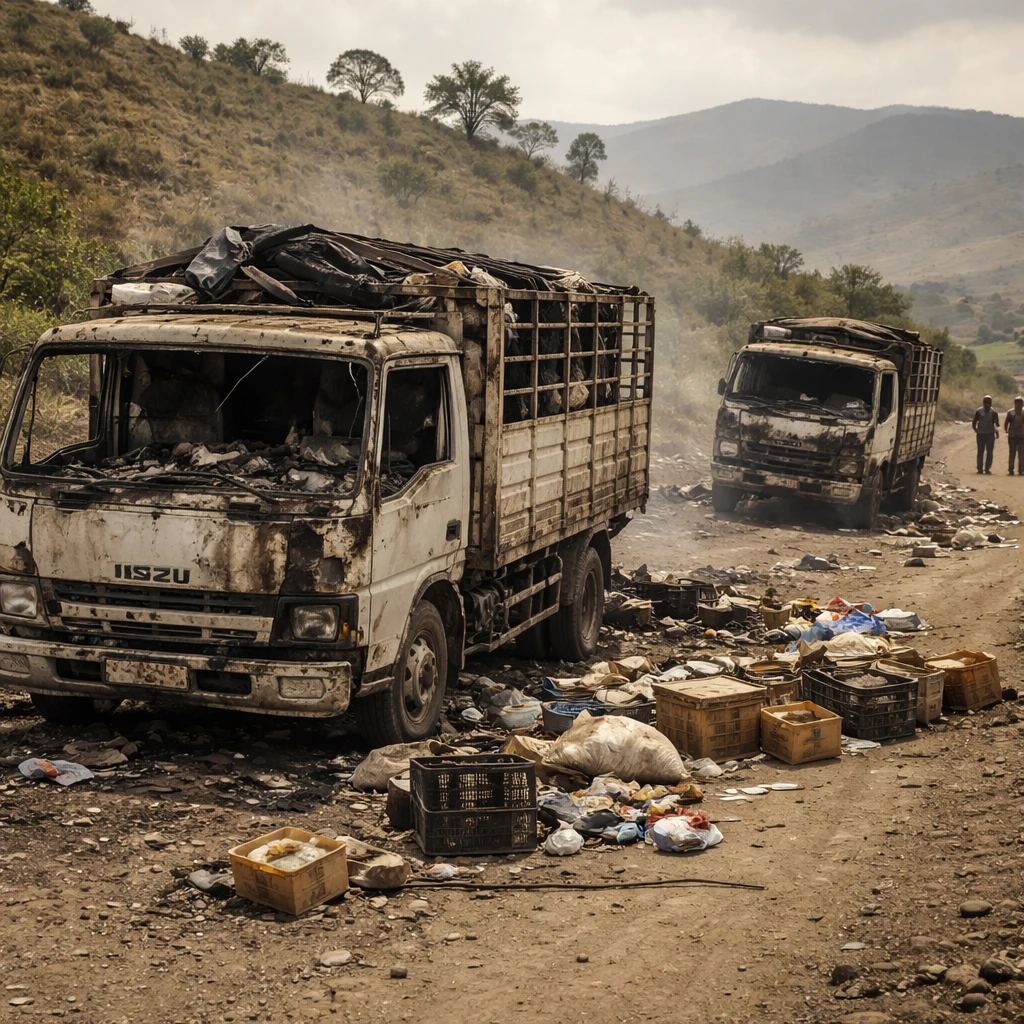
Jan 31 - One person died and another was wounded after drone strikes hit two trucks in Ethiopia's northern Tigray region on Saturday, local officials and aid workers said, marking another escalation in tensions between regional and national forces.
A senior Tigrayan official told reporters the strikes struck two Isuzu trucks close to Enticho and Gendebta, two locations in Tigray situated roughly 20 kilometres apart. A humanitarian worker independently confirmed the strikes. Both sources requested anonymity.
The Tigrayan official attributed the attacks to the Ethiopian National Defence Force, but did not present evidence to substantiate that claim. A spokesperson for the ENDF did not answer a request for comment.
It remained unclear immediately what the trucks were carrying. Dimtsi Weyane, a news outlet affiliated with the Tigray People’s Liberation Front, published photographs on Facebook that it said depicted the damaged trucks. The outlet reported the vehicles were carrying food and cooking items. Conversely, pro-government activists posting on social media asserted the trucks were transporting weapons.
The strikes occur against the backdrop of a renewed upsurge in fighting between regional and federal forces. Earlier in the week, diplomatic and government sources reported clashes in parts of western Tigray that are contested. National carrier Ethiopian Airlines also cancelled flights to Tigray earlier this week, and residents in the region rushed to withdraw cash from banks.
Observers have recalled that Ethiopia’s national army engaged fighters from the Tigray People’s Liberation Front for two years until late 2022, a conflict that researchers say resulted in hundreds of thousands of deaths attributable to direct violence, the collapse of healthcare services and famine. The war formally ended with a peace agreement in November 2022, but several issues have remained unresolved, including disputes over territory in western Tigray and delays in the disarmament of Tigray forces.
At present there has been no independent verification of the party responsible for Saturday’s strikes, nor definitive confirmation of the cargo carried by the two trucks. The differing accounts from local media aligned with the TPLF and pro-government voices underscore the contested narratives on the ground.
Context and immediate effects
The incident adds to recent disruptions in Tigray, where civilian movement, air travel and access to banking services have been affected in recent days. Humanitarian workers and local officials continue to provide on-the-ground reporting, but key details remain disputed and unverified.