
World February 2, 2026

DHS to Equip Every Minneapolis Field Officer with Body Cameras, Plans Nationwide Rollout as Funds Allow

Secretary announces immediate deployment in Minneapolis after deadly ICE incidents; expansion tied to funding availability

By Jordan Park
DHS to Equip Every Minneapolis Field Officer with Body Cameras, Plans Nationwide Rollout as Funds Allow

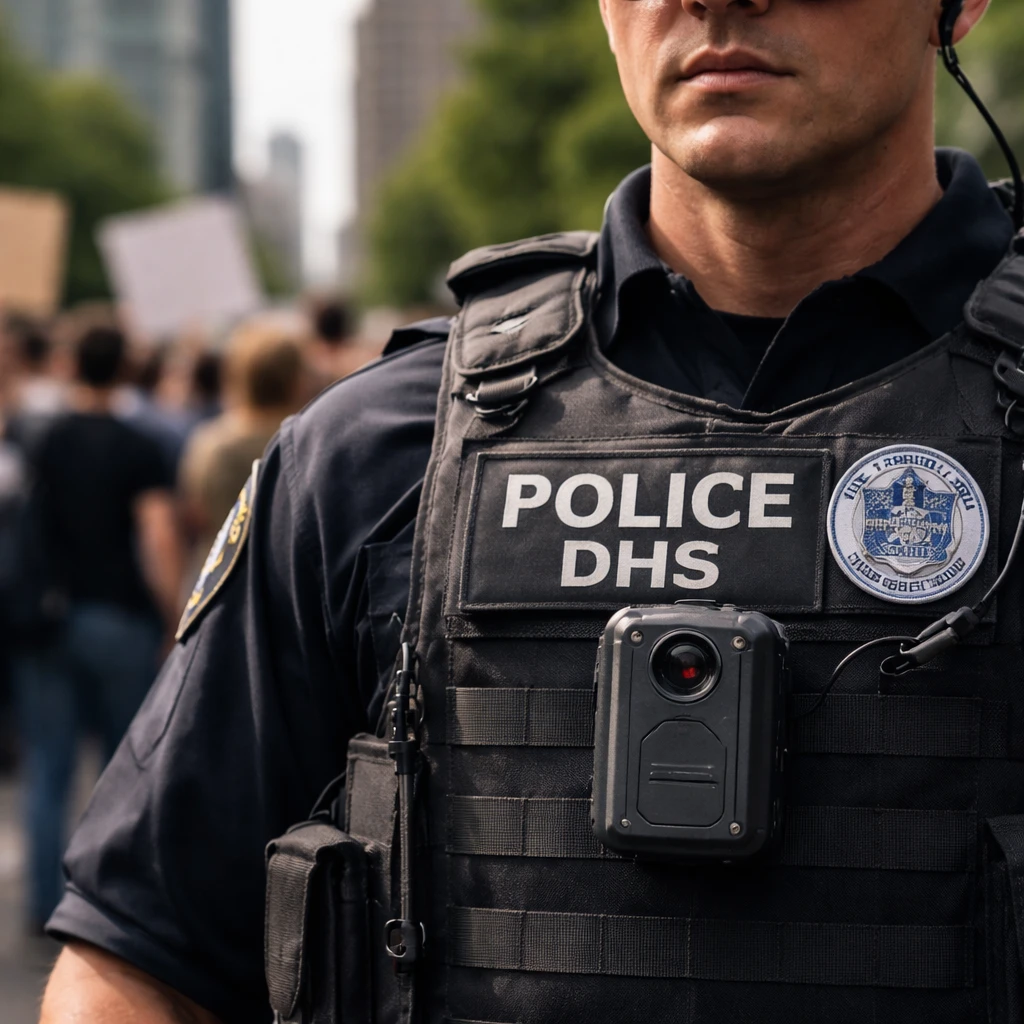
U.S. Homeland Security Secretary Kristi Noem announced an immediate deployment of body-worn cameras to every field officer in Minneapolis and said the department will expand the program across the country as funding permits. The move follows the killing of two U.S. citizens by federal immigration agents in Minnesota and ensuing nationwide protests. President Donald Trump commented that body cameras are generally beneficial for law enforcement, while Noem coordinated the decision with senior DHS and immigration officials.

Key Points

  • Immediate deployment of body-worn cameras to every DHS officer in the field in Minneapolis; national expansion to follow as funding allows - impacts law enforcement operations and public accountability.
  • Announcement follows the killing of two U.S. citizens by ICE agents in Minnesota and subsequent nationwide protests - raises scrutiny of immigration enforcement practices and policy responses.
  • Senior officials including CBP Commissioner Rodney Scott, border operations lead Tom Homan, and acting ICE director Todd Lyons were involved in discussions about the deployment - relevant to DHS operational leadership and resource allocation.

WASHINGTON, Feb 2 - U.S. Homeland Security Secretary Kristi Noem said on Monday that her department would immediately equip every officer operating in the field in Minneapolis with body-worn cameras and that the body camera initiative will be extended nationwide as financial resources become available.

Noem posted on X: "Effective immediately we are deploying body cameras to every officer in the field in Minneapolis. As funding is available, the body camera program will be expanded nationwide." She added that the administration will act quickly to obtain and distribute the devices, saying the Trump administration will "rapidly acquire and deploy body cameras to DHS law enforcement across the country."

The announcement comes in the wake of the killing last month in Minnesota of two U.S. citizens by agents from the U.S. Immigration and Customs Enforcement agency, which operates under the Department of Homeland Security. Those killings have sparked protests on a national scale and intensified scrutiny of the administration's immigration enforcement practices.

Human rights advocates have criticized the administration's immigration policies, saying they fall short on due process and contribute to a hostile atmosphere for immigrant communities. The administration has defended its approach as a measure to strengthen domestic security.

President Donald Trump responded to Noem's announcement on Monday, telling reporters that body cameras "generally tend to be good for law enforcement, because people can’t lie about what’s happening." He added: "So it’s, generally speaking, I think 80%, good for law enforcement. But if she wants to do that, I’m okay with it," while noting that the decision was Noem's and not his own.

Noem made the deployment decision after a call with senior immigration and border officials, including U.S. Customs and Border Protection Commissioner Rodney Scott, Trump border czar Tom Homan - who has been tasked to take over operations in Minnesota - and acting ICE director Todd Lyons.

The department's rollout strategy ties the pace of nationwide expansion to available funding, leaving the timeline for broader deployment contingent on budgetary resources.


Contextual note - The immediate Minneapolis deployment and planned nationwide expansion were announced as part of the administration's response to recent events involving ICE agents and the public reaction they produced.

Risks

  • Funding-dependent rollout - the nationwide expansion of body cameras is explicitly tied to available budgetary resources, creating uncertainty for vendors, procurement timelines, and implementation schedules in the security technology sector.
  • Continued public scrutiny and protests following the Minnesota incidents may influence operational decisions and policy adjustments, affecting DHS legal and reputational risk exposure and potentially altering enforcement practices.
  • Human rights and due process criticisms of immigration policies remain active; these disputes could drive further oversight, litigation, or changes to enforcement protocols that affect DHS operations and related market segments.

More from World

Justice Department Files Reopen Network of Ties Between Jeffrey Epstein and Prominent Figures Feb 2, 2026 Trump’s Kennedy Center Renovation Joins Wide-Ranging Building Agenda Transforming Washington Feb 2, 2026 California Physician Faces First Private Suit Under Texas Abortion Drug Ban Feb 2, 2026 Venezuela’s Interim President Meets U.S. Envoy as Bilateral Ties Edge Forward Feb 2, 2026 Cuban Official Confirms Limited Exchanges With U.S., Stops Short of Calling It a Dialogue Feb 2, 2026