
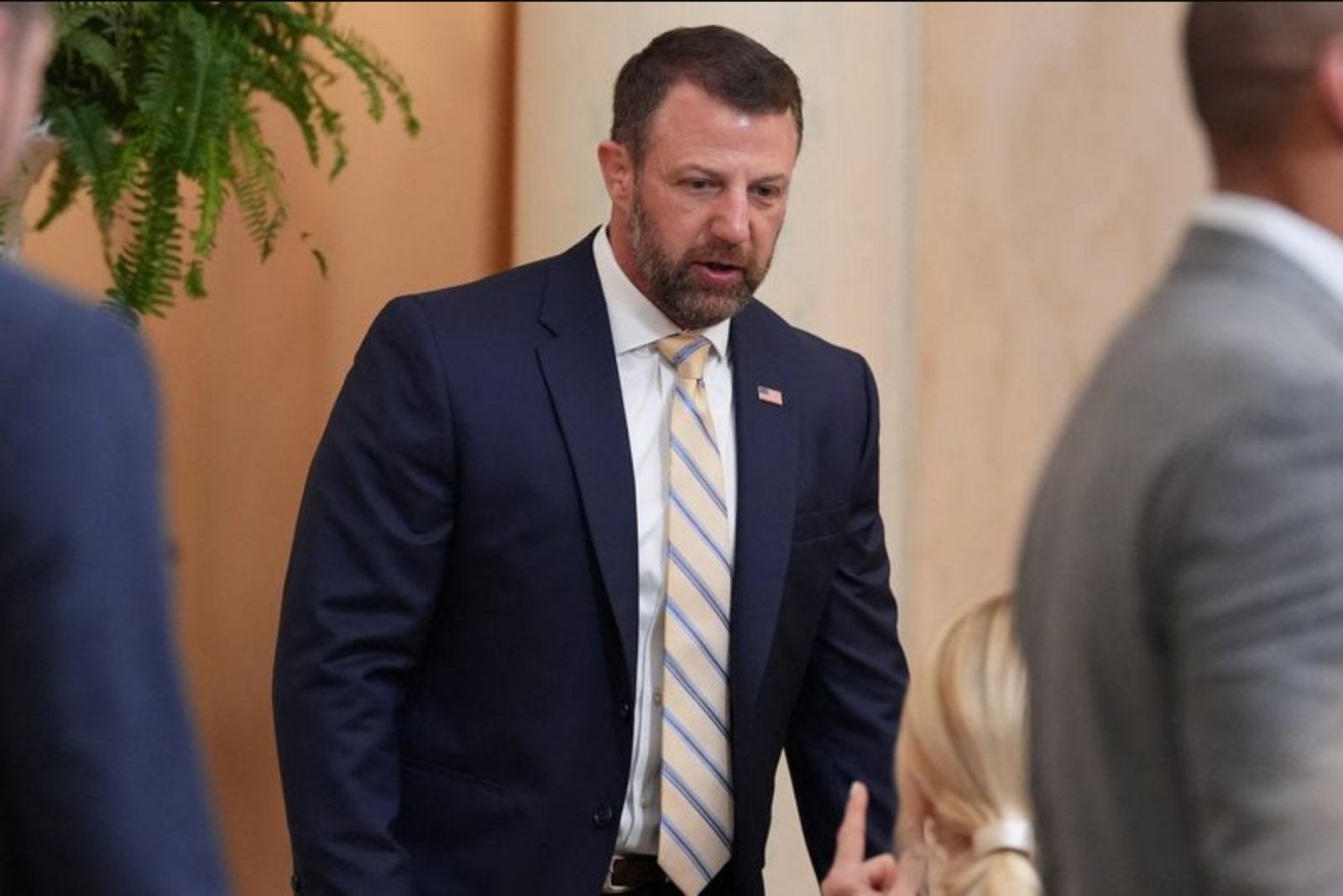
Homeland Security Secretary Markwayne Mullin said on Tuesday that U.S. customs officials could cease processing international travelers at major airports located in jurisdictions designated as sanctuary cities or states that have resisted cooperation with the administration’s immigration policies.
Mullin suggested the step as one option being considered while Congress remains deadlocked over new funding for the Department of Homeland Security, including for Customs and Border Protection. He said he expected to discuss the idea with President Trump but emphasized that no final decision had been made.
"It’s an option," Mullin said to reporters in North Carolina, noting the possibility of pulling customs officers from airports in cities that have adopted restrictions on local immigration enforcement. "If cities are going to sit there and say that they’re not going to enforce immigration policies, then I’ll repeat myself and say it doesn’t make any sense for us to process international travelers through that city."
Officials have described the withdrawal of customs processing as one among several measures under consideration as legislative negotiations over DHS funding continue without resolution. Mullin said the administration would begin conversations about the proposal but added, "This isn’t something that I’m necessarily going to do," and that it remained a subject under consideration.
The U.S. Department of Justice previously published a list of jurisdictions in October 2025 that it categorized as sanctuary cities and states. That list includes numerous metropolitan areas with major international gateways such as Denver, Philadelphia, Chicago, Los Angeles, New York City, Newark, Seattle and San Francisco.
Stopping customs processing in airports located in those locales could have far-reaching consequences for air travel and commerce. More than 50 million international travelers arrived at the three major New York airports alone last year. Officials and industry observers have warned that such a move could effectively halt international air traffic and associated trade in affected hubs.
The potential disruption also carries implications for major international events. The FIFA World Cup is set to begin in early June, and interruptions to customs processing at major airports could have material ramifications for travel related to the tournament.
Mullin linked the consideration of withdrawing customs personnel to the broader political standoff over immigration enforcement funding. He cited the ongoing failure of congressional negotiators to reach a deal to fund DHS, saying Democrats have refused to support additional money for the administration’s immigration crackdown without reforms aimed at scaling back aggressive tactics.
The Homeland Security secretary argued that state and local measures that limit immigration enforcement conflict with federal immigration law and framed such policies as a motivation for considering the removal of customs resources from airports in noncooperative jurisdictions.
Next steps
At this stage, Mullin indicated discussions will continue inside the administration and with lawmakers as options are weighed, but he did not announce any immediate changes to customs operations at airports.