
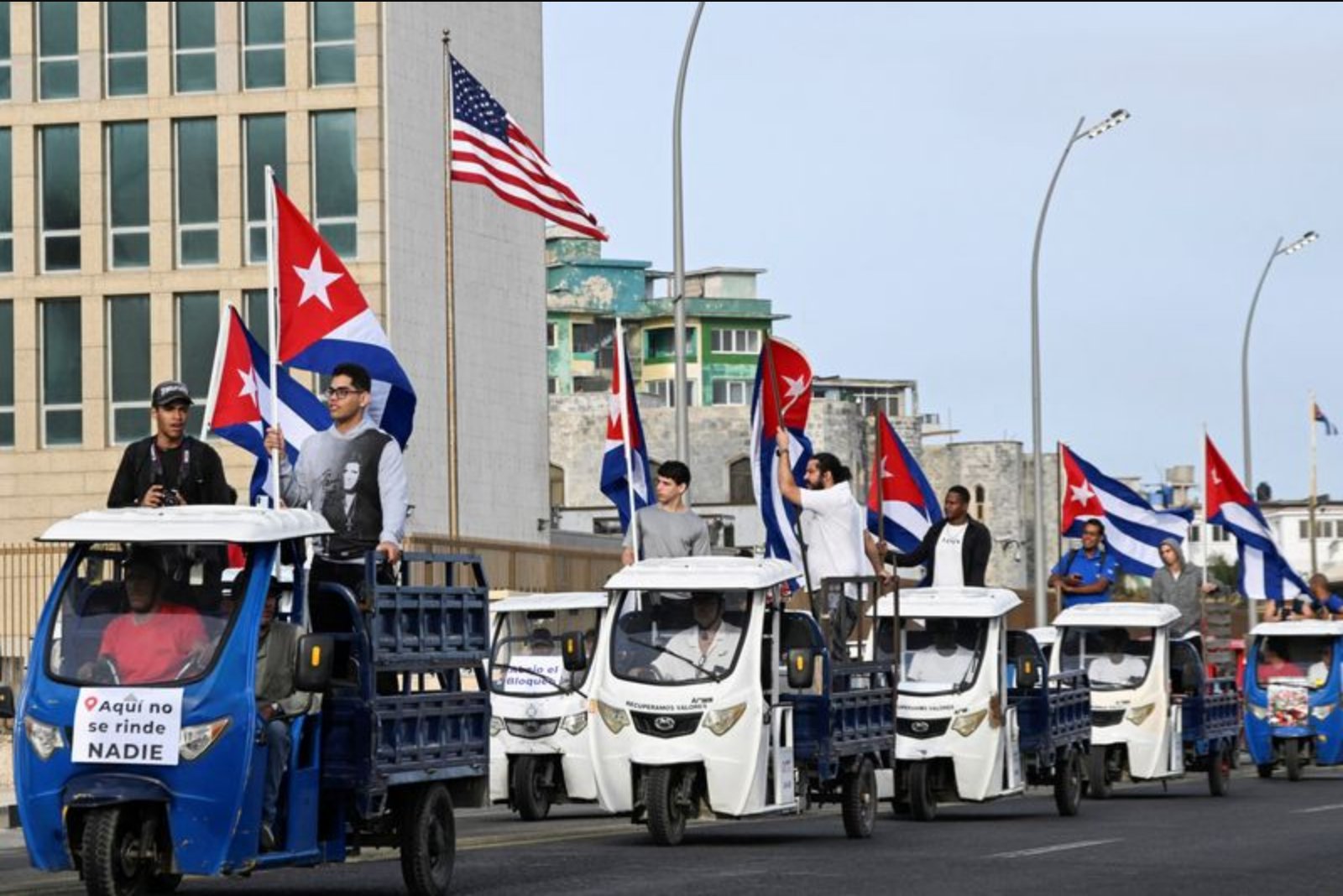
HAVANA - On Thursday, April 2, Cuban activists rode bicycles and electric tricycles along the Malecon waterfront in a government-organized caravan that moved past the U.S. Embassy in Havana. The procession, which included Cuban President Miguel Diaz-Canel among its participants, displayed flags and banners protesting the sanctions imposed on Cuba by the administration of President Donald Trump.
Organizers described the ride as an expression of resistance to U.S. measures aimed at limiting fuel supplies to the island. Vehicles in the caravan were pedal-powered or electric, a reflection of the constrained fuel supply that has disrupted mobility across the country and left public transportation struggling to operate.
The demonstration came a day after Cuba’s top diplomat in Washington publicly invited the U.S. government to assist in overhauling Cuba’s crippled economy. That appeal - part of negotiations that are ongoing - has not yet generated tangible results, according to officials involved in the talks.
Participants at the caravan said they support negotiations with the United States but insisted that any dialogue must respect Cuba’s sovereignty. "I believe that genuine dialogue between both governments is possible, but international law and our country’s autonomy must be respected," said Sheila Ibatao, a Havana law student taking part in the event.
"I believe that genuine dialogue between both governments is possible, but international law and our country’s autonomy must be respected,"
President Diaz-Canel did not address the crowd during the procession. The government has a history of organizing large-scale rallies near the U.S. Embassy in Havana, though officials said this particular caravan was smaller and more discreet, in part because of the ongoing fuel shortfall that has limited movement for residents and public services.
Adding to the complex energy picture, a Russian-flagged tankership arrived in Cuba this week and unloaded 700,000 barrels of crude oil at Matanzas port, an arrival described as likely to provide some relief in the coming weeks. The Trump administration, which has warned it could impose tariffs on countries exporting oil to Cuba and has explicitly prohibited imports of Russian oil, said it allowed the Russian-flagged tanker to dock at Cuba’s Matanzas port for humanitarian reasons.
The caravan and related diplomatic exchanges illustrate tensions between efforts to sustain internal mobility and economic functioning on the island and external pressure aimed at curbing Cuba’s access to international fuel supplies. Negotiations with the United States remain in progress, but participants and officials on both sides have so far not reported concrete outcomes from those talks.