
HAVANA, April 3 - Cuba moved to free inmates from its prison system on Friday following an amnesty announced the previous evening by state-run outlets. Officials characterized the measure as a "sovereign and humanitarian" gesture and said it would result in the liberation of more than 2,000 people, the largest such pardon in a decade.
The announcement came amid heightened pressure from the United States, which said it was "closely monitoring whether those it deems to be political prisoners would be among the liberated." A U.S. spokesperson added: "It is unclear how many, if any, political prisoners will be released. We continue to call for the immediate release of the hundreds of other brave Cuban patriots who remain unjustly detained."
Determining the extent to which the amnesty applies to inmates viewed by some as political prisoners remains a central point of contention between Havana and Washington. The comprehensive release of political detainees, or even a substantial portion of them, would be considered a significant concession in any dialogue between the two governments, but the available information does not confirm whether that will occur.
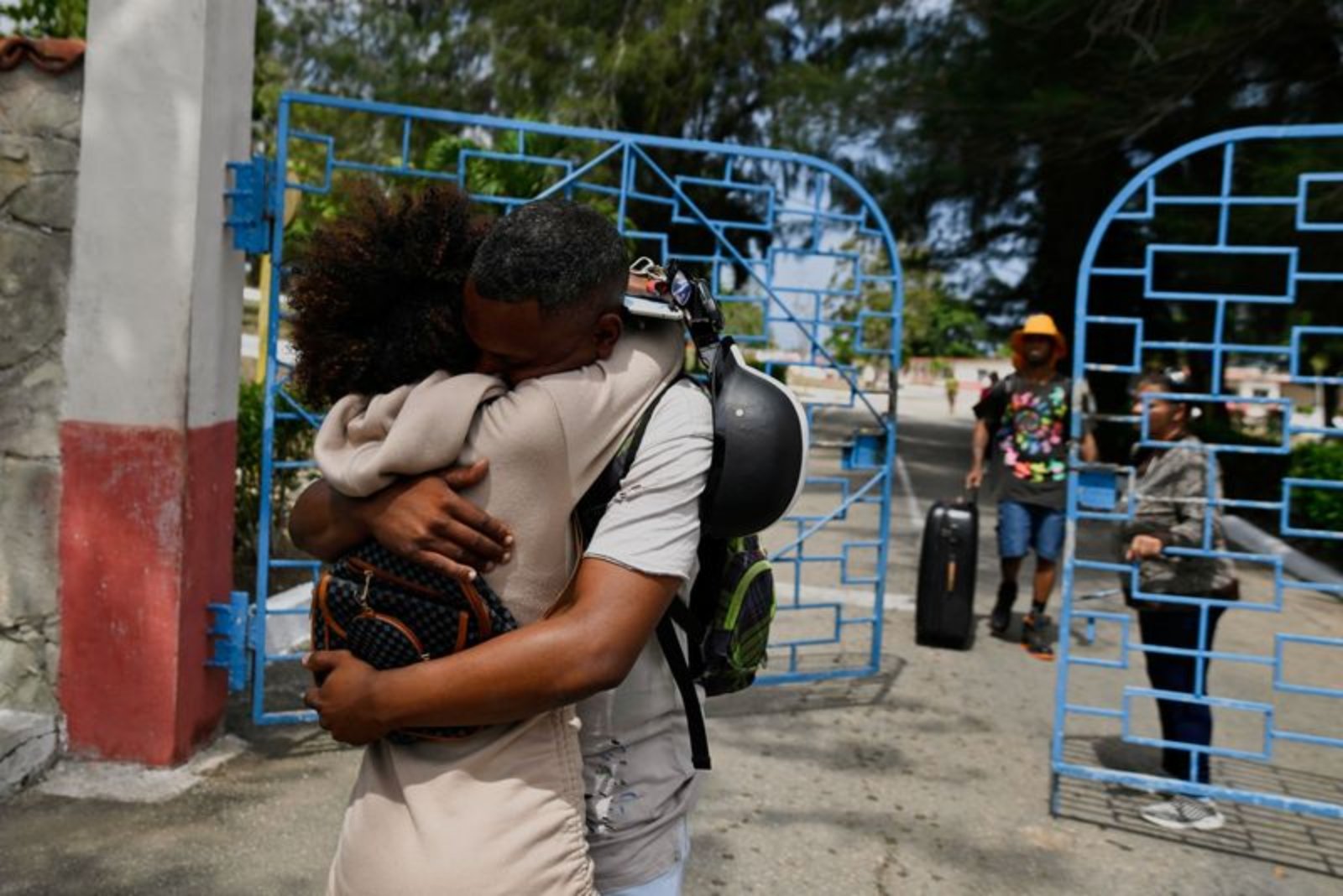
Scenes outside La Lima prison in Guanabacoa, on the outskirts of Havana, illustrated the immediate impact of the decree. Throughout Friday morning, a steady flow of men and women departed the facility. Those leaving included individuals pardoned for ordinary criminal offenses - such as theft and bribery - and not, in the instances observed, participants in anti-government protests.
One man convicted of theft celebrated loudly upon reuniting with a family member, shouting "Long-live freedom." Others emerged more quietly, some in tears, clutching a single white slip of paper indicating their release was due to a "pardon."
Abel Tamayo, convicted of bribery in 2024 and released on Friday, described the measure as evidence the Cuban authorities were open to change. "This shows they are open to everything, open to dialogue, open to national unity," Tamayo said. "There are many people who are imprisoned who may well be bad people, but there are also many who are good people."
State-run media that outlined the amnesty made no reference to either the United States or the Vatican, the latter of which had been involved in earlier prisoner releases. The Cuban government has repeatedly rejected suggestions that it acts under U.S. pressure.
Human rights groups, some of which receive funding from the U.S. government, say the Cuban authorities are holding several hundred political prisoners and pledged to scrutinize the release process. Havana has consistently denied it detains political prisoners, arguing that those arrested during anti-government demonstrations have been convicted of crimes including public disorder, resisting arrest, robbery and vandalism.
The Cuban Observatory for Human Rights, a Madrid-based organization that has received U.S. funding, reported that by midday Friday it had not yet registered the release of any so-called "prisoners of conscience." The group also noted that Cuba generally does not publish lists of names when conducting amnesties, a practice that complicates independent verification by rights organizations.
Multiple sources indicated that several prisons in and around Havana, as well as facilities in other provinces, had begun releasing inmates under the amnesty. The scale and profile of those released varied by facility, and confirmation of the identities of all beneficiaries remained incomplete.
The current measure echoes a prior large-scale pardon in late 2015, when the Cuban government pardoned 3,522 prisoners to coincide with the visit of Pope Francis. That earlier action occurred during a period of warming ties between Havana and Washington. More recently, in March, Cuba freed 51 prisoners under an arrangement with the Vatican; rights groups said some, but not all, of those released last month were among those they considered political prisoners.
At present, observers and advocacy groups are continuing to monitor the unfolding releases and are seeking greater transparency to determine whether individuals characterized by some governments and organizations as political prisoners are included among those freed.