
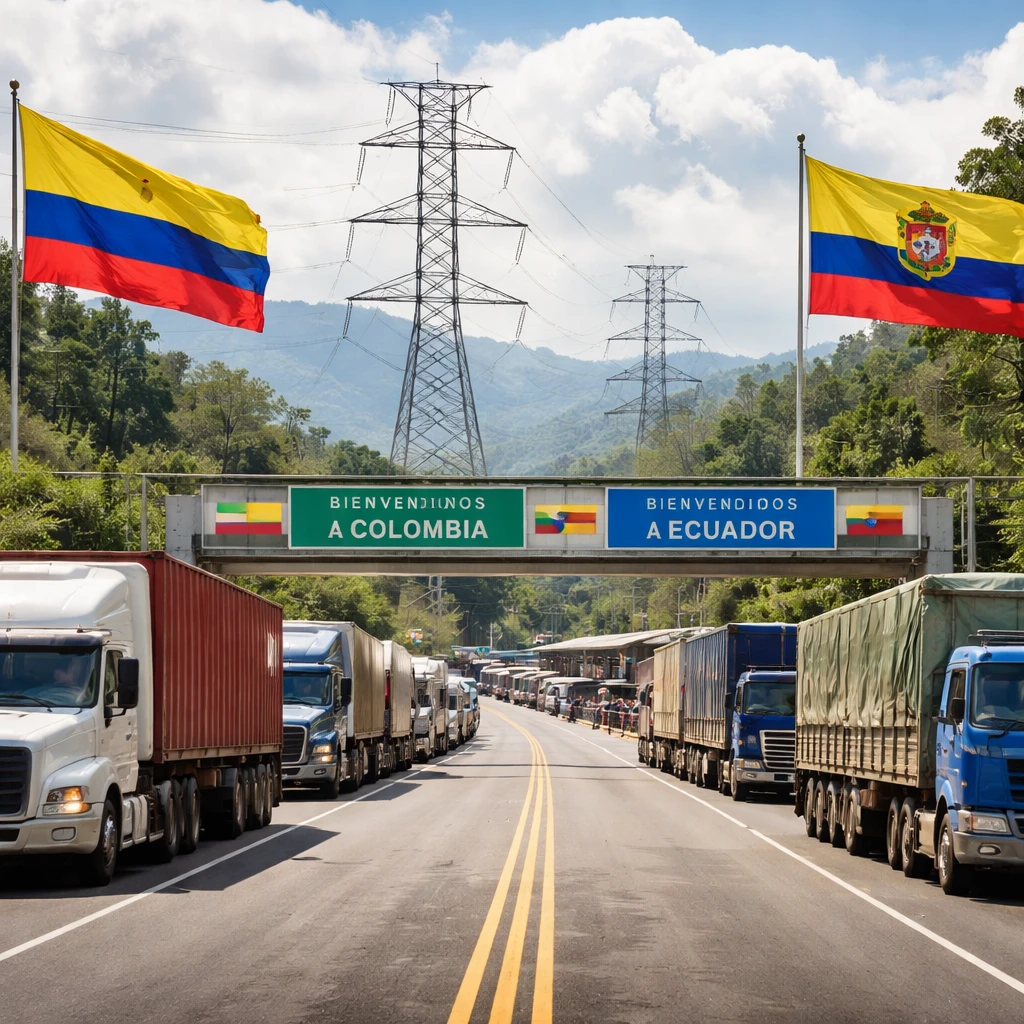
In a significant escalation of trade tensions between Colombia and Ecuador, the Colombian government announced early Thursday that it would enforce a 30% tariff on 20 specific products originating from Ecuador. This move follows Ecuador's recent declaration to impose a comparable 30% "security charge" on Colombian imports beginning February 1. Simultaneously, Colombia has halted electricity exports to Ecuador as a precautionary measure amid the dispute.
The conflict ignited after Ecuador's President Daniel Noboa cited a growing trade deficit favoring Colombia and accused Colombian authorities of failing to cooperate effectively in joint anti-drug trafficking operations. Given Colombia's role as a major electricity supplier to Ecuador, this dynamic has both trade and energy implications. However, Colombian officials have thoroughly repudiated these allegations. President Gustavo Petro emphasized Colombia's active efforts against narcotics, including the seizure of 200 tons of cocaine along their shared border and participation in numerous operations targeting drug networks.
In statements posted on X, Colombia’s leader affirmed strong collaboration with Ecuador's armed forces and expressed a willingness to further enhance shared actions against fentanyl trafficking. "I trust Ecuador has recognized our energetic and solidaristic response whenever called upon," he remarked.
Addressing the retaliatory tariffs, Colombia’s Ministry of Commerce and Industry described the 30% tariff as a "proportional, temporary, and revisable" response aimed at reestablishing equilibrium in bilateral trade after Ecuador’s unilateral step. The ministry affirmed Colombia's openness to diplomatic dialogue to resolve the underlying issues.
Moreover, Colombia's Ministry of Energy issued a resolution suspending all international electricity transactions with Ecuador. This preventive action is intended to safeguard Colombia’s domestic energy supply in light of unpredictable climatic conditions. The ministry indicated that electricity exports would resume once suitable technical, energy, and commercial conditions are met.
Prior to these developments, Colombia’s Energy Minister Edwin Palma criticized Ecuador’s tariff decision, declaring the dismantling of a recent initiative that had allowed private companies to participate in cross-border energy sales. This prior initiative was seen as a measure to mitigate possible power shortages. Colombia currently supplies up to 10% of Ecuador’s electricity consumption, underscoring the significance of the energy relationship between the two countries.
Efforts to obtain further comments from the Ecuadorian government regarding Colombia's latest actions were unsuccessful as the Ecuadorean authorities did not immediately respond.