
Thousands of Christians who remain in a handful of towns along Lebanon’s southern frontier report growing fear and a sense of isolation after the country’s military withdrew personnel from areas near their communities following an Israeli advance. The towns of Rmeich, Ain Ebel and Debel had largely resisted evacuation despite mass orders affecting southern Lebanon, with residents hoping their villages would be spared as the conflict between Israel and the Lebanese armed group Hezbollah expanded.
Lebanon’s army has stepped back from wide sections of the border region - much of which is predominantly Shi’ite Muslim - but until recently had kept forces close to the Christian towns to provide protection and to escort residents as they travelled to nearby urban centers to obtain food, medicine and other essentials. A new redeployment of troops on Tuesday, however, precipitated alarm among the ancient Christian communities in the south just days before Easter Sunday, the high point of the Christian calendar.
Community protection evaporates
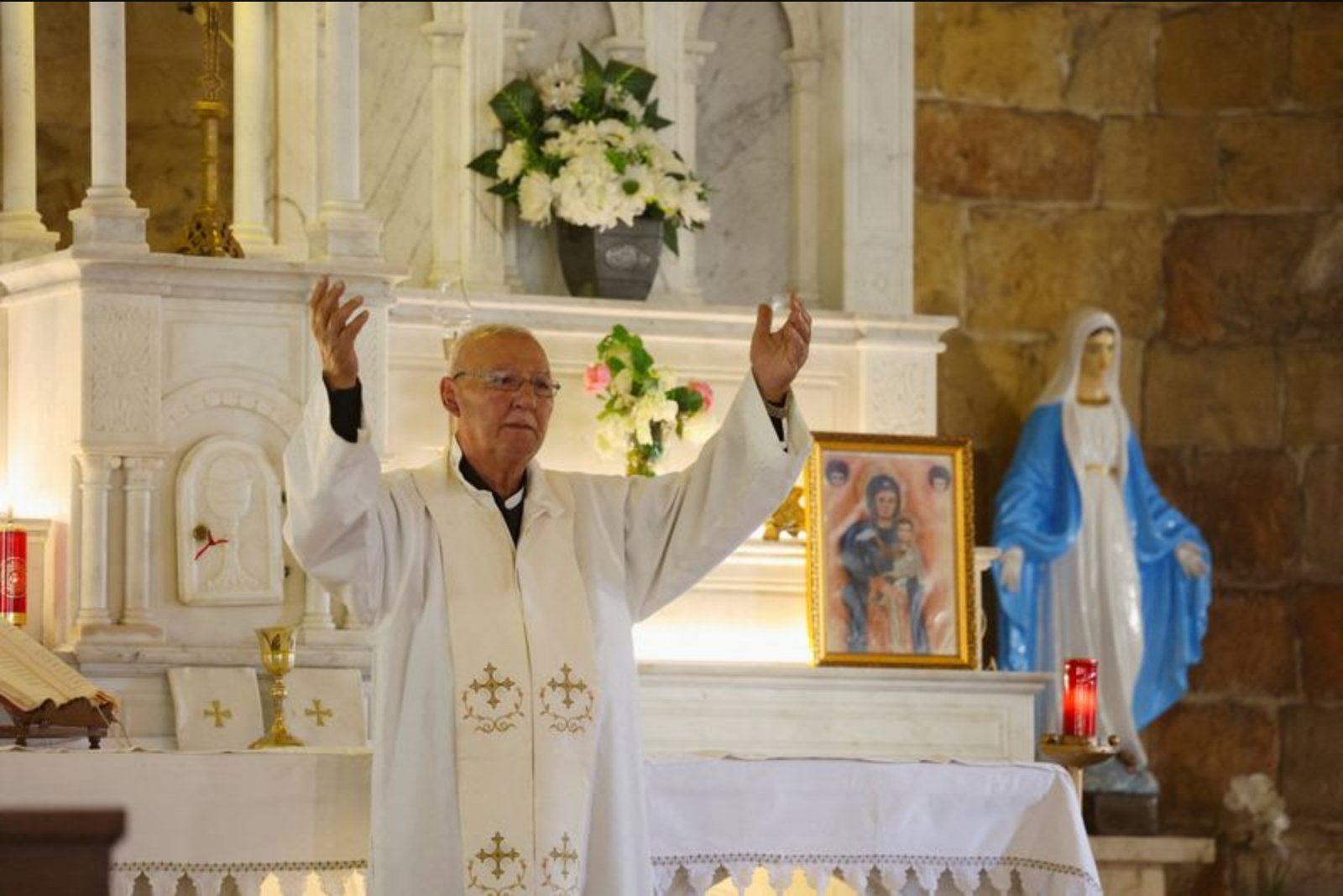
"The Lebanese army was our guarantee and gave us strength," said Fadi Falfil, a priest in Debel. He described the withdrawal as creating "a feeling of insecurity among the people." Falfil warned that the town, with about 1,650 residents, had only limited food and fuel stores and was bracing for the possibility that further escalation could cause widespread shortages of water, electricity and medicine. "What’s happening to us is that we’re caught between a rock and a hard place," he said, referring to missiles and rockets passing above the town.
In Rmeich, where approximately 6,500 people live, residents report property damage from intercepted munitions and heightened anxiety as the conflict approaches. Najib Amil, a priest in Rmeich, said Israeli interceptions of drones fired by Hezbollah had shattered the windows of at least five houses, and that shrapnel from another interception fell into the center of town one morning. Amil also said Israeli troops had demolished four homes close to the border, adding to the sense of threat.
Promises and conditions
Casualties and displacement across Lebanon have been heavy. Israel’s strikes have killed nearly 1,300 people in Lebanon and the country’s evacuation orders have displaced more than 1 million people. Israeli authorities have stated an intention to establish a "security zone" extending as deep as 30 km (20 miles) into Lebanese territory.
Lebanon was drawn into the widening conflict after Hezbollah fired rockets at Israel in solidarity with Tehran, two days after Iran was attacked by Israel and the United States on February 28. That exchange of strikes prompted an intensified Israeli ground and air offensive.
In a recent statement, the Lebanese army said Israeli military advances in the south had "encircled and isolated" its troops, and that forces had redeployed elsewhere as a result. The army did not specify how many troops were moved or the distances involved. The Israeli military did not immediately respond to questions on whether they had provided specific guarantees to Rmeich, Debel and Ain Ebel following the Lebanese army’s withdrawal.
The United States sought to shield Christian border villages from bombardment, according to U.S. ambassador to Lebanon Michel Issa, who said the United States had asked Israel to spare those villages and had "received a promise to that effect, on the condition that Hezbollah members do not infiltrate these villages." An Israeli military official said at the time that the military had not issued evacuation orders to Christian towns and that most Christian communities "were able to keep away Hezbollah operatives from entering the villages, and we act accordingly, so we don’t shoot at them."
Preparations and constraints ahead of Easter
With Easter approaching, town leaders described adjustments to daily life intended to reduce risk. Amil said masses were being held in daylight rather than at night, moved earlier so people would not need to venture out after dark.
Ain Ebel’s mayor, Ayoub Khreish, said the village had stocked supplies - including fuel, food and medicine - that he estimated would last about two months. Ain Ebel sits roughly 5 km (3 miles) from the border, and Khreish said supply lines were still open to the village for the time being. Yet he emphasized residents’ determination to remain at home: "If you remove a tree from the soil, would it survive? If you remove us from our lands, we would want to die or return to them," Khreish said. "We are attached to the soil, to our homes and our church - to everything in this village. This is why we decided not to leave."
Debel’s priest expressed a hope that the war would end by Easter, calling for a resurrection and improvement in Lebanon’s situation and for a return to true peace. But he also underscored the risk that sustained hostilities could sever critical services and supplies for his community.
Local impacts and immediate vulnerabilities
Residents described not only emotional strain but concrete vulnerabilities: limited food and fuel stocks, no local medical facilities in some towns, and damage to housing from intercepted munitions and nearby demolitions. In Rmeich, Amil said there was no medical center, meaning any battlefield injuries could quickly become fatal. The destruction of homes close to the border and the possibility of broader operations to clear border areas, as signalled by an Israeli defense minister’s statement that the military would destroy homes on the Lebanese side of the frontier, amplify those concerns.
For the Christian communities clustered along the border, the combination of military redeployments, nearby strikes and restricted protection has created a tense environment in which basic living conditions and life-saving services could be jeopardized if the conflict continues to expand.
Outlook
Community leaders and residents remain determined to stay on their land, while also preparing for the practical consequences of a conflict that has already inflicted substantial casualties and displacement across Lebanon. For these towns, the immediate weeks will test the durability of supply lines, the availability of basic services and the credibility of any external assurances that civilian areas will be spared.