
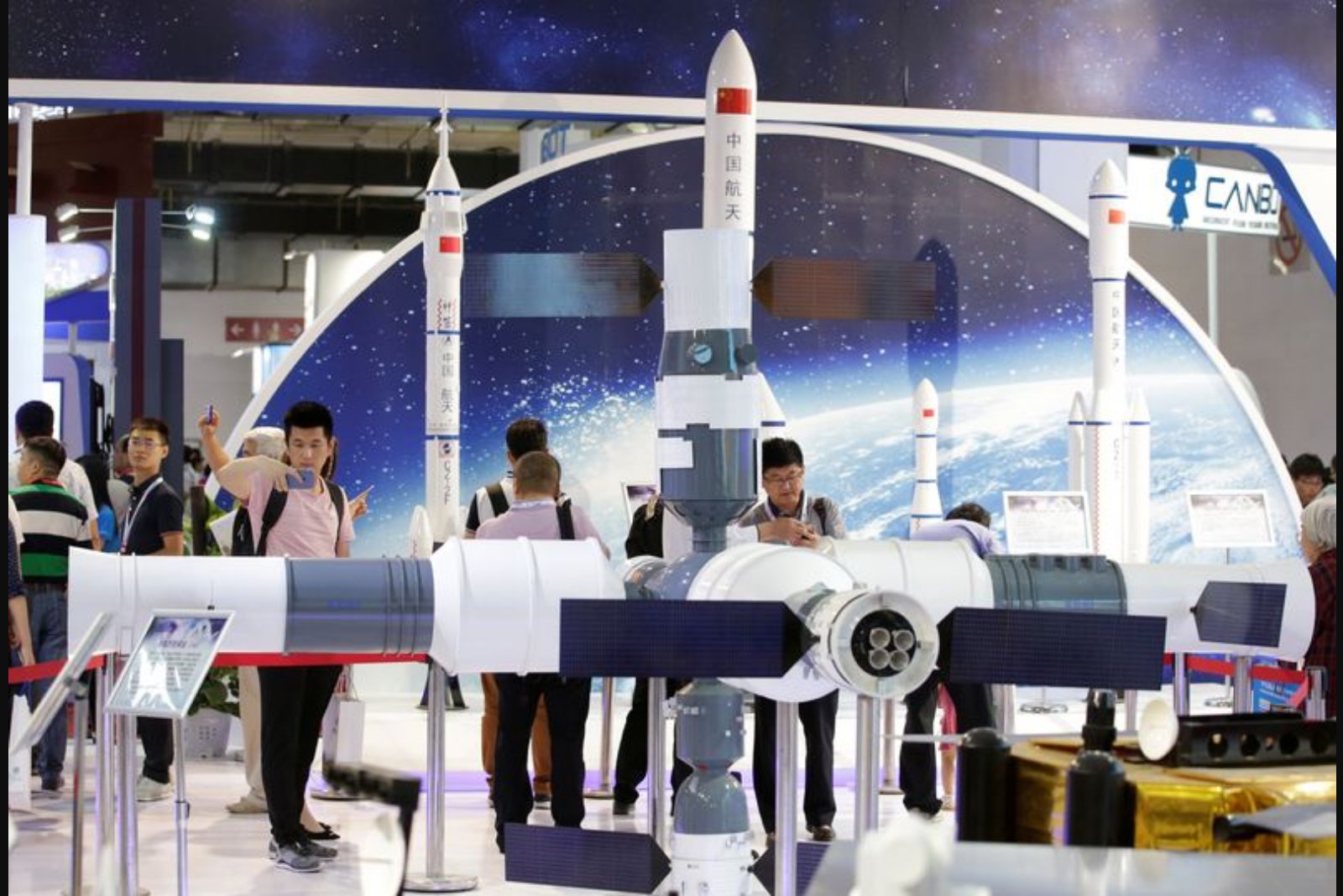
China’s principal state space contractor has publicly pledged an accelerated push into commercial spaceflight and deep space capability building, saying it will pursue suborbital space tourism within the next five years and will gradually advance orbital tourism, according to state media reports.
The China Aerospace Science and Technology Corporation (CASC) said it intends to "achieve the flight operation of suborbital space tourism and gradually develop orbital space tourism," and to "build a gigawatt-level space digital intelligence infrastructure," CCTV reported. The announcement is part of a wider set of goals that CASC has linked to a long-term national objective to become a "world-leading space power" by 2045.
CASC commitments and capabilities
Beyond near-term commercial tourism aims, CASC outlined plans that stretch across satellite networks, space-based digital infrastructure and deep space technology. These include work on small celestial resource exploration and "intelligent independent mining," expanded monitoring of space debris and contributing to international rules for space traffic management, CCTV said.
The state broadcaster also reported that CASC will pursue a "gigawatt-level space digital intelligence infrastructure," a phrase that underscores ambitions to combine massive satellite deployments with on-orbit processing and data services.
Technical hurdles and strategic competition
Officials and analysts point to a key technical constraint: China has yet to complete a reusable rocket test. Reusable launch vehicles are seen as central to reducing the cost per launch. In contrast, the reusable Falcon 9 rocket developed by SpaceX has supported a near-monopoly in low Earth orbit (LEO) satellite deployment through the Starlink constellation and has also been used to facilitate orbital space tourism.
State commentary has framed foreign dominance in LEO satellite deployments as a national security concern, and Beijing has responded by initiating its own satellite constellations. Recent filings with the International Telecommunications Union (ITU) by Chinese entities set out intentions to place about 200,000 satellites in orbit over the next 14 years, with two mega-constellations accounting for the bulk of that total. Officials said the move would strategically reserve orbital slots and radio frequencies.
Education and long-term exploration
The CASC announcements followed the inauguration of a School of Interstellar Navigation housed within the Chinese Academy of Sciences. The new school is intended to cultivate talent in frontier areas such as interstellar propulsion and deep space navigation and to underpin Beijing’s efforts beyond near-Earth operations.
"The next 10 to 20 years will be a window for leapfrog development in China’s interstellar navigation field. Original innovation in basic research and technological breakthroughs will reshape the pattern of deep space exploration," Xinhua wrote on the school’s inauguration.
Chinese officials say the institution will support the nation’s planned lunar research station and programs aimed at detecting planets beyond the solar system. These initiatives are presented as elements of a strategic transition from near-Earth orbit operations to deeper space exploration.
Recent accomplishments and context
China recorded a national total of 93 space launches last year, according to official announcements, a record figure the government attributes in part to a maturing commercial spaceflight sector. The government has also highlighted recent scientific milestones, including the Chang’e-6 lunar probe, which brought back samples from the far side of the moon in 2024.
At the same time, Chinese authorities have framed their large-scale satellite plans and infrastructure efforts as a means to set international standards for spaceflight and space infrastructure, aiming to establish Beijing as a dominant power in space.
Competition with the United States
Beijing’s push occurs amid an intensifying technology and strategic competition with the United States, as both countries seek to commercialize space travel similar to civil aviation and to secure military and strategic advantages that come with space dominance. Observers note that the United States faces significant competition this decade in its effort to return astronauts to the moon - a frontier not visited by humans since the final U.S. Apollo mission in 1972.
Implications for industry and markets
The goals articulated by CASC touch several industrial sectors. Ambitions for space tourism and orbital services may expand demand for launch services and spacecraft manufacturers. Plans for massive satellite constellations implicate telecommunications, earth observation, and on-orbit data infrastructure markets. Meanwhile, the emphasis on debris monitoring and space traffic rules could drive demand for space situational awareness services and regulatory frameworks that affect operators globally.