
Introduction
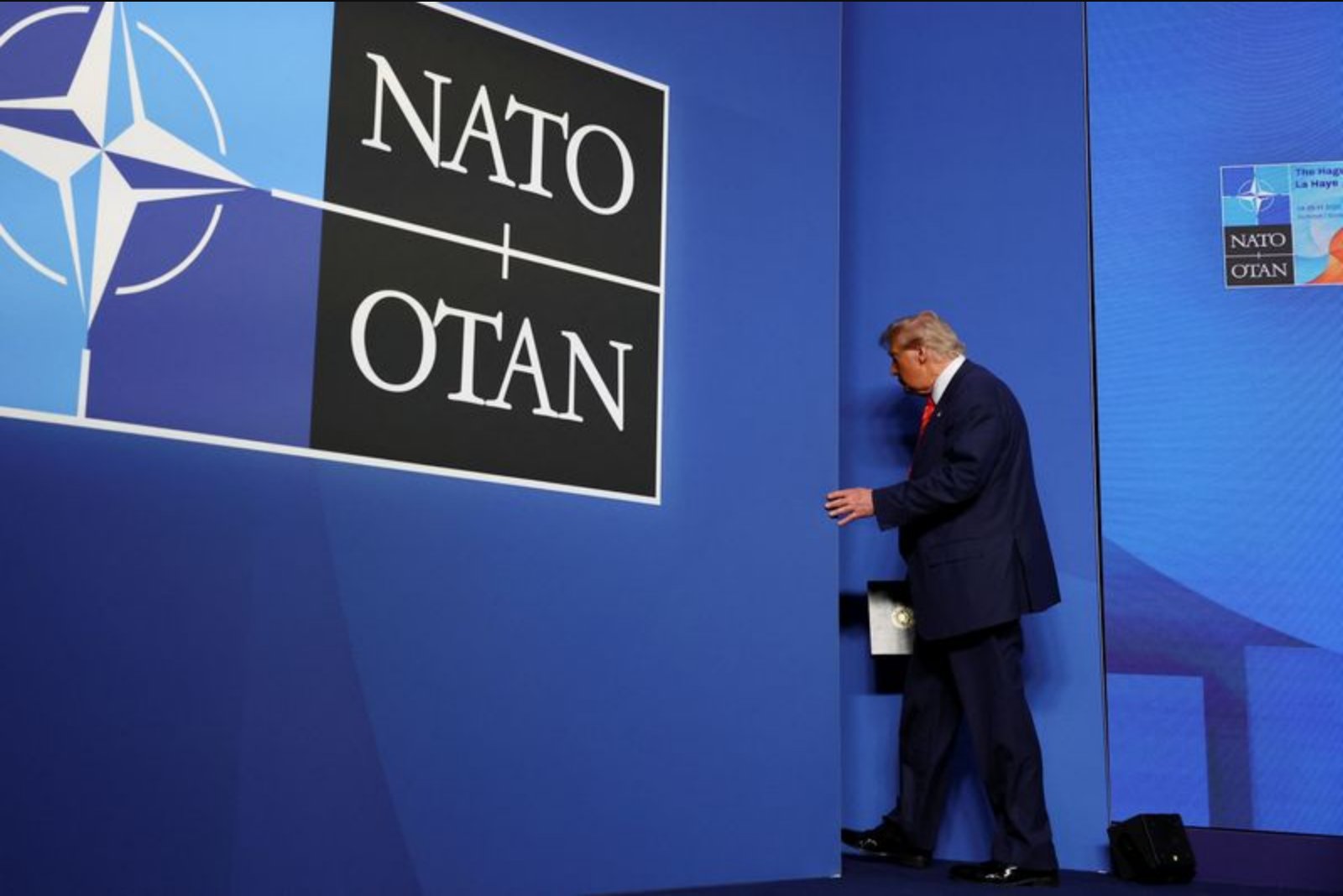
President Donald Trump on April 1 renewed a long-standing critique of the North Atlantic Treaty Organization - and said he could take the United States out of the alliance - citing anger at European partners for refusing to send naval vessels to help reopen the Strait of Hormuz near Iran. Whether a president may do so on his own authority is legally unsettled and politically fraught. The following explains the constitutional text, the NATO treaty language, recent U.S. statutory changes, and the practical obstacles a unilateral withdrawal would face.
What the Constitution says
The U.S. Constitution grants the president the power to make treaties with the "advice and consent" of the Senate, and it requires a two-thirds vote of the Senate for ratification. The Constitution does not, however, spell out a procedure for withdrawing from treaties.
What the NATO treaty says
NATO was created in 1949 as a collective security arrangement among European countries, the United States and Canada. Article 13 of the 1949 North Atlantic Treaty contains an explicit withdrawal mechanism: any party may withdraw by delivering one year’s notice to the government of the United States, which will then inform the other parties of the notice of denunciation. No member has ever rescinded its NATO membership.
What U.S. law now requires
In 2023, Congress passed, and then-President Joe Biden signed, legislation that prevents a president from suspending, terminating, denouncing or withdrawing the United States from the NATO treaty unless two-thirds of the 100-member Senate approves the withdrawal. That language was adopted as an amendment to the 2024 National Defense Authorization Act, the annual package that sets Pentagon policy.
The amendment’s lead sponsors were Democratic Senator Tim Kaine of Virginia and then-Republican Senator Marco Rubio of Florida. The enacted provision also bars the expenditure of U.S. funds to effect a withdrawal from NATO.
Marco Rubio is now serving in the administration in the combined roles of Secretary of State and National Security Adviser, and has said the United States would need to reassess its relationship with NATO after the Iran conflict that began on February 28 with U.S. and Israeli air strikes.
Competing legal views
The internal executive-branch view about treaty withdrawal authority is not uniform. In 2020 the Department of Justice’s legal counsel issued an opinion asserting that the president has exclusive authority to withdraw the United States from treaties without congressional approval. A February 2026 report by the Congressional Research Service noted that, should withdrawal be challenged in court, the executive branch could rely on that 2020 opinion to argue the NDAA amendment is unconstitutional.
What the president has said
Mr. Trump told Reuters on April 1 that he would tell the nation he was "absolutely" considering withdrawing from NATO, expressing "disgust with NATO." His comments followed an episode in which Defense Secretary Pete Hegseth declined to reaffirm U.S. commitment to NATO’s collective defense. Those statements underscore a broader point raised by experts: the legal texts matter, but the attitudes and decisions of the president and senior military leadership are central to whether the United States effectively supports the alliance.
"If the president and the military are not committed to NATO and European security, then I don’t think there’s much Congress can actually do to hold that back," said Max Bergmann, director of the Europe, Russia, and Eurasia Program at the Center for Strategic and International Studies and a former State Department official.
International law and practical considerations
Under international law, a head of state generally may withdraw from a treaty when the treaty itself permits withdrawal and the withdrawing party complies with the required notice procedure. NATO’s Article 13 provides a clear process for withdrawal, with a one-year notice to the U.S. government and subsequent notification of other parties.
U.S. practice, however, has varied. Presidents have previously ended U.S. participation in treaties without explicit congressional approval. The Trump administration itself withdrew the United States from the Open Skies treaty in 2020, a multilateral agreement governing unarmed surveillance flights over members. Those precedents do not resolve whether Congress may lawfully constrain a president’s ability to leave NATO, especially given the 2023 statutory language requiring Senate approval and prohibiting use of funds for withdrawal.
What would happen if withdrawal were attempted
If a president attempted to leave NATO unilaterally in contravention of the 2023 law, the dispute could end up in the federal courts. However, challenges to treaty withdrawals face steep procedural hurdles, including whether any plaintiff can show the required legal standing to bring a case. The Supreme Court has never decided a treaty withdrawal case on the merits, and its current conservative majority has in several instances ruled favorably for positions advanced by Mr. Trump and the executive branch.
Bottom line
The interplay among the Constitution’s silence on withdrawal, NATO’s Article 13 withdrawal clause, the 2023 congressional restrictions, prior Justice Department legal opinions, and the practical commitments of the president and military leadership creates a legally and politically complex environment. A unilateral U.S. exit from NATO is not a straightforward option: it is constrained by statute, by treaty procedures, and by a set of judicial and political uncertainties that could determine the outcome.
Implications for markets and sectors
Although the legal debate centers on constitutional and statutory interpretation, the underlying dispute that prompted President Trump’s remarks - the refusal of European allies to send ships to the Strait of Hormuz - ties this issue to energy and global trade considerations. The defense sector would be directly affected by any shift in U.S. alliance commitments, and broader market reactions could follow from heightened geopolitical risk.
This article explains the legal framework and political dynamics surrounding a potential U.S. withdrawal from NATO based on currently available public statements, enacted statutes, treaty language, and published government legal opinions.