
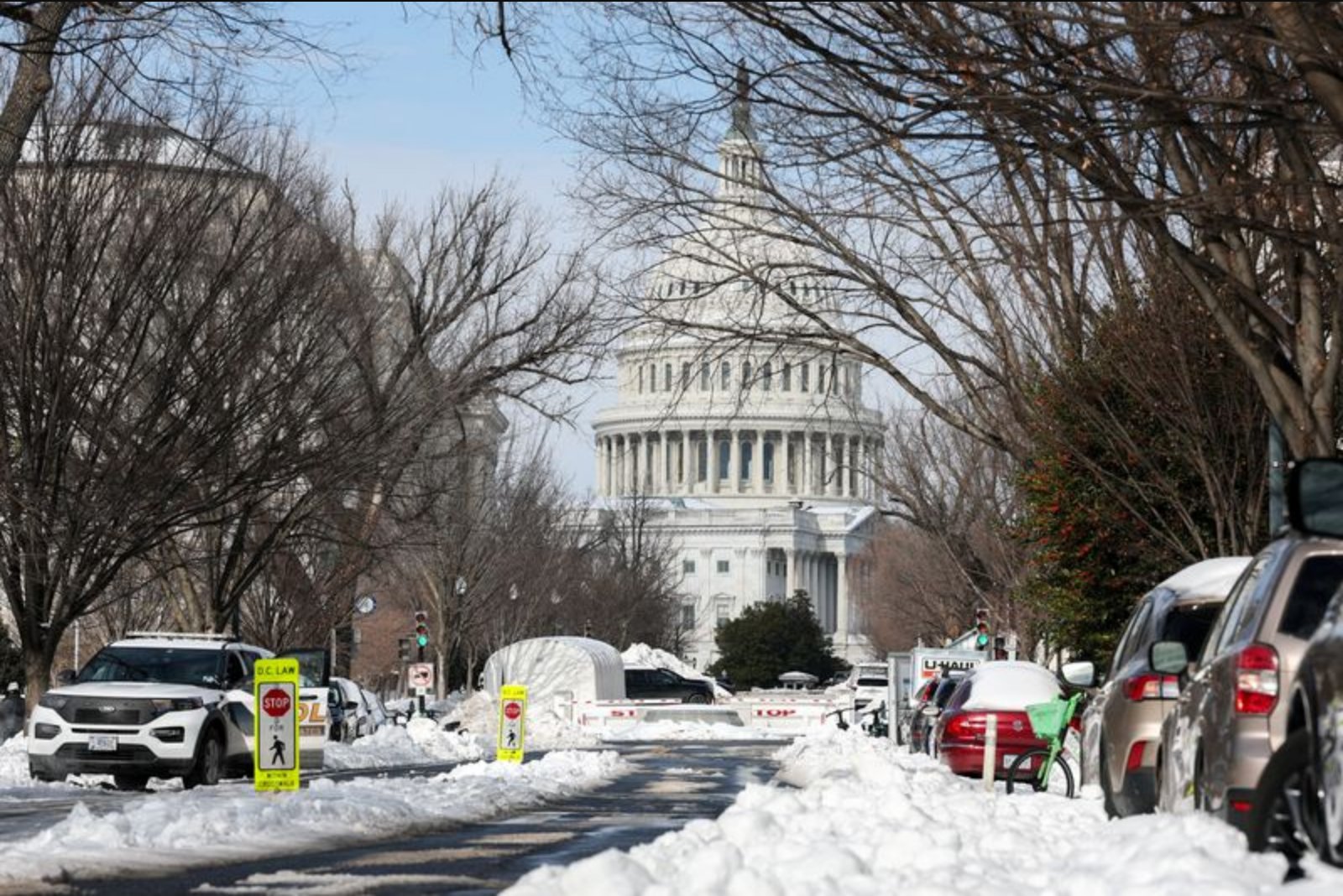
At least 38 people across 14 states had died as of Tuesday after a strong winter storm that formed on Friday deposited snow and ice across a broad swath of the central and eastern United States, local officials and news accounts said. The storm disrupted road travel, led to extensive flight cancellations and produced widespread power outages before its precipitation tapered off on Monday, leaving behind severe cold that was expected to continue.
By Tuesday morning cities and emergency agencies were continuing to respond to the effects of the storm and to protect residents from prolonged exposure, particularly people living on the streets. More than 550,000 homes and businesses nationwide remained without electricity.
New York City recorded 10 of the storm-related deaths, Mayor Zohran Mamdani said at a news conference on Tuesday, noting that the city experienced its coldest temperatures in eight years when the low reached 8 degrees Fahrenheit. The victims were discovered outdoors, and officials have not confirmed whether each was unhoused. Mamdani said some of those who died "had had interactions with our shelter system in the past. It is still too early to share a broader diagnosis or a cause of death."
The city also delayed its annual homeless count, required by the U.S. Department of Housing and Urban Development, moving the exercise from this week to early February. "Outreach workers should be focused on bringing New Yorkers inside, not on data collection," Mamdani said. "Here is the bottom line, New York City: Extreme weather is not a personal failure."
Since January 19, about 500 of the more than 4,000 people estimated to be living in the city’s streets and subway have been placed into shelters, the mayor said. Outreach teams are conducting checks at two-hour intervals on roughly 350 people identified as particularly vulnerable because of underlying medical conditions.
In Nashville, Tennessee, which has a population of about 680,000, the impact has been severe as temperatures were forecast to tumble to 6 degrees Fahrenheit by Wednesday morning with wind chills below zero. Officials said more than 135,000 households and businesses remained without power.
Mayor Freddie O’Connell described the event as historic. "Let’s be clear about what this is," he said at a Tuesday press conference. "It is an historic ice storm." Authorities reported that about 1,400 people had filled the city’s three homeless shelters and two overflow facilities, with police and firefighters working overtime and emergency crews checking city streets.
The Nashville Rescue Mission, which normally serves about 400 people a night, experienced a surge in demand during the cold snap, with those seeking food, clothing and shelter swelling to roughly 7,000 over the period, an attendant who was not authorized to speak to reporters and who did not give a name said by telephone. "We’re always full, but we never turn anyone away," the attendant said.
Reports from across the country indicate a range of storm-related causes of death, including hypothermia and exposure as well as cardiac incidents that occurred while clearing snow. In Bonham, Texas, about 55 miles northeast of Dallas, three young boys died after falling into an icy pond over the weekend; local fire department officials said the exact circumstances remain unclear. In Austin, Texas, authorities said a person seeking shelter at an abandoned gas station appeared to have died of hypothermia.
Other hypothermia-related fatalities were reported from Kansas, Kentucky, Louisiana, Mississippi, South Carolina, Tennessee and Michigan, according to regional media accounts cited by officials.
Nearly 200 million Americans remained under some form of winter cold warning at least through February 1. Forecasters were monitoring the potential for an additional winter storm to affect the eastern United States this weekend, David Roth, a meteorologist with the National Weather Service’s Weather Prediction Center, said.
Emergency systems in multiple cities have had to expand shelter capacity, reassign outreach staff and coordinate checks on at-risk populations. Power and utility sectors continued restoration efforts amid heavy demand, while transportation networks grappled with lingering impacts on roads and flight schedules. The combination of outages, deep cold and the concentration of vulnerable people in urban areas has created acute operational challenges for both municipal services and nonprofit providers.
Officials emphasized that it was too early to draw definitive conclusions about many of the deaths reported while mobilizing resources to reduce further loss of life as temperatures remain dangerously low.