
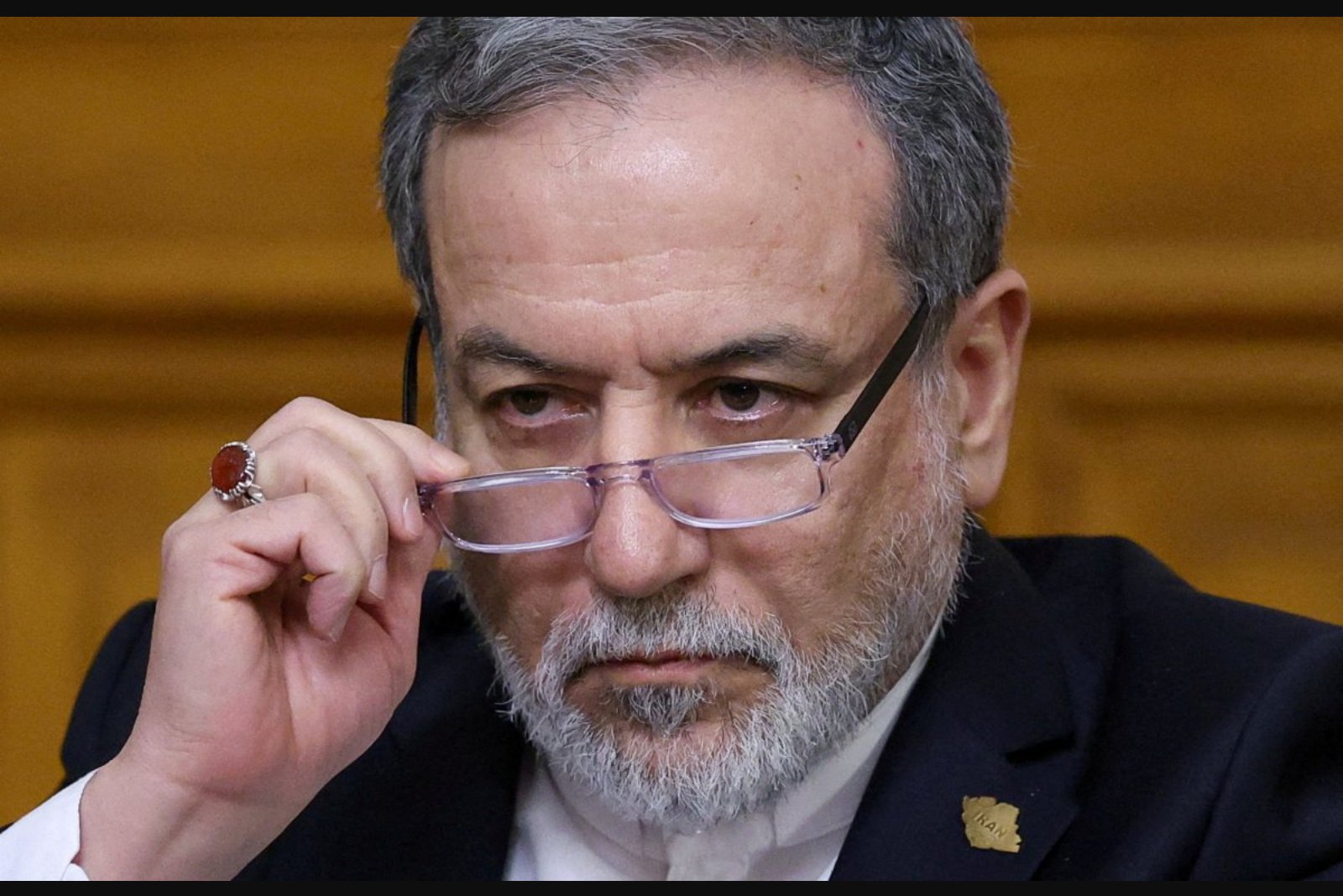
Abbas Araqchi, who rose from the son of an Isfahan carpet merchant to Iran’s top diplomatic post, is set to travel to Pakistan alongside the country’s parliament speaker to participate in peace talks with U.S. officials. Araqchi has likened the Iranian approach to negotiations to the give-and-take of bazaar bartering, saying it demands "patience and great time".
The talks are scheduled to take place shortly after Tehran and Washington accepted a Pakistan-brokered two-week ceasefire intended to halt a six-week war that has resulted in thousands of deaths, spread across the Middle East and caused unprecedented disruption to global energy supplies. Iranian and U.S. delegations are expected to meet to discuss a potential long-term settlement on Friday.
Iran has said its delegation will enter the talks with caution, citing a deep trust deficit with the United States. The Iranian team will be led by Mohammad Baqer Qalibaf, an influential former commander of Iran’s Revolutionary Guard Corps, alongside Araqchi and other senior figures.
Security considerations have shaped the composition of the delegation. A Pakistani source said last month that Israel removed both Araqchi and Qalibaf from a hit list after Pakistan urged Washington to press Israel not to target them, leaving them among a small number of senior Iranian officials still able to engage directly with Washington. Scores of Iran’s senior political and military officials had been targeted during the conflict, narrowing the pool of negotiators available to Tehran.
Araqchi has been Iran’s foreign minister since 2024. He was selected by Iran’s late supreme leader, Ayatollah Ali Khamenei, to lead multiple rounds of talks with the U.S. Middle East envoy Steve Witkoff in efforts aimed at resolving Tehran’s longstanding nuclear dispute with Western powers. Those discussions, mediated by Oman, ultimately stalled on central issues that included uranium enrichment, missile matters and sanctions relief.
Long involved in diplomacy on Iran’s nuclear file, Araqchi played a key role in the negotiations that produced the 2015 agreement between Tehran and world powers. That deal imposed stringent limits on Iran’s nuclear programme in return for sanctions relief, and was later abandoned by the United States in 2018. Participants in the earlier negotiations described Araqchi as a serious, technically knowledgeable and straightforward interlocutor who cultivated a reputation as a tough negotiator.
Political insiders have characterized Araqchi, who was educated in Britain, as one of the Islamic Republic’s most powerful foreign ministers to date. Iran’s clerical establishment appears confident in his ability to navigate delicate diplomacy with finesse.
In his 2024 book, The Power of Negotiation, Araqchi reflected on the national negotiating style, referring to it as "the style of the bazaar" - continuous and persistent bargaining. He included a footnote recounting memories of his late mother’s skill at bartering, and warned against excessive bargaining. In an Arabic translation of the book, he wrote: "When you sell snow under the sun, bargaining more than necessary is a loss." These remarks illustrate both a cultural framing of negotiation and a caution against overplaying leverage.
Insiders and officials familiar with Araqchi’s career depict him as calm and patient, yet combative and resilient when circumstances demand. He has kept a reputation for maintaining distance from "political frays and infighting," and a senior Iranian official said Araqchi retained good relations with the Revolutionary Guards and across Iran’s political factions.
Born in Tehran in 1962 into a wealthy religious merchant family, Araqchi was 17 when the 1979 Islamic Revolution transformed Iran’s political landscape. He joined the Islamic Revolutionary Guard Corps and fought in the 1980-88 Iran-Iraq War before beginning a diplomatic career in 1989.
Araqchi’s diplomatic postings included ambassadorships in Finland from 1999 to 2003 and Japan from 2007 to 2011. He became the foreign ministry spokesman in 2013 and was appointed deputy foreign minister the same year after obtaining a doctorate in politics from the University of Kent in Britain.
He served as the point person for efforts to revive the 2015 nuclear agreement during the U.S. administration in office from 2021 to 2025, a process that ultimately did not succeed and which led to his replacement by a hardliner. Shortly after that shift, Araqchi was named secretary of Iran’s Strategic Council on Foreign Relations, a key advisory body to the supreme leader that drew him further into the inner circle of Iran’s ultimate authority.
A devout Muslim, Araqchi has served under presidents with varying approaches, from pragmatic to hardline, and his career has been marked by sustained involvement in some of Iran’s most consequential foreign-policy dossiers. As he prepares to take part in the Pakistan-hosted talks, his combination of technical experience, established relationships and a negotiation philosophy rooted in persistence will shape Tehran’s posture at a delicate diplomatic moment.
Summary
Abbas Araqchi, Iran’s foreign minister and a seasoned negotiator, will join a delegation in Pakistan to meet U.S. officials after a two-week ceasefire paused a six-week war. Araqchi, known for describing Iran’s negotiating culture as bazaar-style bargaining, was selected by the late supreme leader to lead prior talks with the U.S. and has a record of involvement in the 2015 nuclear deal negotiations. Tehran has signalled cautious engagement due to a deep trust deficit with Washington, and the delegation will be led by influential former Revolutionary Guard commander Mohammad Baqer Qalibaf.
Key points
- Abbas Araqchi, Iran’s foreign minister since 2024, has been entrusted by Iran’s leadership to take part in delicate talks with U.S. officials in Pakistan - a role that underscores his influence in Tehran’s diplomatic ranks. (Impacted sectors: geopolitics, diplomatic relations)
- The Pakistan-brokered two-week ceasefire followed six weeks of conflict that caused thousands of deaths and unprecedented disruption to global energy supplies, highlighting direct consequences for the energy sector and broader markets. (Impacted sectors: energy, commodities, global markets)
- Past negotiations mediated by Oman on core nuclear-related issues stalled on topics such as uranium enrichment, missiles and sanctions relief, reflecting persistent technical and political hurdles that will shape current talks. (Impacted sectors: energy, finance)
Risks and uncertainties
- Deep distrust between Tehran and Washington presents a significant risk to productive negotiations; a lack of trust could impede progress and prolong instability. (Impacted sectors: diplomacy, energy markets)
- Core issues remain unresolved - including uranium enrichment, missile capabilities and sanctions relief - which could stall or derail talks if consensus is not found. (Impacted sectors: energy, finance)
- Security concerns for senior Iranian figures and the targeting of officials during the conflict have reduced the pool of negotiators, introducing uncertainty about who can represent Tehran effectively in sustained diplomacy. (Impacted sectors: defense, diplomatic engagement)