
Overview
A challenge to the established rule that nearly all persons born on U.S. soil are automatically citizens has returned to the Supreme Court, reviving legal questions that were litigated more than a century ago. The issue surfaced originally in the 1898 case involving Wong Kim Ark - a decision in which the nation’s highest court interpreted the Citizenship Clause of the 14th Amendment to include those born in the United States even if their parents were foreign nationals. That same constitutional language is now central to a dispute about an executive order that would deny automatic citizenship to children born in the United States if neither parent is a citizen or a lawful permanent resident.
Personal stakes: a family legacy
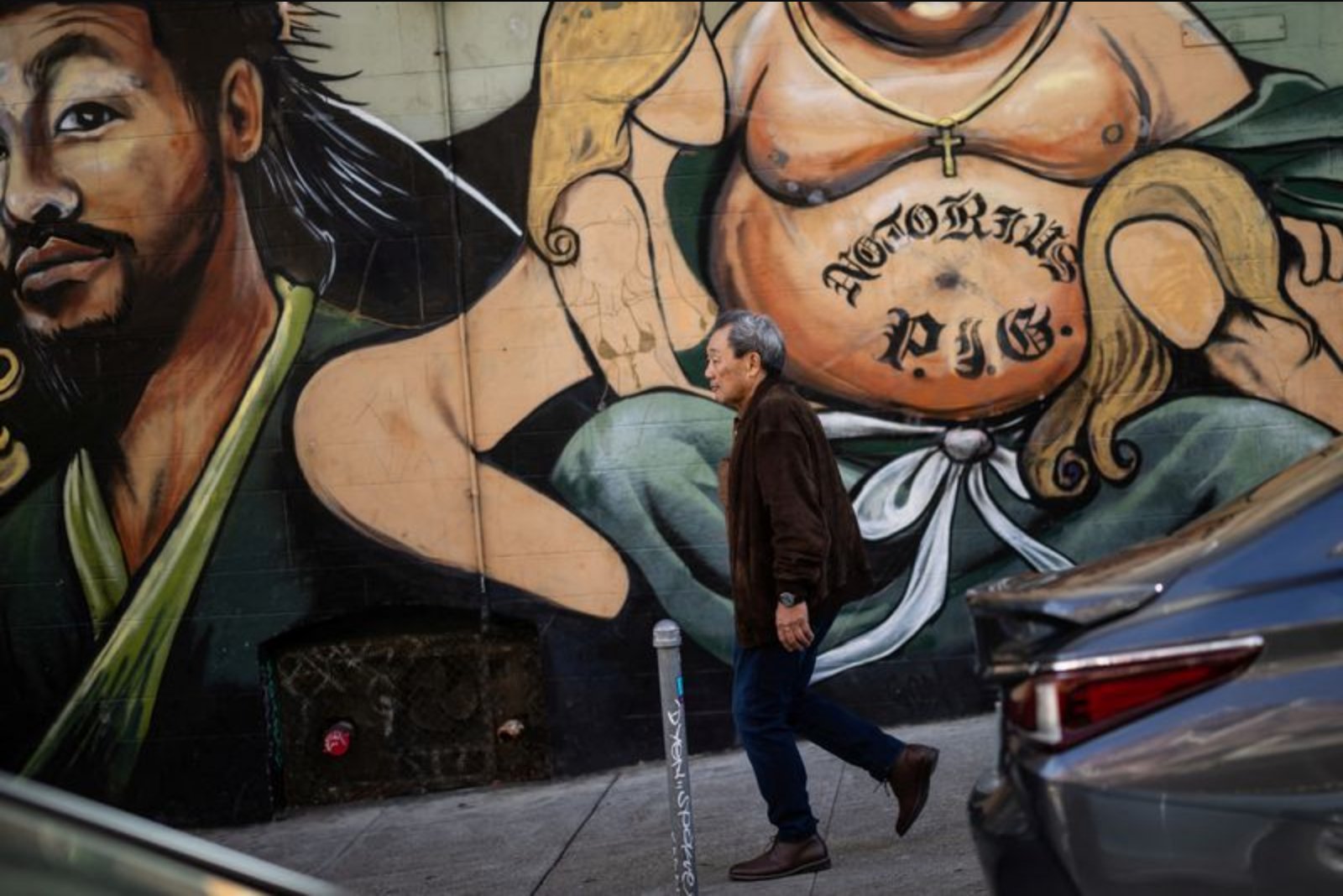
One living link to that earlier ruling, a great-grandson of Wong Kim Ark who lives in the San Francisco area, says the principle affirmed by his ancestor may be imperiled. The descendant, who did not know of his familial connection to the 1898 decision for much of his life, has since studied the case and traveled to his family’s ancestral village in China. He warns that the current effort to restrict birthright citizenship is an attempt to undo a foundational understanding of American nationality.
"Wong Kim Ark knew he was an American. And he demanded that his citizenship be recognized. He was willing to stand up," the great-grandson said. "Wong Kim Ark didn’t make the rule. He affirmed the rule." He characterized the administration’s arguments as "fake arguments and fake reasons" aimed at pursuing a goal he views as contrary to the American dream. "We’re just revisiting it," he added, noting that the question was settled 128 years ago.
The directive under review
The executive order at the center of the case was issued on the president’s first day back in office, as part of a broader set of immigration restrictions. It would withdraw automatic citizenship from babies born in the United States when neither parent is an American citizen or a legal permanent resident - a category that, according to the administration, includes people present in the country only temporarily, such as students and holders of work visas, as well as people who are in the country illegally.
The administration has argued that the current application of birthright citizenship creates incentives for illegal immigration and fuels "birth tourism," in which people travel to the United States to give birth so their children obtain citizenship. Critics contend the directive is clearly unconstitutional and rooted in discriminatory anti-immigrant sentiment.
Judicial posture and prior rulings
The Supreme Court that will hear the case has a conservative majority. Over recent years the court has allowed a range of presidential immigration measures to take effect in the interim while litigation continues, including actions that end certain humanitarian protections or permit deportations to countries where migrants may lack ties. The court previously granted the administration an initial, narrow procedural victory in the birthright citizenship dispute by curbing the power of federal judges to block presidential policies nationwide. That earlier decision, however, did not answer whether the directive itself is lawful. The current case is expected to address that question directly.
Legal arguments and historical precedent
Central to the debate is the Citizenship Clause of the 14th Amendment, which states: "All persons born or naturalized in the United States, and subject to the jurisdiction thereof, are citizens of the United States and of the state wherein they reside." The amendment, ratified in 1868 after the Civil War, was intended to overturn the Dred Scott ruling that had excluded people of African descent from citizenship. In 1898, the Supreme Court interpreted that clause in a way that recognized citizenship by birth on U.S. soil - including for those born to foreign parents - with narrow exceptions.
The court in 1898 rejected a government attempt to deny citizenship to Wong Kim Ark after customs officials in San Francisco treated him as a non-citizen on his return from a trip to China. Although Wong was born in the Chinatown neighborhood of the city, officials said that because his parents were Chinese nationals he was not a citizen and therefore could be excluded under the Chinese Exclusion Act of 1882. The Supreme Court disagreed in a 6-2 decision, holding that the words "subject to the jurisdiction thereof" were meant to exclude children of foreign diplomats and occupying enemies, not to impose broader new limits on citizenship by birth.
The court observed that excluding other categories of U.S.-born children would deny citizenship to "thousands of persons of English, Scotch, Irish, German or other European parentage who have always been considered and treated as citizens of the United States." The decision made clear that the traditional common law approach to jurisdiction did not shrink the scope of the Citizenship Clause.
Where the current administration says the law allows change
The Justice Department representing the administration contends that for generations the government has mistakenly extended birthright citizenship to people who do not meet the proper standard - specifically those who are present in the United States only temporarily or who are here unlawfully. The administration argues that the 1898 ruling can be read consistently with its directive because the court discussed the circumstances of parents with permanent domicile and residence in the United States; under the administration’s interpretation, those temporarily present or illegally present do not qualify for their children to receive citizenship at birth.
Some legal scholars emphasize that the Wong Kim Ark case focused on parents who had permanent domicile and residence in the United States at the time of the child’s birth. "I just don’t think it’s correct to say that Wong Kim Ark (as a legal precedent) decided the question of the citizenship status of children born to temporary visitors or to people here illegally," one law professor observed. He noted that, "strictly speaking, [the precedent] focused on law domiciled parents," and that the case contains language that can be interpreted to support arguments on both sides.
Other scholars stress that every major method of constitutional interpretation supports treating birthright citizenship as applying broadly to everyone born in the United States, with very limited common law exceptions. The commonly cited core exception centers on the children of foreign diplomats, who are not considered subject to U.S. jurisdiction in that narrow sense.
Practical consequences if the administration prevails
Legal observers warn that endorsing the administration’s view would create sweeping implications. Some estimates referenced in the debate suggest as many as 250,000 babies born in the United States each year could be affected by a new rule that denies automatic citizenship to children of non-citizen, non-permanent-resident parents. Beyond those annual births, a shift in constitutional interpretation could cast doubt on the status of millions of people who have lived their lives as American citizens.
Opponents of the directive are particularly concerned about the possibility of retroactive application. While the order itself is formally prospective - applying to births after it takes effect - legal arguments offered by the government about the meaning of the Constitution have been characterized as creating a cloud over the citizenship of people whose nationality has long been taken for granted. An attorney for challengers to the directive warned that a decision for the government could "cast a shadow over the citizenship of millions of other people who have lived their entire lives as American citizens, potentially going back generations."
He also cautioned that a favorable decision for the administration could invite challenges to the citizenship of Americans more broadly, including those whose parents are not among the specific categories the directive targets.
Litigation and the parties
The challenge to the executive order was filed in New Hampshire on behalf of parents and children whose citizenship would be threatened by the new rule. A federal district judge allowed the plaintiffs to proceed as a class, which led to a nationwide block of the order while litigation progressed. The case reached the Supreme Court for a definitive ruling on the directive’s constitutionality.
Historical context reiterated
The account of Wong Kim Ark’s return to the United States provides a historical anchor for the modern dispute. As a young cook in his 20s, having been born in San Francisco, he was denied re-entry after traveling to China in the 1890s on the basis that his parents’ nationality made him ineligible for citizenship under immigration restrictions of the era. The court’s response in 1898 rejected the government’s attempt to read the 14th Amendment in a way that would place limits on citizenship beyond those narrow exceptions such as foreign diplomats and occupying enemies.
Native Americans were noted among the exceptions at the time, though Congress later extended citizenship to Native Americans by statute in 1924. The 1898 court made clear its view that the Citizenship Clause was not intended to impose broad new restrictions that would contradict long-standing practice and expectations.
Dueling readings and the language of precedent
In the current litigation the administration argues that its interpretation is compatible with the 1898 precedent because Wong Kim Ark’s parents had permanent domicile and residence in the United States when he was born. The administration reasons that children whose parents are temporarily present or unlawfully present do not meet that standard.
Other legal scholars counter that the 14th Amendment’s text and the historical judicial approach support a broad application of birthright citizenship. One law professor summarized the textual and interpretive case for broad coverage, saying that every major method of constitutional interpretation confirms that the clause applies to everyone born in the United States, except for extremely narrow common law exceptions.
Yet another scholar highlighted that the 1898 decision contains language that could be deployed to support either side in the present dispute, reflecting the complexity of applying a century-old precedent to the precise categories at issue today.
Voices from the challenger side
Civil rights advocates and the attorneys challenging the directive have warned of far-reaching consequences for families and for Americans who have believed their citizenship secure. They argue that the order is prosecutorial overreach that would require families and states to undertake burdensome proof of citizenship for newborns, and could unsettle the nationality of people who have lived and worked as Americans for generations.
"While the order is formally prospective ... the arguments the government is making about what it claims the Constitution means cast a shadow over the citizenship of millions of other people who have lived their entire lives as American citizens, potentially going back generations," one challenger’s lawyer said. He also said the decision could signal a broader vulnerability to challenges against the citizenship of fellow Americans.
Family perspective and political stakes
The great-grandson of Wong Kim Ark sees the case in stark terms: he worries that this administration’s actions mark a beginning rather than an end, the start of incremental measures to reduce citizenship rights for those the administration does not favor. "I didn’t see the executive order ... as an end. I saw that as a beginning, that they would chip away at citizenship until they can do away with the people that they don’t want. And they’ll always have a reason, you know?" he said. "We’re talking about the soul of America, who we are as a people."
Conclusion
The Supreme Court’s forthcoming decision will determine whether the long-standing judicial understanding of the 14th Amendment’s Citizenship Clause remains intact or can be narrowed to exclude children born to parents who are not citizens or lawful permanent residents. The ruling could affect immediate policy regarding births going forward and carry implications that reach into the status of millions of people who have lived their whole lives as Americans.