
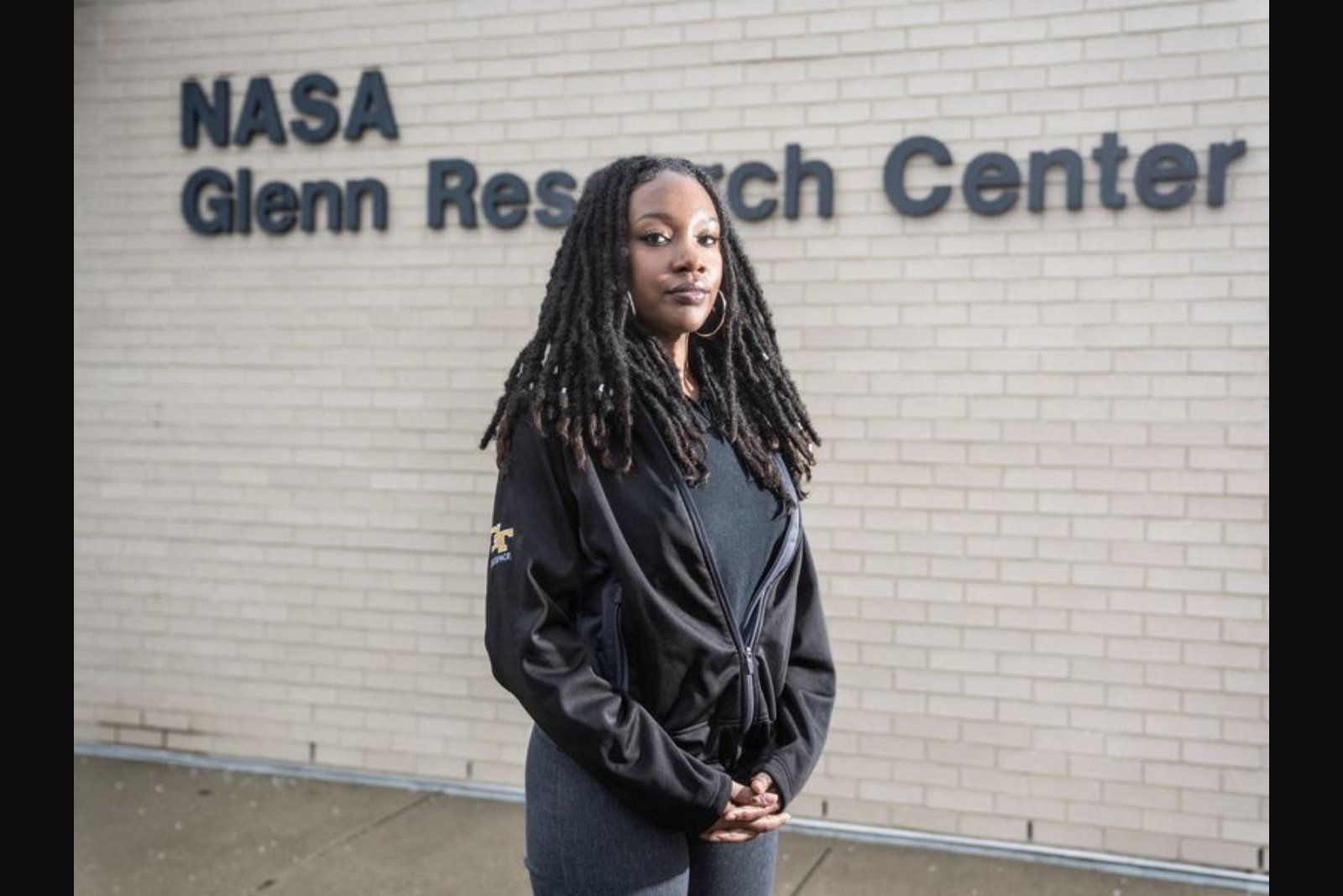
At age 12, Naia Butler-Craig decided she wanted to be an astronaut. Each time she entered St. Mark AME Church in Orlando, Florida, and saw a framed photograph of Mae Jemison - the first Black woman to travel into space - she felt certain that space exploration would be her career. Roughly 16 years later, now a NASA aerospace engineer holding a PhD in the field, Butler-Craig met Victor Glover and told him she was following in his footsteps.
She recalled the exchange from January 17: "Most people worry about making the right choice," Butler-Craig said, recounting Glover’s reply. "Make the choice right." That interaction came into sharper focus almost three months later when Glover launched into space as part of NASA’s Artemis II mission, one of four people to travel farther from Earth than any human in recorded history. The mission placed him among the small number of astronauts who have pushed the bounds of human distance from Earth during a lunar flyaround.
For Butler-Craig, Glover’s mission offered affirmation - not only for her personal path but for the aspirations of countless Black Americans who historically faced exclusion from higher education and elite professional roles because of race. "To see him live all of those facets of identity at the same time when that’s exactly the tension and the constant dichotomies I’m facing is incredibly validating," she said of Glover. "It just makes me feel like he’s paved the exact road for someone like me."
Glover’s flight has also stirred a broad reaction across social media and within professional communities, arriving at a politically charged moment. As President Donald Trump’s administration moves to dismantle diversity, equity and inclusion programs across government and the private sector, the symbolic impact of Glover’s mission has been widely noted. Supporters and observers have framed the mission as a milestone in a long trajectory of Black achievement in aviation and space exploration.
"It’s a source of pride and joy because when you look at aerospace and space exploration, yes, we have some representation, but we don’t have enough representation," said Tennesse Garvey, a United Airlines Boeing 777 pilot who chairs the board of directors of the Organization of Black Aerospace Professionals. The nonprofit has trained and encouraged minorities to pursue careers in aerospace and aviation since 1976. Garvey noted a personal connection to the astronaut’s family: two of Glover’s daughters attended the organization’s first week-long space academy program in Houston when they were younger. "It’s really inspirational to many other young children that are actually dreaming that dream," he said.
Glover is one of 20 Black astronauts selected by NASA since the agency named its first class of seven Mercury astronauts in 1959, a cohort that means Black astronauts make up roughly 6% of all those chosen by NASA to date. That statistic underscores the limited representation that leaders and advocates say remains a barrier to broader participation in aerospace.
Before the Artemis II lunar flyaround, Glover had already accumulated substantial operational experience. Beginning in 2020, he spent nearly five and a half months in orbit as pilot of NASA’s Crew-1 flight, the first operational International Space Station mission using SpaceX’s Crew Dragon capsule. Prior to joining NASA, he flew more than 40 types of aircraft during a U.S. Navy career that included combat deployments in Iraq. His career record lists about 3,000 flight hours, over 400 aircraft carrier landings and 24 combat missions.
Even as he took on the distinction of being first in several categories, Glover has voiced a desire for such milestones to become less notable in the future. Before the Artemis launch he said, "I also hope that we are pushing the other direction, that one day we don’t have to talk about these firsts." That sentiment connects to a longer lineage of Black aviators and military pilots who opened pathways in U.S. aviation, such as Lieutenant Colonel John William Mosley Jr., who served among the Tuskegee Airmen - a segregated unit whose service contributed to broader integration of military aviation.
William Eric Mosley, John’s son and a former United Airlines pilot, reflected on that legacy: "We’re all standing on the shoulders of the previous generation," he said. "In my case, and I believe also in Captain Glover’s case, he would believe the same."
Glover and his crew splashed down on Friday in the Pacific Ocean off the coast of San Diego, marking the successful completion of a mission that supporters say helps lay the groundwork for future lunar exploration. The flight is being framed as an enabling step toward the first crewed moon landing since 1972, which is planned for 2028, and for additional missions beyond that date.
While awaiting the safe return of the crew earlier in the mission, Butler-Craig said she would draw strength from a Bible verse she has tattooed on her arm, James 1:12: "Blessed is the one who perseveres under trial because having stood the test, they will receive the crown of life."
The mission and the reactions it produced combine technical accomplishment with cultural meaning - a reminder that achievements in aerospace can have ripple effects across education, training programs, and professions tied to aviation and defense. At the same time, the responses emphasize that representation remains an area where many advocates see continued work as necessary.