
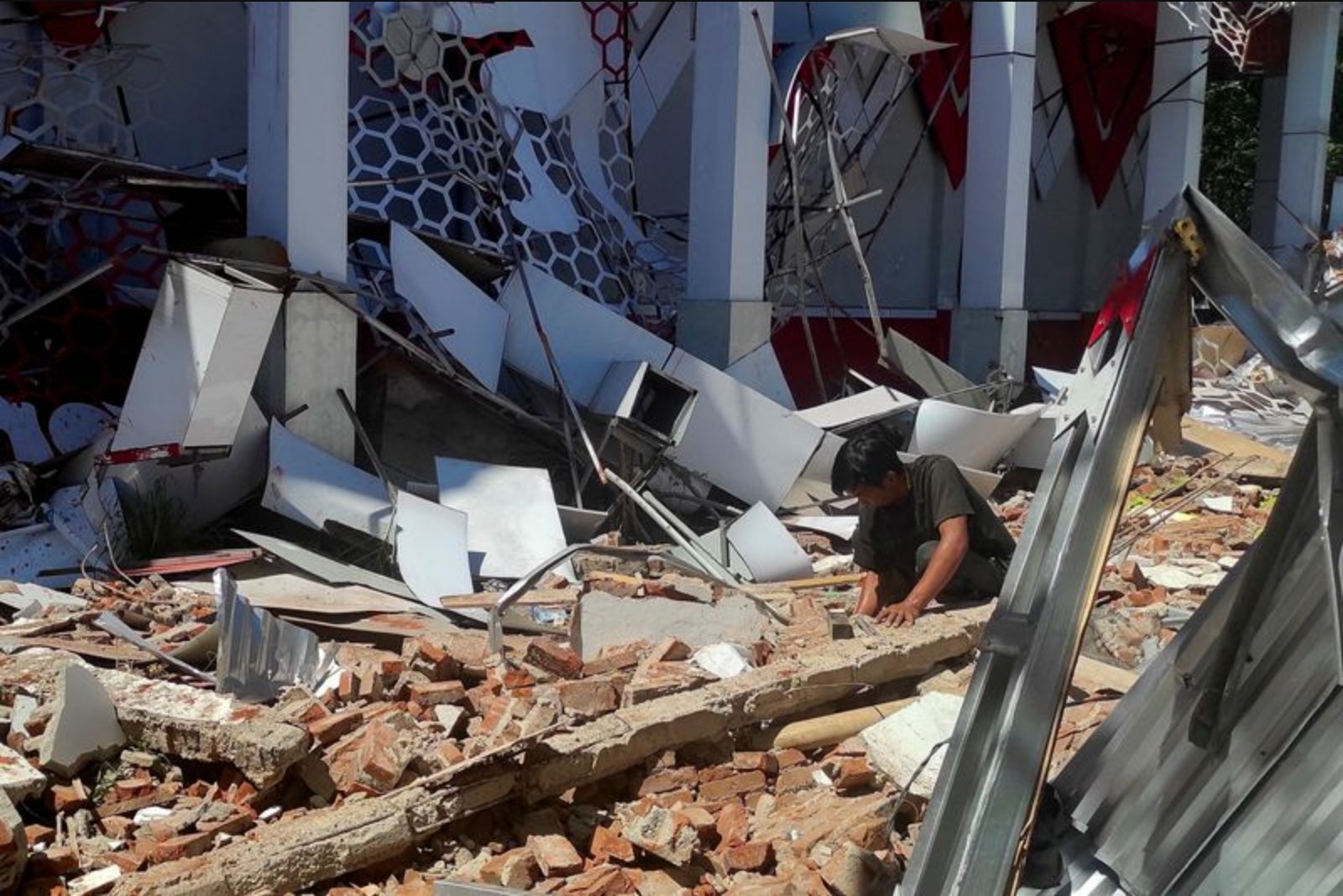
A strong earthquake of magnitude 7.6 hit the Northern Molucca Sea on Thursday, killing one person, causing building damage and producing tsunami waves in several coastal locations, authorities and local witnesses reported. Monitoring agencies said the risk of additional casualties was low, but emergency services continued to track aftershocks and survey affected areas.
Indonesia’s meteorological agency, BMKG, reported tsunami waves in five locations following the quake. The largest recorded wave reached 0.75 m (2.46 ft) at North Minahasa in North Sulawesi. BMKG monitored about 50 aftershocks, the strongest of which measured magnitude 5.8. BMKG chief Teuku Faisal Fathani initially said agency modelling suggested tsunami potential with wave heights between 0.5 m and 3 m (1.6 ft to 9.8 ft), but the tsunami warning was lifted later on Thursday morning.
U.S. tsunami warning authorities first indicated that hazardous tsunamis were possible along parts of Indonesia, the Philippines and Malaysia, then subsequently withdrew that threat warning.
Local officials confirmed one fatality in the city of Manado. Deputy chief of North Sulawesi police Awi Setiyono told reporters the victim died when part of a building used by the local sports authority collapsed and falling rubble struck the person.
Geography, seismic context and initial assessments
The quake’s epicentre was located in the Northern Molucca Sea at a depth of 35 km (22 miles). BMKG and international monitoring agencies placed the epicentre roughly 580 km (360 miles) south of the Philippine coast and approximately 1,000 km (620 miles) from Sabah in Malaysia. The United States Geological Survey noted the epicentral area has seen nine other magnitude 7 or greater earthquakes within 250 km over the last 50 years, none of which caused extensive damage.
Although the epicentre sits within 150 km (93 miles) of islands with sizable populations such as Ternate and parts of Sulawesi, the USGS assessed a "low likelihood" of further casualties and expected economic damage to be limited. Indonesia’s national disaster agency nevertheless urged continued vigilance.
"Although relatively small, this situation still requires vigilance due to the potential for aftershocks," the agency said in a statement.
Initial field reports indicated minor to moderate damage to several houses and a church, and officials said a more complete assessment was underway. The agency said the strongest tremors from the initial quake were felt for 10 to 20 seconds in Bitung City and Ternate City. Subsequent aftershocks were detected under the sea, and authorities urged residents to follow official guidance until the situation was declared safe.
Abdul Muhari, a spokesperson for the national disaster agency, urged people to avoid damaged buildings and warned that aftershocks continued to pose a danger.
Local response and conditions
Footage broadcast by Indonesia’s Metro TV showed damaged structures in some areas. A resident of Manado told reporters that people had fled their homes in panic; in her neighborhood there was no visible structural damage but items fell from shelves and power had been cut.
Regional monitoring agencies provided updates for neighboring countries. The Philippines’ seismology agency, Phivolcs, said there was "no destructive tsunami threat" to the Philippines based on its latest data. Malaysia’s meteorological department similarly reported no immediate tsunami threat to the country while continuing to monitor developments.
The Pacific Tsunami Warning Center warned of the possibility of waves less than 0.3 m (1 ft) above tide levels for the coasts of Guam, Japan, Malaysia, Papua New Guinea, the Philippines and Taiwan. The Japan Meteorological Agency said Japan could see waves up to 0.2 m (8 inches) but did not expect damage, while emphasizing that a tsunami could occur in the wider Pacific basin.
Situation outlook
Authorities and monitoring agencies moved from initial alarm to a more measured posture as tsunami alerts were lifted, but they emphasized the need to remain cautious because of the aftershock sequence and the preliminary nature of damage reports. Emergency teams continued assessments to determine the full extent of structural harm and to advise on any further safety measures for affected communities.
As work to collate field reports continues, officials urged residents to heed local directives, avoid unstable buildings and await official clearance before returning to damaged structures.