
Hook and short thesis
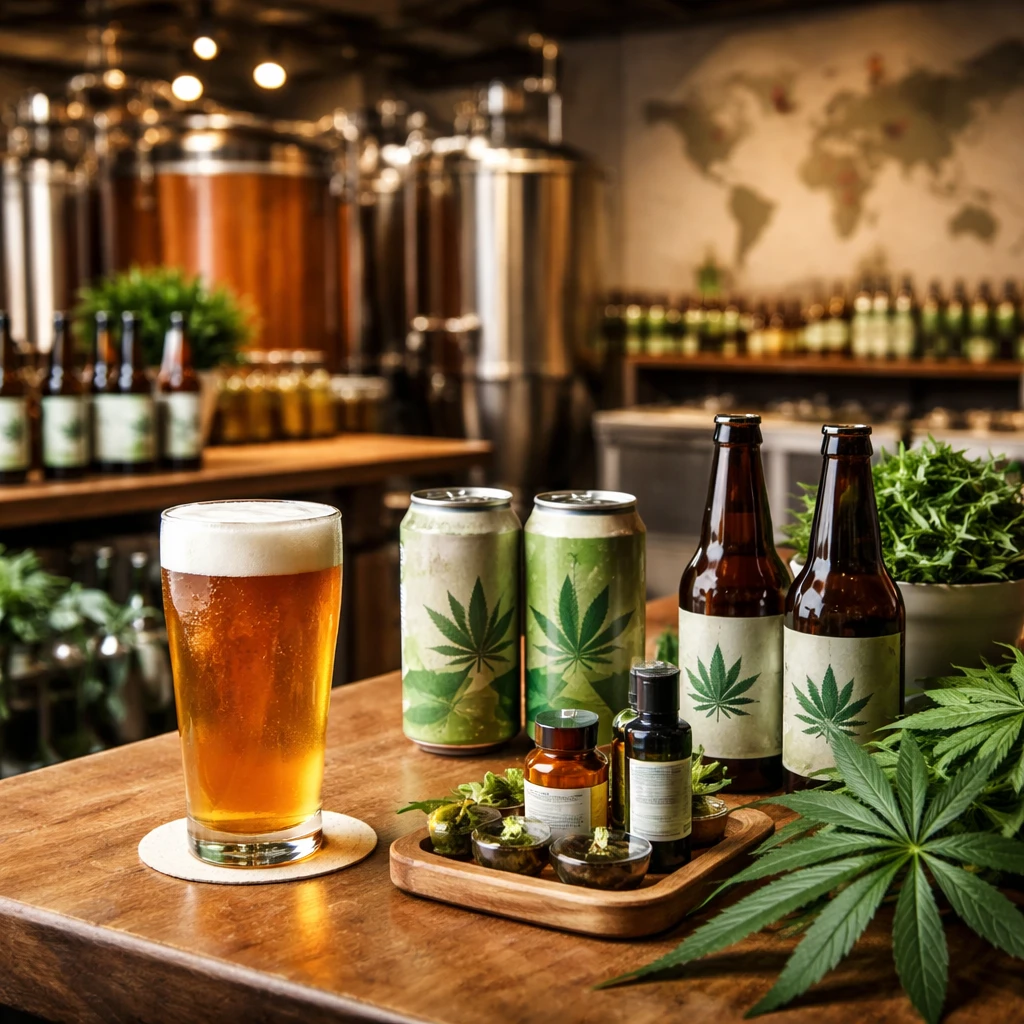
Tilray is building something real: a consumer packaged goods platform that now blends cannabis, beverages and wellness. The completed BrewDog purchases announced in early March 2026 (03/02/2026) add roughly $200 million of annual net revenue and modest adjusted EBITDA in fiscal 2027, lifting Tilray's global beverage business toward a meaningful scale. Those dynamics explain why I believe Tilray is likely to be a structurally better company 12-24 months from now.
That said, the near-term picture is mixed. The stock is trading near $7.00 and already reflects a lot of speculation about future synergies. Negative EPS, negative free cash flow, and bearish technicals argue against buying aggressively here. My tactical recommendation: hold for existing shareholders and avoid initiating new positions until better execution or a cleaner technical setup emerges. If you're trading the name, use a disciplined plan with explicit entries, stops and targets (see trade plan below).
What Tilray does and why the market should care
Tilray Brands is a diversified consumer goods company focused on four operating segments: Cannabis (medical and adult-use), Distribution (pharmaceutical and wellness distribution), Beverage (alcoholic beverages and craft brands), and Wellness (hemp-based food and wellness products). The business is now consumer packaged goods (CPG)-like in its ambitions: scale, brand building and distribution efficiency matter more than pure cultivation economics.
The market should care because the BrewDog transaction materially changes the unit economics and top-line scale of the beverage business. Management's disclosure suggests the deal adds about $200 million in annual net revenue and $6-8 million in adjusted EBITDA in fiscal 2027, bringing total company annualized revenue to roughly $1.2 billion. That is meaningful scale for a company with a market capitalization sitting around $816 million today and enterprise value near $844 million.
Hard numbers that matter
| Metric | Value |
|---|---|
| Current price | $7.00 |
| Market cap | $816 million |
| Enterprise value | $844 million |
| Price / Sales | 1.0 |
| Price / Book | 0.53 |
| EPS (TTM) | -18.07 |
| Free cash flow (most recent) | -$61.4 million |
| Cash (per data) | $0.95 (absolute value listed) |
| Debt / Equity | 0.16 |
| 52-week range | $3.51 - $23.20 |
How to read the numbers
On surface valuation, Tilray looks inexpensive: EV / Sales ~1.0 and P/S ~1 at roughly $1.2 billion of pro forma revenue implies the market is giving the company credit for near-term revenue scale. Price / Book of 0.53 and enterprise value similar to market cap reflect meaningful equity dilution historically, but also a balance sheet that isn't heavily levered (debt / equity 0.16). Those are reasons for optimism.
Counterbalancing that, EPS is deeply negative (-$18.07) and free cash flow was negative in the latest period (-$61.4 million). The company is still in a growth-and-integration phase: acquisitions boost reported revenue quickly but real value comes from margin expansion and free cash flow conversion. Management projects modest adjusted EBITDA from BrewDog in fiscal 2027 ($6-8 million) which is helpful but not transformative on its own — execution and cost control matter.
Technicals and market behavior
Technically the stock is soft. The 10-day and 20-day SMAs sit above current price ($7.51 and $7.58 respectively), the 50-day SMA is $8.31, and the 9-day EMA is $7.35. RSI at ~36.7 implies the name is near the lower end of its recent momentum, and MACD shows bearish momentum. Short activity is non-trivial — recent short volume has been a meaningful portion of daily turnover — though days-to-cover metrics have been variable.
Catalysts to watch
- Execution on BrewDog integration - revenue synergies, US/Australia asset negotiations closing, and any reported uplift to beverage margins. Management guidance or early quarterly results showing improved beverage margins would be a clear positive.
- Sequential EBITDA improvement - clear quarter-over-quarter moves from negative to closer-to-breakeven adjusted EBITDA across segments would validate the acquisition strategy.
- Distribution and wellness traction - any sign the Distribution business is crossing to recurring margin contribution would materially de-risk the story.
- Share count discipline - visible slowing of dilution or buybacks would be a strong signal that management believes cash generation is stabilizing.
Trade plan (actionable)
Summary stance: neutral - Hold for existing shareholders. Do not add size at market unless you intend to treat this as a higher-risk trade and use the explicit levels below.
- Entry (if initiating a new trade against a pullback): $6.00 — wait for a dip to this level to get a better risk/reward. The current price ($7.00) is not the ideal entry in my view given negative momentum.
- Stop loss: $5.50 — if you add at $6.00, exit at $5.50 to cap downside. If you already own stock purchased below $7.00, consider a wider stop depending on your cost basis and conviction.
- Target: $10.50 — a reasonable swing target over a mid-term horizon if execution shows improving margins and stable free cash flow. Hitting this target would reflect multiple expansion as the company converts revenue into sustainable EBITDA.
- Horizon: mid term (45 trading days) to long term (180 trading days) depending on catalyst realization. Expect the trade to last at least mid term (45 trading days) to allow for integration headlines and one quarterly report to show progress.
Why those levels?
$6.00 is roughly where downside pressure typically intensifies and gives a better entry valuation vs. buying at $7.00 with current bearish momentum. $5.50 is a logical stop that protects against a re-test of the recent multi-month low zone and caps loss to a manageable percent from the entry. $10.50 assumes the market begins to reward a clearer path to positive adjusted EBITDA and the market re-rates the stock toward a higher EV / Sales multiple consistent with other mid-cap CPG roll-ups that convert revenue into stronger margins.
Risks and counterarguments
- Execution risk on acquisitions - The BrewDog purchases add scale but also integration work. If cost synergies miss or cultural/franchise issues emerge, the revenue boost could be offset by margin erosion.
- Profitability & free cash flow - Tilray posted negative free cash flow (-$61.4 million) and a large negative EPS (-$18.07). Until FCF turns positive on a sustainable basis, the company remains dependent on capital markets or further dilution to fund growth.
- Market sentiment and volatility - Cannabis-related equities remain sentiment-driven. News about settlements, regulatory shifts, or poor earnings can quickly re-ignite downside; short interest and short volume have been meaningful lately.
- Valuation complacency - The market is pricing pro forma revenue but not yet pricing in full margin recovery. If revenue growth disappoints, a re-rating lower is possible despite a superficially low P/S.
- Regulatory and legal issues - Canadian securities settlements and other legal developments have previously affected comparable names; any new disclosures or legal costs could materially impact performance.
Counterargument: Some investors will argue this is a buy-the-dip situation because the company now has ~$1.2 billion of annualized revenue and balance-sheet leverage is low (debt / equity 0.16). If management can demonstrate quarter-on-quarter margin improvements and a path to positive free cash flow, the current market cap (~$816 million) looks small relative to pro forma revenue, making an aggressive buy warranted. That argument is valid — but it requires evidence of execution rather than conjecture.
What would change my mind
- If Tilray reports two consecutive quarters of meaningful adjusted EBITDA improvement and positive or materially reduced free cash flow burn, I would shift from Hold to Buy and likely tighten stops and raise targets.
- If the company announces additional beverage asset acquisitions that are immediately accretive to EBITDA well above the stated $6-8 million for FY2027, I would become more constructive.
- Conversely, further dilution without a clear plan for cash-flow improvement, missed integration milestones on BrewDog, or a material regulatory/legal charge would push me to a Sell stance.
Conclusion
Tilray looks positioned to be a durable CPG player a year or two out thanks to its beverage expansion and diversified segments. The recent BrewDog add is meaningful for revenue scale. But the present combination of negative earnings, negative free cash flow, and unfavorable technicals argues for caution now. Hold existing positions, avoid adding at market, and consider a disciplined add on a pullback to $6.00 with a $5.50 stop if you want exposure. Re-rate the position to Buy only after clear evidence of margin improvement and consistent cash flow stabilization.
Key data snapshot
Current price: $7.00 | Market cap: $816M | EV: $844M | P/S: 1.0 | P/B: 0.53 | EPS (TTM): -$18.07 | Free cash flow: -$61.4M