
Hook and thesis
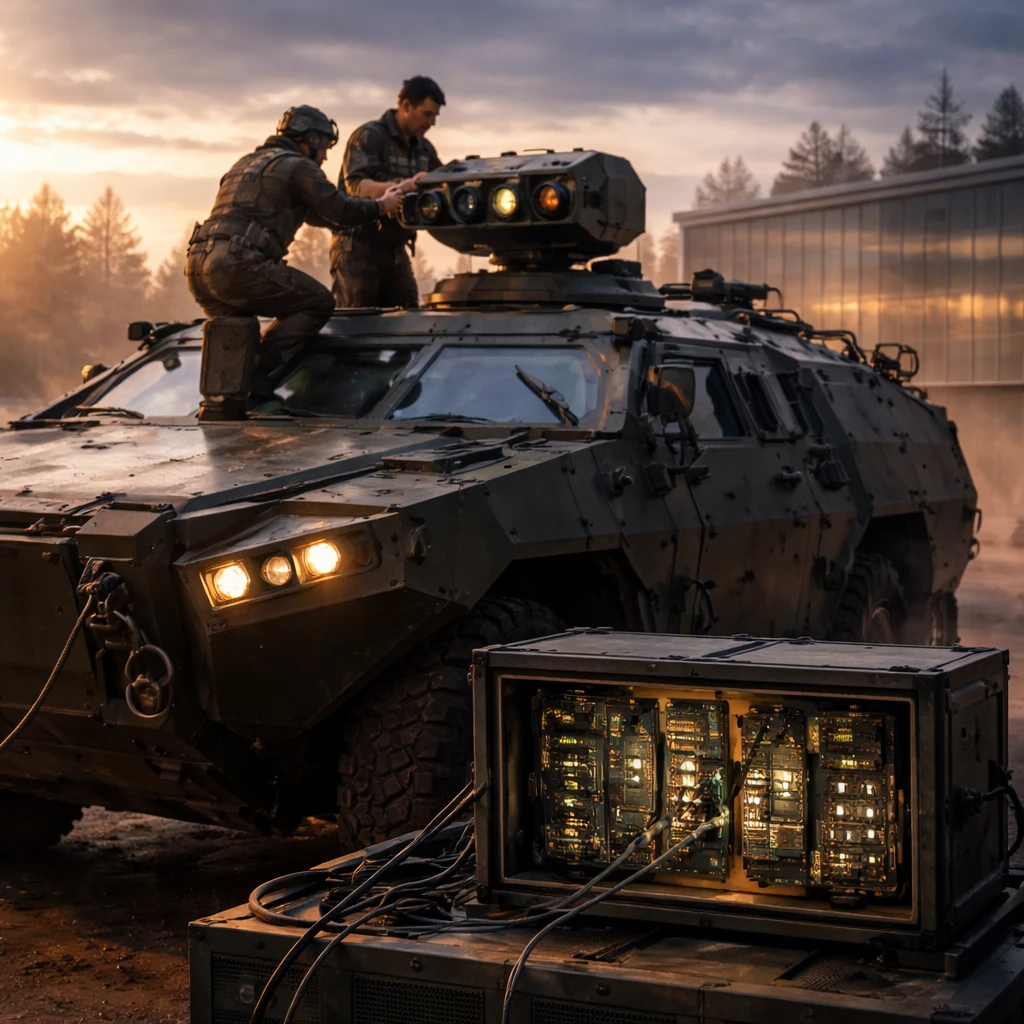
Rheinmetall looks positioned to be one of the primary beneficiaries of a defense cycle that is evolving. The old narrative - a blunt demand surge for artillery and armor - is still true, but it no longer tells the full story. The new wave centers on the electrification of the battlefield: sensors, hyperspectral imaging, electronic integration, and upgraded fire-control systems. These are higher-margin, repeatable revenue streams that can sustain a multiyear re-rating for companies that already own scale in munitions, vehicles, and systems integration.
We believe Rheinmetall is underappreciated by investors who still value it primarily as a hardware supplier. The faster-growing pockets of the defense technology market are visible in recent industry forecasts: for example, hyperspectral imaging is projected to grow from $0.92 billion in 2025 to $1.83 billion by 2030 at a 14.7% CAGR (03/12/2026). That is emblematic of the broader shift toward sensor-heavy upgrades and intelligence-led procurement decisions that favor companies with both systems know-how and production scale.
What the company does and why the market should care
Rheinmetall has historically been synonymous with armored vehicles, munitions, and military electronics. The strategic point for investors is simple: the market is moving from platform-only procurement toward platform-plus-sensor-and-software procurement. That raises both the lifetime revenue per platform and the margin profile of orders. Two high-level reasons the market should care:
- Higher attach rates for sensors and electronics: Modernization programs increasingly include EO/IR suites, multispectral and hyperspectral sensors, and integrated battle-management electronics. The hyperspectral imaging market forecast shows a near doubling in five years, indicating defense customers will pay a premium for improved sensing capabilities.
- Repeatable upgrade cycles: Sensors and electronics are updated more frequently than main battle tanks, creating recurring revenue streams for suppliers that can deliver both hardware and system integration.
Supporting evidence from the data
The clearest numeric anchor available is the hyperspectral imaging market forecast: expected to increase from $0.92B in 2025 to $1.83B by 2030, a 14.7% CAGR (03/12/2026). While that market is a subset of overall defense spending, it is precisely the subset where Rheinmetall has been investing: compact sensors, vehicle-mounted suites, and integration into existing platforms. Growth at that pace suggests the addressable opportunity for defense-grade imaging alone will roughly double over five years, creating room for multiple providers to scale revenues and margins.
Valuation framing
Rheinmetall has a mix of legacy product lines (vehicles, ammunition) and newer, software-enabled systems. That hybrid business model argues for a valuation that recognizes both cyclical revenue from large platform orders and semi-recurring, higher-margin revenues from sensors and electronics. Historically, companies that migrate toward software and systems integration command a premium to pure-play hardware makers because of stickier revenue and higher gross margins.
Absent a single comparable peer set in the available dataset, think of valuation qualitatively: if the market begins to price future sensor attach rates and recurring upgrade contracts into Rheinmetall's cash flows, a mid-single-digit to low-double-digit percent re-rating is reasonable. The trade below assumes such a re-rating materializes as investors revalue future profitability rather than just current order flow.
Catalysts (timing and what to watch)
- New product wins or framework agreements for vehicle-mounted hyperspectral or multispectral systems (near-term catalyst).
- Announcements of customer-funded R&D or production contracts tied to electronic warfare, sensors, or battlefield awareness systems.
- Quarterly results showing margin improvement in the electronic systems segment or higher attach rates across platforms.
- Broader defense budget announcements by major European or NATO members that allocate more to modernization and sensors than to pure force expansion.
Trade plan (actionable)
We are initiating a long trade on Rheinmetall with the following parameters. This is a directional but capital-protective trade aimed at capturing a re-rating tied to higher-margin sensor and systems adoption.
| Action | Price | Horizon |
|---|---|---|
| Entry | $125.00 | Long term (180 trading days) |
| Target | $160.00 | |
| Stop | $108.00 |
Rationale: the entry gives room for a near-term pullback while remaining inside a constructive technical range. The target reflects a meaningful re-rating that could occur if sensor-related revenues and margins are confirmed in forthcoming releases. The stop at $108 limits downside to a clearly defined technical breakdown level while allowing the position to breathe around short-term volatility.
Time view
This trade is intended to last roughly long term (180 trading days). That window is chosen to allow product wins to progress into visible orders, for margins to start reflecting higher sensor attach rates, and for the market to digest a structural re-rating instead of reacting only to one quarter. Shorter horizons (for example, less than 11 trading days) are likely to be noisy; mid-term holders (around 45 trading days) should be prepared for volatility around contract announcements or fiscal updates.
Risks and counterarguments
- Procurement delays: Defense contracts can be delayed or re-scoped. A shift in government procurement priorities or slow approval cycles would push out revenue recognition and harm the re-rating thesis.
- Integration execution risk: Moving from hardware to integrated sensor-software offerings requires reliable software delivery and after-sales support. Any execution missteps could compress margins and disappoint investors.
- Competition and pricing pressure: The hyperspectral and sensor space is attracting new entrants and incumbents from nontraditional suppliers. Increased competition could depress prices and margins.
- Macro and currency risk: European defense firms are exposed to FX swings, supply-chain constraints, and broader macro uncertainty that can affect costs and order timing.
- Counterargument: One plausible counterargument is that Rheinmetall is already priced for defense growth and that most of the sensor opportunity will accrue to specialized technology firms rather than traditional hardware integrators. If investors continue to separate sensor makers from platform integrators, Rheinmetall may not capture the full upside even if the sensor market grows as forecast.
What would change my mind
I would downgrade the trade or exit early if I saw one of the following materialize: (1) consecutive quarters showing narrowing margins in the electronic systems segment, (2) a pattern of lost bids on sensor/platform contracts to pure-play sensor vendors, or (3) a major macro-driven procurement freeze in key European customers. Conversely, clearer evidence of sustained margin expansion and multi-year framework contracts for sensors and integration work would strengthen the thesis and justify adding to the position.
Conclusion
The defense market is changing. The headline munitions and armor cycle is only part of the story; the faster-growing, higher-margin segment for sensors and systems integration is increasingly where long-term value will be created. With the hyperspectral imaging market alone projected to roughly double by 2030, companies that combine production scale with systems know-how are well placed. Rheinmetall fits that bill. The trade presented here is a structured way to get exposure to that secular shift while keeping downside defined.
Key dates to watch: product or contract announcements and the next quarterly update for evidence of higher attach rates and margin improvement.