
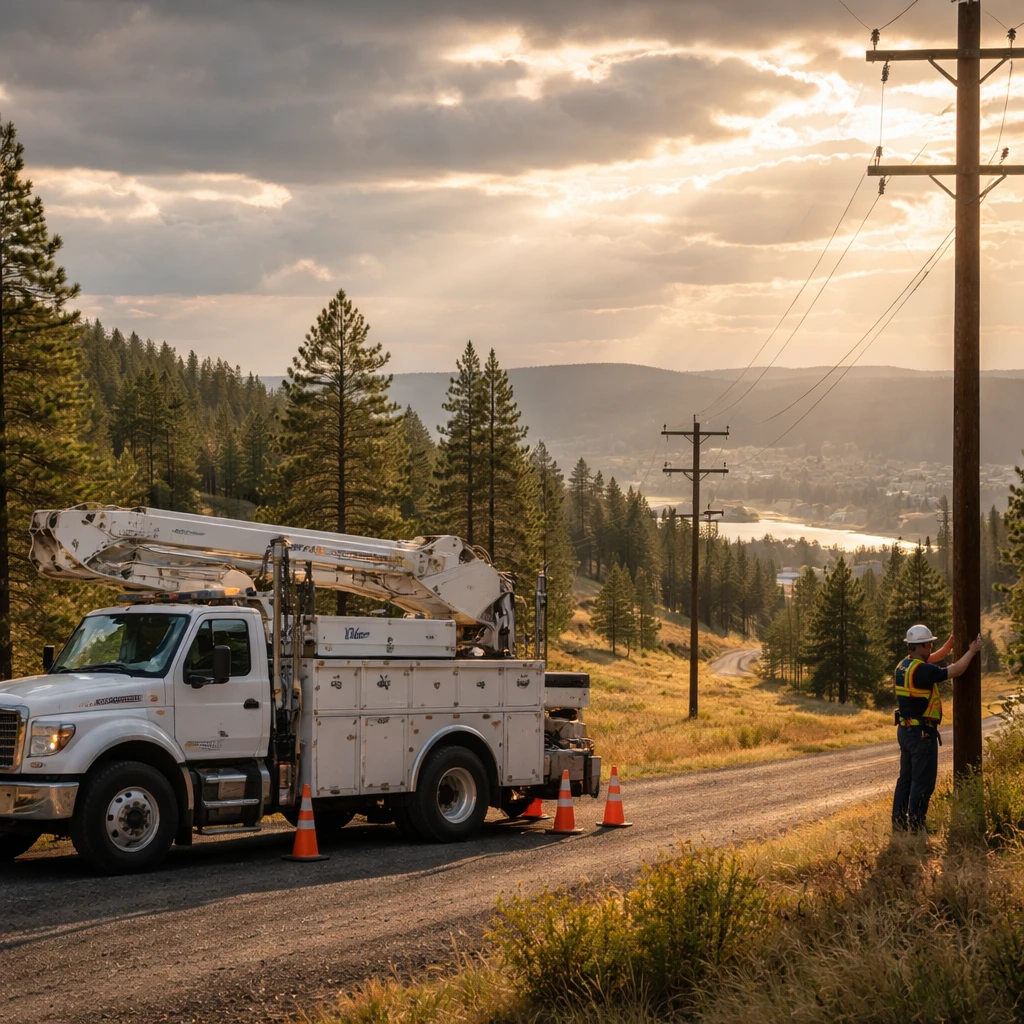
Hook & thesis
I’m upgrading Avista Corporation (AVA) to a Buy on a swing-horizon thesis: the stock is trading at a reasonable multiple, carries a dependable and increasing dividend, and the near-term regulatory docket should support revenue. Compared with other regional utilities such as Pinnacle West, Avista presents a cleaner risk/reward for income-oriented investors looking for a mid-term (45 trading days) trade that also benefits from potential upside on regulatory approvals.
This is not a take for buy-and-forget investors; it is an actionable trade that rests on three points: (1) rate case activity that can drive ~mid-single-digit to high-single-digit revenue lift in key states, (2) a 4.9%+ yield supported by a 24-year dividend growth streak, and (3) valuation that is modest relative to the utility cohort given Avista’s earnings and enterprise multiples.
What Avista does and why the market should care
Avista is a vertically integrated regional utility operating primarily in eastern Washington, northern Idaho, parts of Oregon and Juneau, Alaska. The company provides electric distribution and transmission plus natural gas distribution through Avista Utilities and Alaska Electric Light and Power. That geographic focus means Avista’s earnings and cash flows are driven by state regulatory outcomes and local energy costs rather than broad national demand cycles.
The market cares because Avista is a classic regulated-utility cash generator: it pays a meaningful dividend and is exposed to regulatory rate cases that can move revenue and earnings over relatively short timeframes. Recent regulatory filings in Idaho and Washington mean materially visible near-term catalysts for shareholders.
Key fundamentals and what they imply
Here are the headline numbers that shape the argument:
| Metric | Value |
|---|---|
| Current price | $39.87 |
| Market cap | $3.28B |
| P/E | ~17x |
| EV/EBITDA | ~10.9x |
| Dividend (annualized) | $1.97 (yield ~4.9%) |
| Debt/Equity | ~1.16x |
| Free cash flow (most recent) | -$101M |
| ROE / ROA | 7.12% / 2.31% |
Those numbers tell a straightforward story. The company is not high-growth, but it earns steady returns on equity and pays a healthy yield. The P/E in the high-teens and EV/EBITDA around 11x are consistent with a utility that carries modest operational risk but has meaningful regulatory upside if rate cases are approved.
Recent news and the regulatory driver
Near-term, Avista has several regulatory moves in play. On 02/14/2026 Avista filed with the Idaho Public Utilities Commission for a 7.4% increase in electric revenues, roughly $25.2M, effective 05/01/2026. If approved, the company said an average residential customer would see bills rise about $8.90 per month (7.7%). That is direct, recurring revenue if it clears the commission and is the most immediate lever for earnings support.
Separately, earlier filings in Washington seek an 8.6% decrease in gas rates and a 1.7% electric increase, which highlights the mixed but manageable regulatory backdrop across states. The company also announced it reached an all-party settlement in Idaho general rate cases on 06/09/2025 which increases base electric and natural gas revenues over the following two years. Taken together, these items are not speculative – they are live and measurable inputs to 2026-2027 revenue.
Valuation framing
At a market cap of roughly $3.28 billion and an EV of about $6.40 billion, Avista trades at a P/E near 17x and EV/EBITDA around 10.9x. For regulated utilities with visible rate-case timing, that is attractive. The company pays a ~4.9% yield while growing the dividend for 24 consecutive years; management has signaled plans to keep dividend growth below EPS growth until payout reaches a 60-70% target. That implies room for modest dividend increases if earnings recover and rate actions are favorable.
Relative valuation context versus larger, more diversified peers (for example, bigger utilities with larger service territories) would normally command a premium for scale and more diverse regulatory jurisdictions. Avista’s regional footprint and recent negative free cash flow (-$101M) warrant a discount to the largest utilities; however, the current multiples appear to price in those risks already. The trade is to buy now for mid-term re-rating if regulatory approvals and rate recovery stick.
Catalysts
- Idaho rate filing decision (filed 02/14/2026, effective if approved 05/01/2026) - approval lifts revenue and provides visible earnings support.
- Washington rate adjustments - modest electric increase proposals could offset gas declines and stabilize overall revenue.
- Dividend increase cadence - management raised the quarterly dividend to $0.4925 (payable 03/13/2026); maintaining the streak attracts income buyers.
- Operational improvements - vegetation management and wildfire mitigation measures reduce outage and liability risk during the summer season, supporting reliability metrics.
Trade plan (actionable) - why now and how to size
My trade is a directional long with the following parameters:
- Entry: $39.87 (current market price)
- Target: $44.00 (primary target for swing execution)
- Stop-loss: $37.00
- Primary horizon: mid term (45 trading days) - this is a swing trade designed to capture re-rating from regulatory approvals or multiple expansion.
Timeline detail: short term (10 trading days) - watch for near-term volatility around regulatory headlines and dividend ex-dates; hold only if the share price remains above $38.00 and volume confirms buying. Mid term (45 trading days) - this is the primary horizon for the trade: regulatory decisions and confirmation of rate recoveries are likely to be priced in over this window. Long term (180 trading days) - if holdings become a position trade, re-evaluate based on free cash flow trends and leverage reduction prospects; I would expect a larger re-rating only if FCF turns positive and payout ratio targets are approached.
Sizing: moderate position for income-oriented portfolios. Given the dividend yield and regulatory sensitivity, consider a position size consistent with a medium-risk allocation to utilities in a diversified portfolio.
Technical and market sentiment clues
Technicals are neutral-to-mildly bearish: the 20-day and 50-day moving averages sit above the current price, RSI ~45 suggests no extreme conditions, and the MACD shows bearish momentum. Short interest has fluctuated but recent days-to-cover are in the low-to-mid single digits, implying limited forced-squeeze risk. That technical backdrop supports a disciplined entry at or near the current price with a tight stop.
Risks and counterarguments
- Regulatory risk: The most obvious downside is an unfavorable decision on the Idaho filing or other state proceedings. If commissions deny requested increases or order refunds, earnings could fall materially versus expectations.
- Free cash flow pressure: Avista reported a negative free cash flow of -$101M. Continued negative FCF could force higher borrowing or slower dividend growth, pressuring the valuation.
- Leverage and interest-rate exposure: Debt/equity of ~1.16x is meaningful for a utility. Rising rates or refinancing risk could pressure net interest expense and compress EPS or the dividend cushion.
- Weather and operational risk: As a Pacific Northwest utility, extreme weather or wildfire events can create outage-related costs and capital needs beyond what rate cases recover.
- Counterargument - Pinnacle West may still be preferable: A reasonable counterargument is that Pinnacle West (or other regional peers) may offer stronger scale, better FCF, or a more diversified regulatory footprint and therefore superior downside protection. I don’t dismiss that view; investors who prioritize scale and larger service territories may prefer larger peers. My upgrade reflects the combination of Avista’s current yield, active rate-case path and valuation rather than a claim of absolute superiority.
What would change my mind
I would downgrade from Buy if any of the following happen: (1) a clear denial of the Idaho filing or material adverse regulatory decisions in Washington that reduce anticipated revenue, (2) another quarter of materially negative free cash flow without a credible plan to restore FCF, or (3) a rise in leverage beyond guidance or a meaningful dividend cut. Conversely, if FCF turns positive and management moves decisively toward a lower leverage profile while keeping dividend growth visible, I would become more constructive and extend the target toward $48+ on a longer horizon.
Bottom line
Avista is an upgrade candidate right now because the stock offers a generous yield, a forward-looking regulatory calendar that can lift revenue, and a valuation that seems to price in downside risks. The trade is not without real regulatory and cash-flow risks; that’s why I favor a disciplined swing trade with a stop at $37.00 and a target of $44.00 over ~45 trading days. For income-focused investors who can stomach regulatory headline risk, Avista presents a better risk/reward versus many regional utilities in the current environment.
Trade parameters recap: Entry $39.87, Target $44.00, Stop $37.00, Horizon: mid term (45 trading days).