
Hook & thesis
Pilgrim's Pride (PPC) is trading at $36.74, within a buck of its 52-week low ($35.73), yet it still generates robust cash flow and trades at just under 8x earnings. For active traders willing to accept event and commodity risk, this is an actionable long: the combination of inexpensive valuation (P/E ~7.98, EV/EBITDA ~5.26), a high-margin prepared-foods brand gaining share, and oversold technicals (RSI ~30) argues for a mean-reversion bounce over the next 45 trading days.
This is not a “buy and forget” endorsement for a volatile commodity-exposed name. Instead, it is a tactical, defined-risk trade: enter near $36.50, stop at $33.00, and target $42.00. The setup offers a reasonable reward-to-risk for a mid-term horizon while relying on balance-sheet resilience and clear operational catalysts.
What Pilgrim's Pride does and why the market should care
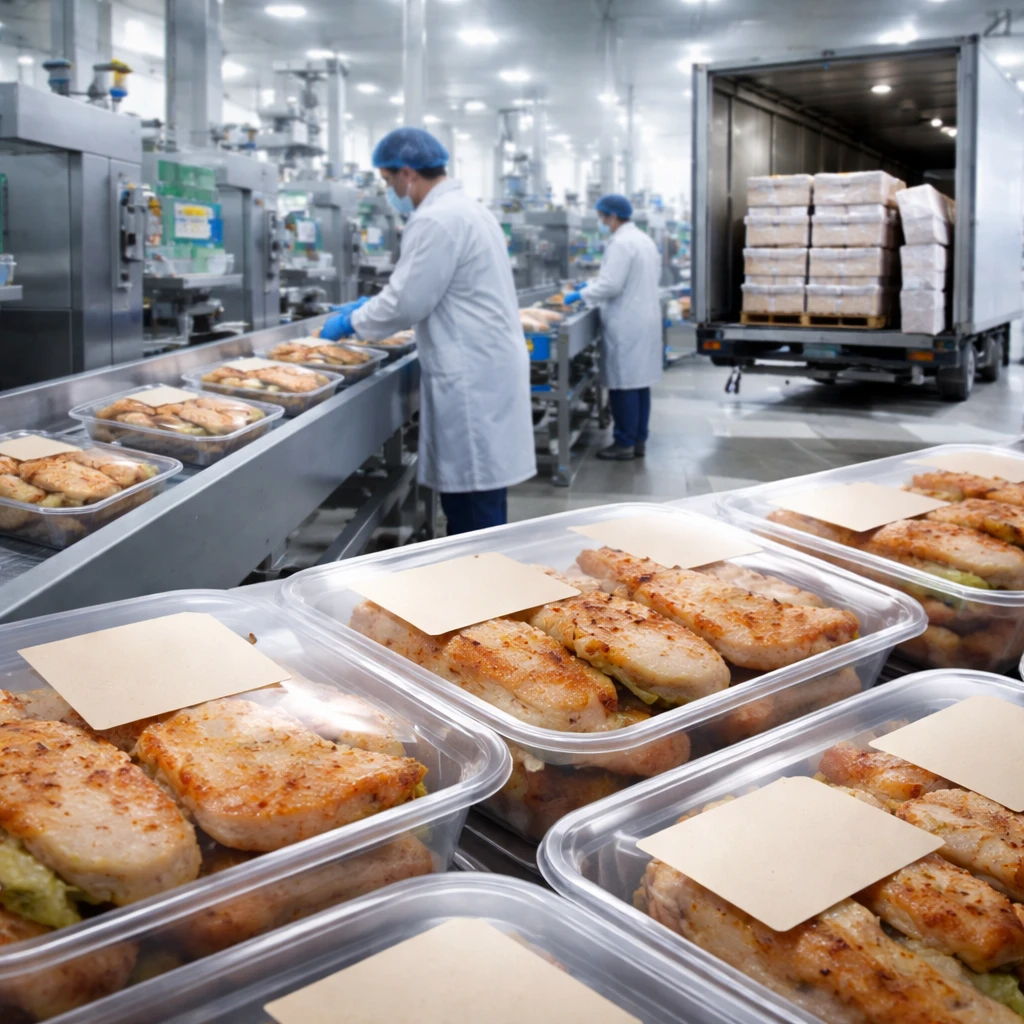
Pilgrim's Pride is a large poultry and prepared-foods producer operating across the U.S., Europe and Mexico. The business sells fresh, frozen and value-added chicken and pork to retail, distribution and foodservice customers. Key operational strengths are scale in protein production and a growing presence in higher-margin prepared foods, where consumer convenience trends support premium pricing and faster growth.
The market should care because Pilgrim's combines low relative valuation with meaningful free cash flow generation: free cash flow is reported at $660.6 million and the company trades with an enterprise value near $11.06 billion. That mix makes the stock sensitive to sentiment swings: investors punish multiples when protein margins soften, but conversely the business can move quickly when demand or pricing improves.
Numbers that support the idea
- Current price: $36.74; 52-week low: $35.73; 52-week high: $56.73.
- P/E is roughly 7.95 and reported EPS is $4.56, implying earnings support for the current price.
- Valuation cross-checks: EV/EBITDA ~5.26, EV/Sales ~0.60 and price-to-sales ~0.47. Those multiples indicate depressed revenue and margin expectations are already priced in.
- Free cash flow of $660.6M and enterprise value ~$11.06B gives a free-cash-flow yield that looks constructive versus the base multiple story.
- Balance sheet: debt-to-equity ~0.84; current ratio ~1.47; quick ratio ~0.76. The company is leveraged but not precariously so for an industrial food producer.
- Momentum/technicals: 10/20/50-day SMAs are all well above the current price (SMA50 ~$41.26), RSI is ~30 (near oversold), and MACD is negative, signaling recent selling pressure but potential for a technical bounce.
Valuation framing
At a market capitalization around $8.7 billion and enterprise value of roughly $11.06 billion, Pilgrim's Pride looks inexpensive on several common metrics. A ~7.98 P/E implies the market expects only modest earnings support from current operations; EV/EBITDA of ~5.26 is low for a company of Pilgrim's scale. The low P/S (~0.47) further suggests revenue expectations are muted.
Put simply: the market has already discounted several downside scenarios. That does not mean the stock cannot fall further if commodity costs spike or demand weakens, but the starting point gives buyers a margin of safety relative to historical cyclicality. With free cash flow north of $660M, the company has the capacity to pay special distributions (it paid a $6.30 special cash dividend in 2025), invest in capacity and support operations through cyclical periods.
Catalysts to drive the trade
- Prepared-foods growth - The Just Bare brand reached $1 billion in annual retail sales with ~45% annual growth and increased category share rapidly. Continued strength or new capacity additions could lift margins and sentiment.
- Special capital returns / shareholder actions - The 2025 special dividend ($6.30/share) showed the company will return excess capital when appropriate; further returns or buybacks would re-rate the stock.
- Commodity margin recovery - Any stabilization or improvement in feed and input costs would mechanically restore margins and earnings, pushing multiples higher.
- Short squeeze potential - Short interest remains meaningful historically (~5.97M shares as of 2/27/2026 with days-to-cover north of 6 in recent reads) and short-volume has been elevated on recent trading days; a technical reversal could prompt short-covering that amplifies a bounce.
- Mean reversion to moving averages - Price sits well below 20/50-day averages; a reversion toward those averages represents a realistic path to the $42 target within the mid-term horizon.
Trade plan (actionable)
Direction: Long
Entry: Buy at $36.50
Stop loss: $33.00
Target: $42.00
Horizon: mid term (45 trading days)
Rationale: Entry at $36.50 picks a spot near current levels while allowing for intraday slippage. The stop at $33.00 sits under the recent 52-week low area and reflects a cut that limits downside to roughly 9.6% from entry. The target of $42.00 lines up with the 50-day SMA/EMA bands and a modest multiple expansion back toward mid-single-digit to low-double-digit EV/EBITDA that is reasonable if margins stabilize. Expect a typical holding period under 45 trading days unless the company reports a fundamental change; the plan is to lock gains or re-evaluate at the target rather than let a swing become a position trade.
Position sizing & risk management
Treat this as a medium-risk trade within a diversified portfolio. Because PPC is commodity-exposed and can gap on quarterly results or major cost moves, size the position so a stop-hit equals an acceptable portfolio loss (for many traders, 1-2% of portfolio value). If you prefer layered exposure, consider half the position at entry and the remainder on a move above $38.50, which would signal some technical stabilization.
Key risks and counterarguments
- Commodity cost volatility - If feed or energy costs re-accelerate, margins can compress quickly and drive earnings below current expectations. That could push the multiple lower and invalidate the near-term bounce thesis.
- Demand softness - A slowdown in foodservice or retail consumption could hit volumes and mix, especially in prepared foods where promotional activity can erode margins.
- Execution/capacity missteps - Rapid expansion of prepared-foods capacity (or misaligned capital allocation) could pressure returns if demand doesn't keep pace.
- Elevated short interest and volatility - While short interest can fuel a short-covering rally, it also contributes to whipsaw risk. Heavy short activity paired with negative headlines could accelerate downside moves.
- Macroeconomic / input-inflation shocks - Broader macro shocks (higher interest rates, inflation spikes) could depress multiples across cyclicals and compress the stock further.
Counterargument: You could argue the market is rightly cautious: the low multiples and proximity to the low reflect genuine structural margin pressure in proteins and the risk of recurring cyclical downcycles. If commodity costs remain elevated or demand weakens, the company’s earnings and free cash flow could disappoint, and the stock could remain depressed or test new lows.
Why I still prefer the long trade
Despite the valid counterarguments, the balance sheet and cash-flow profile lessen bankruptcy/solvency risk and create optionality (capital returns, capacity investment). The prepared-foods franchise growth is a tangible, high-margin offset to commodity-exposed legacy businesses. On a mid-term timeframe, the most likely path to profit is a mix of mean reversion, tactical investor rotation into lower-P/E names, and positive headlines around branded growth or capacity plans.
What would change my mind
- Misses or guidance cuts in an upcoming quarter that materially reduce FY EPS estimates below $3.50 would make me step away from the long setup.
- A sudden rise in feed-cost forecasts or unexpected market shock that meaningfully increases leverage or erodes cash flow would flip the trade to neutral/short.
- If price breaks and closes below $31.50 on heavy volume, that would show structural weakness and invalidate the mean-reversion thesis.
Conclusion
Pilgrim's Pride is a tactical long candidate right now: cheap on absolute and relative metrics, supported by solid free cash flow, and oversold technically. The trade outlined here is mid-term (45 trading days), with a clear entry at $36.50, stop at $33.00 and a target of $42.00. This setup balances upside from multiple expansion and operational catalysts against the real commodity and execution risks that can push the stock lower. Manage position size, respect the stop, and re-evaluate on any meaningful company news or a break above $40 that would shift the trade into a more bullish posture.